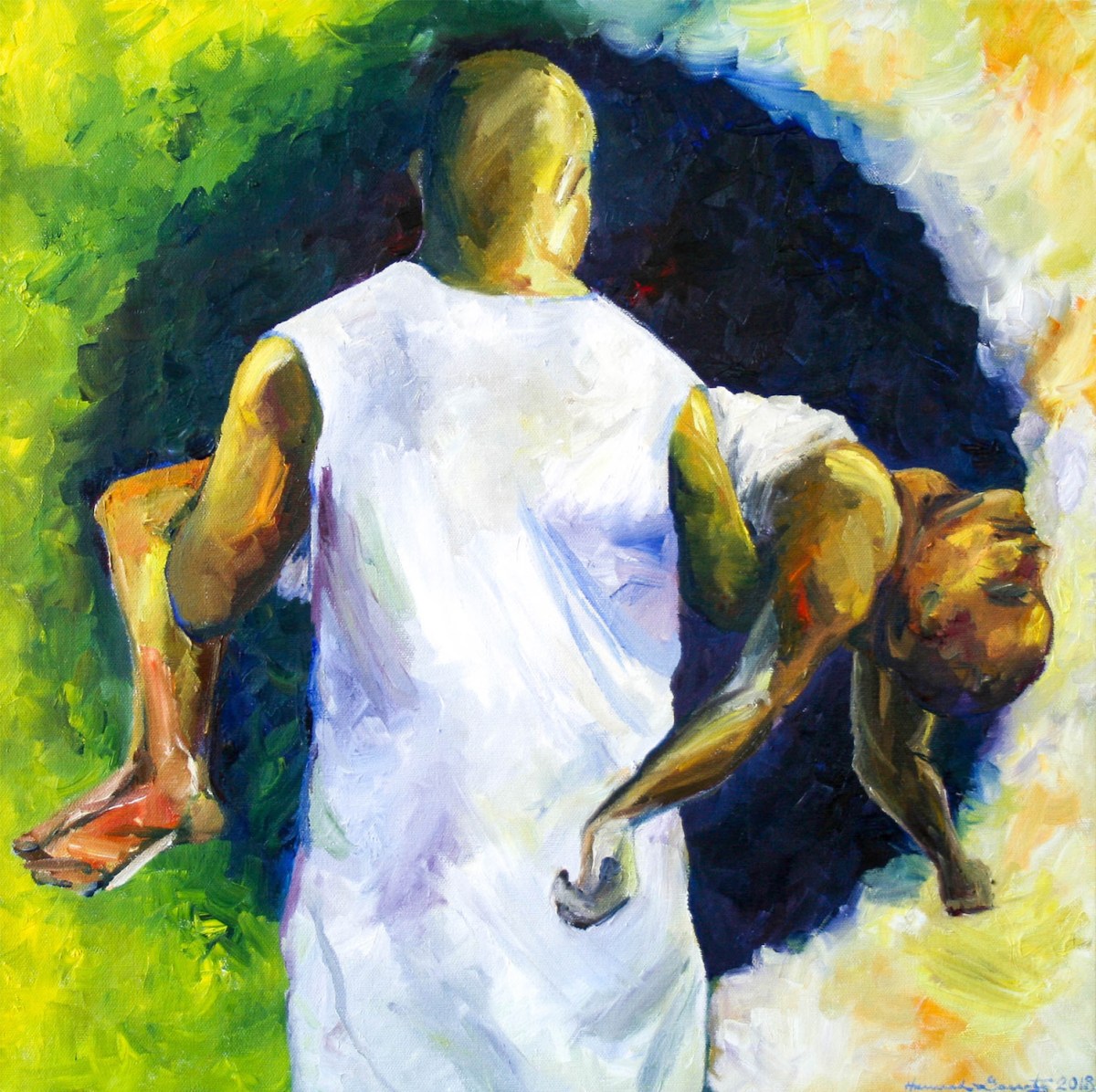
Sermon: of Sheep and Goats

What criteria is Matthew using for judging who is a sheep, or a goat?  Does the Son of Man care what we think of him? Is he judging whether we can drive without colorful words and exuberant hand signals? Is he concerned about whether we’ve been baptized, said our prayers every night, or voted for the right candidate? No!

When I first approached Tom about my inspiration for what became this morning’s sermon, it was to be a meditation on politics and faith: looking at the words and lives of those elected to office who call themselves “Matthew 25 Christians”. Unfortunately (or perhaps fortunately) God got in the way. As I labored over it, this message transformed itself into a meditation on how our reading from Matthew demands we see beyond the bit of road in front of our face. With that in mind, please join me in prayer….

Lord God, may your peace and Holy Spirit fill this place. Open your scriptures to us, and may I clearly communicate that which you intend us to receive. May your Word take root and flourish within each and every one of us. And through it may we be strengthened and transformed by your unconditional, living, and limitless love for all of your Creation.

In Jesus Name, Amen.

The part of my Christian witness that needs the most work is when I’m driving alone. Like, when someone cuts me off I’ll spontaneously give them the fist of fellowship. And, I’ve been known to utter a few very warm and heartfelt words when someone steals my parking spot!

It’s easy to be judgmental when we’re safe inside a steel and glass cocoon. We don’t have to deal with the judgement of others. Nor are our own judgements overheard.  Like, whether the vehicular faux pas’ of that person is due to their having a bad moment, or whether their IQ really is less than the speed they’re driving.  We won’t be challenged, there in our little four wheeled ship. We’re the commander, cruising along the road of life. It’s so easy to let fly with a little emotion, and maybe a gesture or two, safe there in our little mobile Kingdom.

What criteria is Matthew using for judging who is a sheep, or a goat?  Does the Son of Man care what we think of him? Is he judging whether we can drive without colorful words and exuberant hand signals? Is he concerned about whether we’ve been baptized, said our prayers every night, or voted for the right candidate? No! Instead, we are judged on whether we feed the hungry, or give drink to the thirsty, or welcome the stranger, or clothe the naked, or care for those who are sick, or visit those who are in prison. Why? Why judge on this? Why does this matter to God?

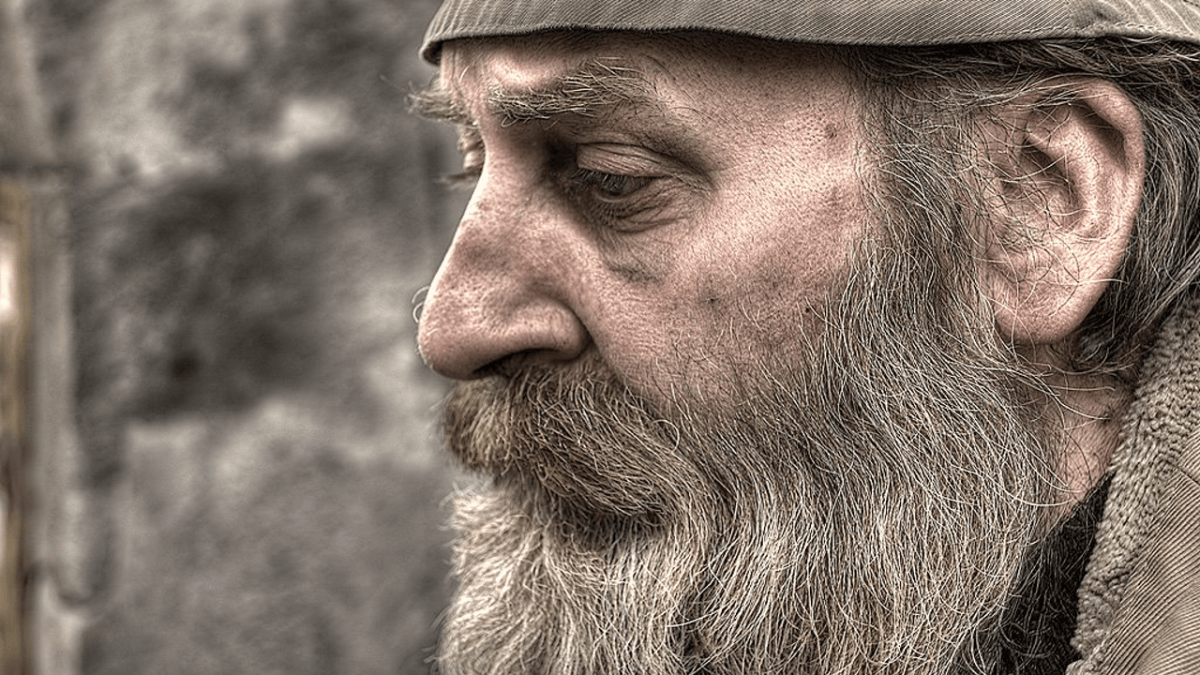
When I first moved to this area, I often saw a man at the grocery store near my home. He was older, white haired. And, no matter what the weather, he always wore the same heavy plaid shirt and frayed pants. He was clean and well groomed; but you could see the pain and humiliation in his eyes as he stood near the store exit, watching us as we came out with our bags and carts full of food and drink. He never spoke, never indicated whether he wanted any help. He stood there, silent, waiting to be noticed. His need plain to those of us who bothered to look. Like many who are hungry, thirsty, strangers, naked, sick, or in prison, he was unseen. We ignored him because we didn’t want to deal with him or his neediness. His existence was inconvenient. But here in Matthew, Jesus says our treatment of him matters a great deal.  Not seeing him is no excuse.

Continue reading “Sermon: of Sheep and Goats”
Sermon: Changing the Story

The widow in this morning’s reading from Luke 21 gave those two coins not because it made a speck of difference to the temple. Not because anyone there cared for her – no one did. She gave those coins in spite of the temple and all it stood for, not because of it.

(A Meditation on the Story of the Widow’s Mite)

I recently learned that many who watch sermon videos online watch the introduction, then skip to the end for the conclusion. … (I’m sure no one here does that!) … But it’s understandable. I mean, everyone has too much to do and not enough time to do it in.  So, why not just skip all that stuff in the middle …  get done quicker?

In conclusion…

Well, before I get to the conclusion, I’d really like to talk a bit about this morning’s readings. The story of the Widow’s Mite teaches us that God honors faithful gifts, no matter how small, no matter what they are, no matter what size they are. It’s the size of the faith that matters, not the size of the gift. 

Another point we sometimes overlook is that the Widow’s two tiny coins mark the end of her life. She had almost nothing left to give; but she gave anyway. After that, there was nothing left not even her life. Her journey had reached its conclusion.

This story also marks the closing of Jesus’ ministry. He never taught in public again. He had given everything he could. He also had nothing left to give except his life. They were both done, both at the end of their journey, both ready for the next step. And, they both knew it.

And yes, these are important lessons. But Luke is teaching us about more than just this. He shows us that all that we have, all that we can give, already belongs to God. He teaches that we are called to bless and support others with what God has blessed us with.

We’ve all heard that lesson many times, it can be found everywhere in the Scriptures. Our willingness and motivation for giving is what matters. It’s not about how much treasure we give, or even whether anyone notices.

Luke speaks of the magnificence of the temple. But, it is the widow’s action, done in good faith, that matters – not the temple.

Continue reading “Sermon: Changing the Story”

A Meditative Prayer Using a Poem by Amanda Gorman.

I presented this poem with a short prolog describing the thoughts it inspired within me for our Church’s “Prayer of Invocation” on January 18th, 2026. The poem is entitled “For Renee Nicole Good, Killed by I.C.E. on January 7, 2026.” Amanda Gorman wrote this poem shortly after the events of January 7, 2026 in Minneapolis, MN,

Good morning and welcome home, I am Allen Vander Meulen, your Covenant Leader this morning.

For me, this church and actually all of you, are a place of rest and restoration.  A community of those with whom we gather and find love and support and healing and purpose.

And it is in times like these, times where we see pain and harm, even death, needlessly and deliberately inflicted upon so many in this nation and throughout the world, that we learn why communities like ours are so important.  Communities that welcome all and labor to build respect and love and affirmation and hope, for all.

We worship and work together to prepare ourselves and those whom we love to go out into a hurting and lost world; ministering out-of, and sharing, the Gospel that has been planted within us.

And so, with these thoughts in mind, hear this poem written a few days ago by Amanda Gorman (whom you may remember spoke at Joe Biden’s Inaugural) entitled “For Renee Nicole Good, Killed by I.C.E. on January 7, 2026.”

Continue reading “A Meditative Prayer Using a Poem by Amanda Gorman.”

Sermon: A Mighty River

We’re all in this together, which is a good thing. We all have a stake in the outcome, which means we all have a role in the solution; and there is a solution.  Amos teaches that God’s plan is for us to work together: caring for the poor, the hungry, the destitute, and the land; looking for the good, and rejecting the evil.

Amos and Dr. Martin Luther King present salvation in a way we don’t normally think about  … for them salvation is communal, not individual.  We cannot achieve salvation for ourselves if we allow our community, our nation, and its people, and our world, to suffer and die.

Please join me in prayer.  Lord God, may your peace and Holy Spirit fill this place. Open your scriptures to us, and may I clearly communicate that which you intend us to receive. May your Word take root and flourish within each and every one of us. And through it may we be strengthened and transformed by your unconditional, living, and limitless love for all of your Creation.

In Jesus Name, Amen.

The other day, my son and I saw a truck driving on Route 2. It was what is known as a stake body truck (I had to look that one up!): it has a flat bed with metal rails on each side, mounted on stakes.  It had a tailgate on the back, which is little unusual.  It was very old and had seen hard use: battered, bald tires. It was driven by an equally ancient man.  (As my son would say, he was even older than I am.)  The truck was filled with what looked to me like a huge pile of random tools, equipment, mysterious bags and boxes.

The bed of the truck tilted to one side at an alarming angle.  The broken tailgate was held on by a single ancient strap fastened across the back, tied to the rails on each side – which was a good thing because otherwise they would have collapsed into the road.

The driver had trouble keeping his truck in the lane.  I shudder to think of what would have happened in a sudden stop.  I could not believe he dared to drive it, let alone at highway speeds.  What was so important that he felt such a risk with all of his mysterious cargo was worth it?

Continue reading “Sermon: A Mighty River”

Sermon: Knowledge, Faith, and Love

Solomon is certain he has built a place worthy of being God’s dwelling place forever.  … Forever is a long time: building a permanent dwelling place for God strikes me as an attempt to create boundaries for God that work for us, but perhaps not for God.  God’s former home was that tent made out of cloth, and skins, not stone.  It was not a permanent dwelling.  And so I think of that tent as representing how our Faith is a journey, not an endpoint; a path we must walk.  We might stop occasionally to dwell for a time, but we always move on.  A tent is not a monument.

Lord God, may your peace and Holy Spirit fill this place. Open your scripture to us, and may I clearly communicate that which you intend us to receive. May your Word take root and flourish within each and every one of us; and through it may we be strengthened and transformed by your unconditional, living, and limitless love for us and all of your Creation. 

In Jesus Name, Amen.

Tom texted me yesterday and asked if I would fill in for him this morning.  I immediately said yes, certain I had a sermon somewhere in my archive that would provide a good starting point for a meditation on this morning’s scripture.  Oops.  It took a lot more work than I thought; which is probably a good thing, actually: because if it wasn’t a journey to write this sermon and prepare for this service, then it probably wasn’t worth doing.

This morning’s reading is about Israel redefining its relationship with God in the time of Solomon the Wise.  The old tent that long housed the Ark of the Covenant no longer seemed fitting to them, for their prosperous and peaceful Kingdom.  

At the end of our reading, Solomon is certain he has built a place worthy of being God’s dwelling place forever.  …Forever is a long time: building a permanent dwelling place for God strikes me as an attempt to create boundaries for God that work for us, but perhaps not for God.  God’s former home was that tent made out of cloth, and skins, not stone.  It was not a permanent dwelling.  And so I think of that tent as representing how our Faith is a journey, not an endpoint; a path we must walk.  We might stop occasionally to dwell for a time, but we always move on.  A tent is not a monument.

Also, for a while now, I’ve been pondering how Faith operates in and through us on our journey through life.

For example, we saw Faith at work last week here, at our Special Congregational Meeting  – a major stepping stone in a long period of our congregation evaluating what works, what doesn’t, what’s broken, and what needs to be replaced or rethought.  We were asked to commit ourselves to the next step in that journey in the form of a Capital Campaign, to prepare our church’s infrastructure for the future. 

That meeting, just like this worship service, and so many other things that we do – either individually or jointly – are all expressions of faith.

Continue reading “Sermon: Knowledge, Faith, and Love”

Sermon: Amos and the Good Samaritan

If you think about it, the Parable of the Good Samaritan is the prophecies of Amos told from the inside out. Instead of future catastrophe caused by a refusal to love God and our neighbors, the loss and suffering are already here: right in front of us. The man is a victim of those Amos condemned: those who do not love and who refuse to be held accountable.

Allen Vander Meulen, July 13, 2025
Video of the sermon, including scripture readings and the children’s message.

The themes this morning’s readings have in common are of Samaritans, strangers, loss, and restoration.

Northern Israel, where Amos prophesied, was known as Samaria.  The Samaritans of Jesus time (and even today) claim descent from those left behind in the devastated land after Samaria was conquered and most of its people exiled in about 720 BC.

In Jesus’ parable, the stranger is a Samaritan. In Amos, the stranger is Amos himself. Amos is the earliest of the 12 minor prophets. (“Minor” because their books are short, not because anyone thought them unimportant.) Amos is the model for prophetic ministry that all of his successors followed, including John the Baptist and Jesus.

Amos ministered in Samaria about 25 or 30 years before it was conquered, shortly after the first Olympics were held in Greece; and about the time legend says Rome was founded.

The Kingdoms of Samaria and Judah were both at the height of their power, wealth, and influence. Things were good – the borders were secure. People were getting rich. The land was at peace.

But Amos is a gloomy guy … don’t invite him to a party! He prophesied the unthinkable: that their glorious and wealthy Kingdom would be destroyed by the Assyrians.

Continue reading “Sermon: Amos and the Good Samaritan”

Sermon: What’s Missing?

Lord God, may your peace and Holy Spirit fill this place. Open your scriptures to us, and may I clearly communicate that which you intend us to receive. May your Word take root and flourish within each and every one of us. Through it may we be strengthened and transformed by your unconditional, living, and limitless love for all of your Creation.

In Jesus Name, Amen.

One of my earliest memories is of sitting in the front pew at our new church with my mother and brother; my father’s voice booming out as he sang hymns and preached.  (Although I was mostly interested in raiding the treat table after the service, before they all disappeared.)

Eventually I realized that something went missing during our first few weeks there. I overlooked it for a long time, a very long time, before realizing it was gone. So, five decades later, I asked him about it.  In response, he told me the following story…

The church had a new sound system. The first one Dad ever used; and he wasn’t sure how to work with it.  The Church Moderator was Pony Felch, a true old time Vermonter, right down to his accent. One day, Pony came to my Dad and said “You know Reverend, we appreciate your strong voice.  But when singin’ the hymns, could you take a step or two back from the Mic?”

Continue reading “Sermon: What’s Missing?”

Sermon: Out of Darkness

No, we cannot fix our nation’s ills right now. But we can hope. We can nurture that hope, we can help it grow and spread. For this reason Jesus was born.
And, hope is what we need now in this time of darkness, confusion, hate, and fear. For if there is hope, hate and fear fall away. If there is hope, confusion and darkness are not nearly so scary.

Please join me in prayer…

Lord God, may your peace and Holy Spirit fill this place. Open your scriptures to us, and may I clearly communicate that which you intend us to receive. May your Word take root and flourish within each and every one of us. Through it may we be strengthened and transformed by your unconditional, living, and limitless love for all of your Creation.

In Jesus Name, Amen.

I’ll begin with a quote I heard in Seminary. But, I’ve been unable to find the source or exact wording. So, I’m quoting from memory … plagiarizing and paraphrasing, all at the same time! What a Jewish scholar said (more or less) was, “Christianity did what Judaism never has. It envisioned God in an infant. This is an amazing thing.”

For me, his words are helpful in this era of darkness and uncertainty. Especially now, at the start of Advent. Itself a season of darkness in which we prepare ourselves for the days when hope is reborn, the hope that Jeremiah spoke of.

Infants can do nothing for themselves. For a newborn, that first breath (or any bodily function or sensation) is often a traumatic event. It’s all new, all unknown, it’s scary. They need help, they need comforting, they need nurturing. They need us.

So, why did God begin Jesus’ ministry in a position of absolute vulnerability? Jesus had no choice but to rely entirely upon others, upon us, for everything. Why did the Savior begin his earthly ministry as a helpless, fragile, infant?

Well, since I’m the one preaching this morning, I’ll tell you. … At least I’ll tell you what I think! But first, let’s step back a bit and consider the context of this birth to come.

Continue reading “Sermon: Out of Darkness”

A Prayer of Invocation Inspired by Psalm 10

Almighty God, 

Outside these walls, within them, and even within each and every one of us, there is suffering, there is loss, there is grief. Whether sequestered or plain for all to see, there is pain raging within us, caused by the injustices and hardness of this uncaring world. 

But you are the Creator of Life, the Lord and Lover of Creation.  You are present within all that surrounds us, in everything we encounter, in every moment we experience. And, you are within us: present in every thought, and in every word we hear and share.

Continue reading “A Prayer of Invocation Inspired by Psalm 10”

Sermon: “Joseph of Arimathea”

Joseph of Arimathea inspires me because his deed is a lesson for us all on what it means to have a living faith. He was the first. Like him, we are called to see what others can’t see, or don’t want to see, and do what we can to help.

Please join me in prayer… 

Lord God, may your peace and Holy Spirit fill this place. Open your scriptures to us, and may I clearly communicate that which you intend us to receive. May your Word take root and flourish within each and every one of us. Through it may we be strengthened and transformed by your unconditional, living, and limitless love for all of your Creation. 

In Jesus Name, Amen.

Our journey through the Christian year often seems like a rush from one major event to the next, skipping over the smaller stories in-between.  But then again, that’s the point of this summer’s series of sermons; such as this morning’s meditation on the story of Joseph of Arimathea. 

Like Joseph and the others we’ve studied, there’s a whole chorus of us here at MCC – seen and unseen – whether officially members of this congregation or not – who make this service, this congregation, this community of Faith, and its many ministries and outreaches, part of our own stories. We are all part of that community. All of us make the Body of Christ a living reality.  It works because of all of us.

There are no heroes here, nor in the stories we’ve studied. There is no one waving a magic wand to make it all happen. They and we are just one of a bunch of people working together to help all of us move along on our journeys of faith. And in that light, our subject this morning fascinates and inspires me for three reasons.  

Continue reading “Sermon: “Joseph of Arimathea””

Thoughts on Gaza and the Israel/Palestine Conflict

Jesus taught that we must love The Other – no prerequisites, no limitations, no exceptions. That’s a very, very hard thing to do – especially in times like this. Yet, we must.

I have Jewish friends whom I deeply value and respect, just as I have Palestinian friends whom I equally value and respect. Many of these folks are friends and co-workers with each other, deeply committed to affirming the value of all human beings; regardless of nationality, race, creed, or political convictions.

The events of the past several months have been deeply troubling to my friends, as they have been to me.

They are appalled and deeply troubled by Hamas’s slaughter of innocent Jews and Palestinians in the October 7th attacks. Many of the dead, wounded, and missing are their own friends, families, and co-workers. People they knew. People they loved across the divisions and strife their own leaders and governments continue to nurture in the name of maintaining and expanding their own power.

But equally, they are angered by the Jewish Government & IDF’s response to that attack. Few deny that Israel has the right to defend itself, and that a forceful response to the Hamas attack is reasonable. But many question, as do I, the ferocity and breadth of that response. They are angered, as am I, by Israel’s willingness to sacrifice tens of thousands of innocent lives in its campaign to extinguish Hamas. …A fruitless and self-defeating endeavor I might add, as such violence and contempt will create more new militants and new enemies than it kills. People who will dedicate their lives to making Israel pay for what it has done, just as Israel is punishing all Palestinians for what Hamas has done.

The grievances and pain both sides have experienced both before and since October 7th is real and cannot be denied. I know people on both sides of that fence. They are deeply wounded by the decades of conflicts and injustice they’ve suffered, wounds they will never fully be healed-of.

Continue reading “Thoughts on Gaza and the Israel/Palestine Conflict”

Sermon: Who We Are

Paul had to address problems that we still face today. People still talk at each other rather than with each other. People still seem unable to appreciate their neighbor’s points of view. Many don’t give credence to others’ perspectives including our own – if they hear us at all. So, What does Paul do?

Please join me in prayer…  

Lord God, may your peace and Holy Spirit fill this place. Open your scriptures to us, and may I clearly communicate that which you intend us to receive. May your Word take root and flourish within each and every one of us. Through it may we be strengthened and transformed by your unconditional, living, and limitless love for all of your Creation. In Jesus Name, Amen.

I’ve been thinking a lot about community recently. Especially communities of faith – such as ours, here at MCC. In our reading, Paul talks about what a community of faith is, and how to make it work.

In Paul’s time, Corinth was a young city of several hundred thousand inhabitants, rebuilt long after Rome destroyed the original city and all of its people.

Everyone was an immigrant, or descended from immigrants. The social hierarchy was still fluid and evolving. So, improving one’s social status was possible, unlike most Roman cities. This may be why many came to Corinth in the first place. But even so, there were great disparities in wealth, power, and privilege. Most of the population were slaves and freedman, and very poor. Some were newly wealthy, but often had a low social status due to their own humble origins. 

Back then, Christians were seen as slightly bonkers (we still are). But we worship together regardless of class, which was very odd to folks back then, because it challenged the social norms of the time.

In Corinth at this time, there were perhaps 200 Christians over all, meeting in tiny house churches scattered around the city. Their members are known to include Jews, longtime Gentile believers, new converts, slaves, the wealthy, and perhaps a few soldiers and Roman officials as well. It was a tiny and diverse but fragmented, community of faith. They worshiped together, but their divergent perspectives and lives created friction.

Paul had to address problems that we still face today. People still talk at each other rather than with each other. People still seem unable to appreciate their neighbor’s points of view. Many don’t give credence to others’ perspectives including our own – if they hear us at all.

Continue reading “Sermon: Who We Are”