“…Our role is one of support, not leadership. We are not here to solve the problem, but to help make sure it is solved; not set aside, not weakened, not forgotten. We are not the light that chases away the shadows within which injustice thrives. We are a lens others use to focus and strengthen that light. We are here to be take part in the journey, not lead it.”
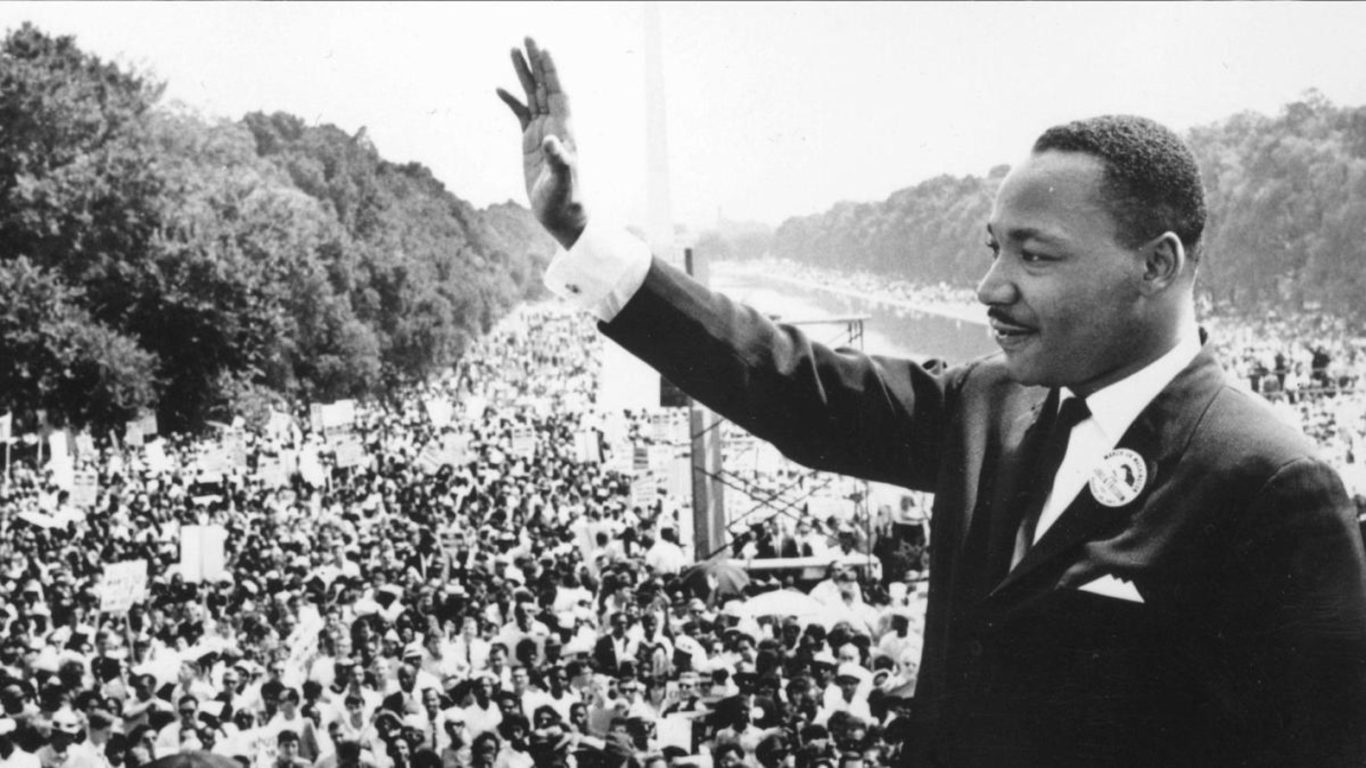
A Meditation on the “Great March on Washington” of August 28, 1963
Sermon Video:
Before I begin, I must thank Rev Gail Wright and her son, Peter Wright, for stepping in at the last minute once they knew of my need to isolate due to COVID exposure.
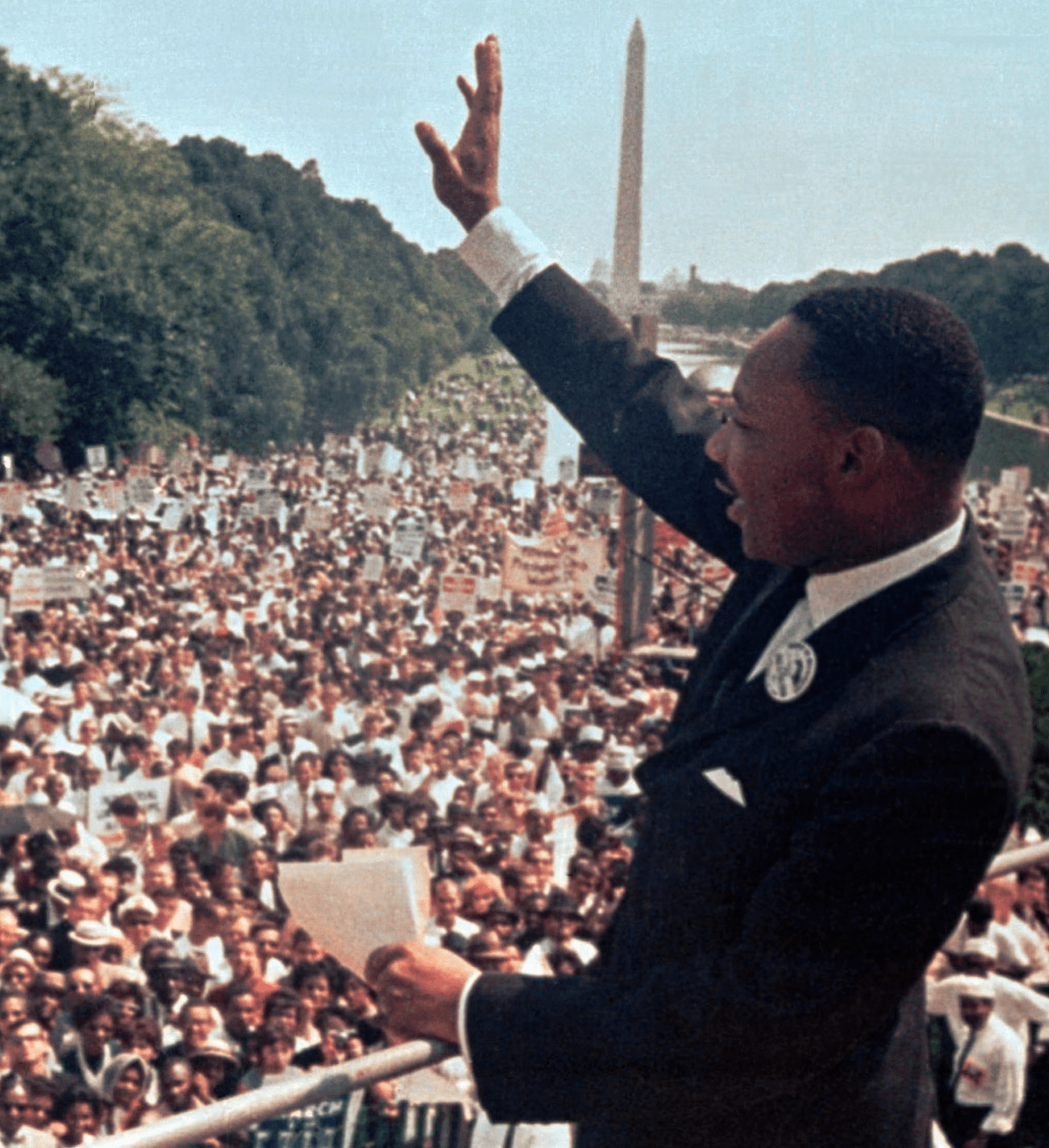
I particularly wish to thank the Rev. Sarah Hubbell: Last week, while describing my struggles and thoughts as I prepared for this service, I mentioned that I’d found the materials my Father had saved from his witnessing of Dr. Martin Luther King’s “I Have a Dream” speech at the finale of the Great March on Washington DC on August 28, 1963.
She pointed out that this month is the 60th Anniversary of that event. So, now you know how the theme of today’s service came about. The music, hymns, scripture readings, and sermon are all connected with the events of that day.
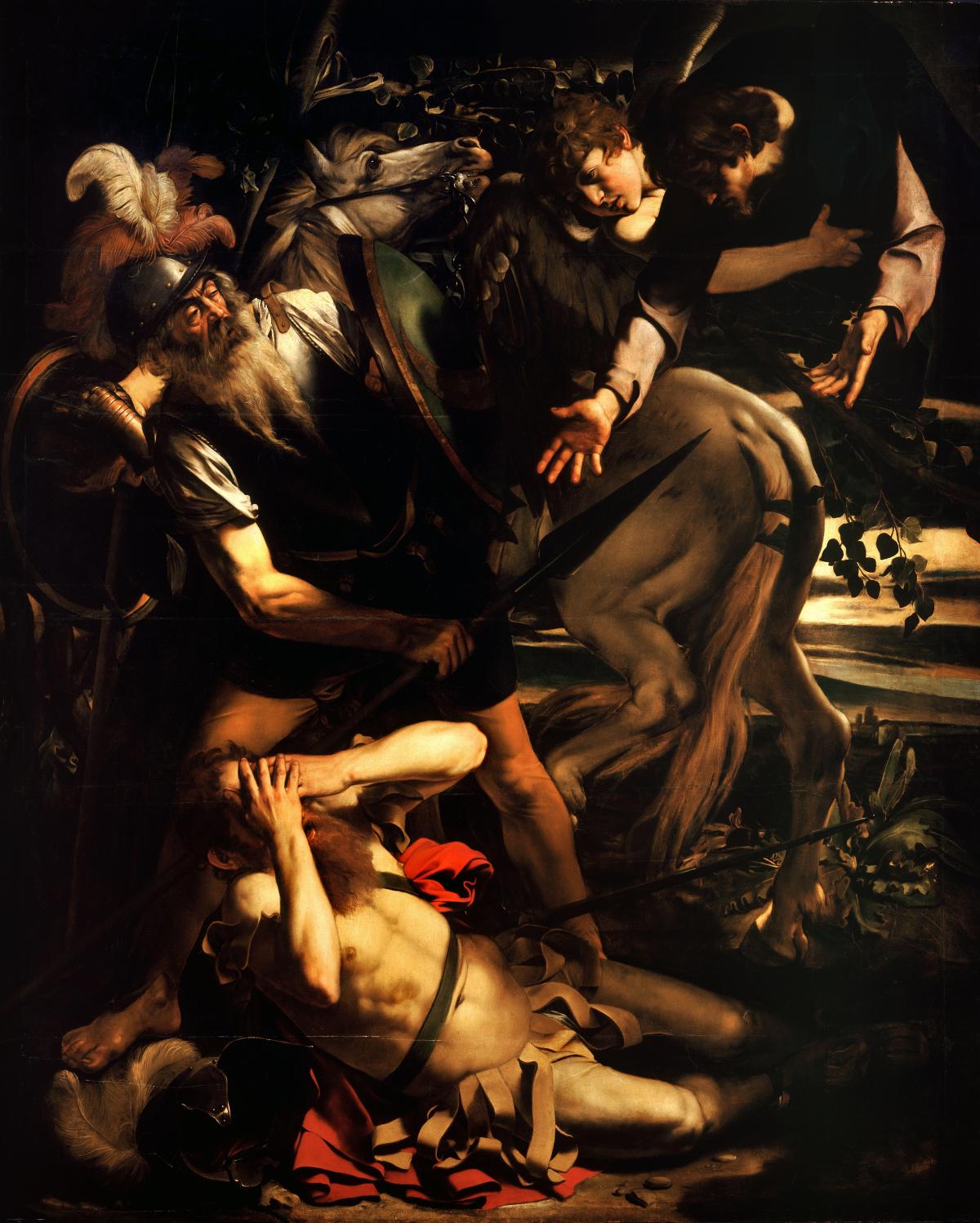
Paul’s Epistle to the Romans is a dense and complex text. We will examine just one thread of the many he surfaces in this morning’s reading…
Please join me in prayer… … Lord God, may your peace and Holy Spirit fill this place. Open your scriptures to us, and may I clearly communicate what you intend us to receive. May your Word take root and flourish within each and every one of us, and through it may we be strengthened and transformed by your unconditional, living, and limitless love for each and every one of your children. In Jesus Name, Amen.
The world is a dismal, frightening, imperfect place; and we’re tired. It isn’t like it was in the “Good Old Days.” (On the other hand, even the good old days were not like the Good Old Days.)
But seriously, we’re tired. Tired of one crisis after another. Tired of existential problems that never go away. Tired of our own endlessly repeating kaleidoscope of challenges and problems. We’re even tired of being tired.
The late Marcus Borg, a well known New Testament scholar and theologian, once wrote that American Indians would often begin a story by saying: “Now I’m not sure all of this happened this way, but I know it is all true.”
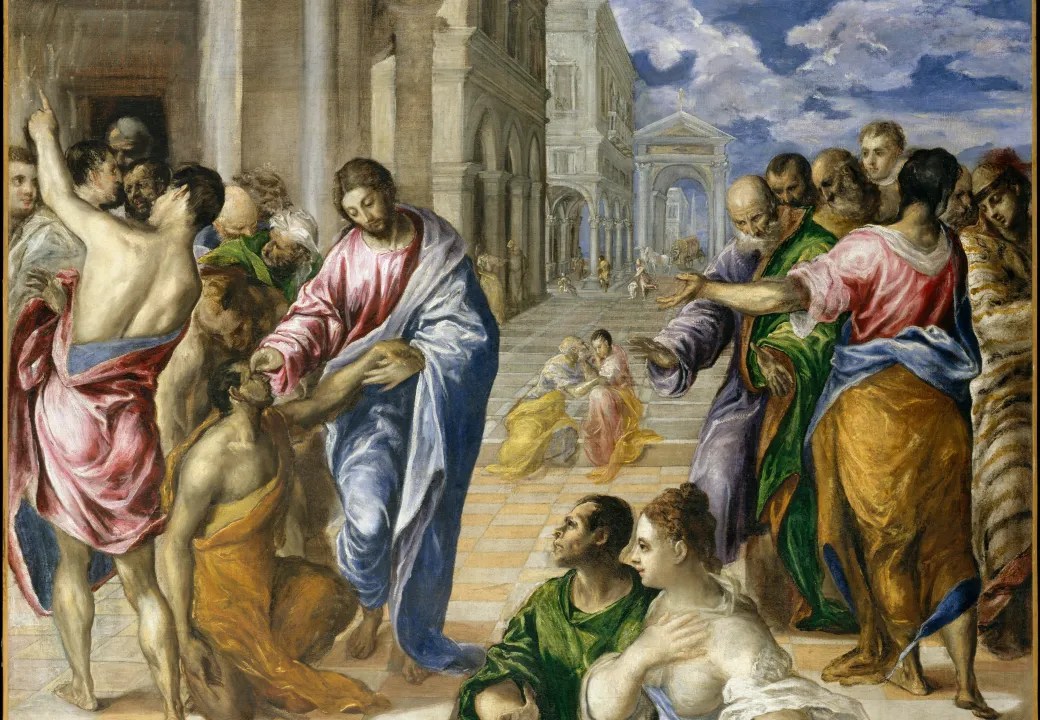
“The Story of the Man Born Blind” in the Gospel of John is the story of a community cast aside. They were thrown out: unseen, unheard, unwanted. They were rejected by those whom they loved; and who they thought loved them in return.
…a big part of why I am here is to hear those narratives. Our narratives – the stories we tell about ourselves – help us understand who we are, and help us communicate that understanding to others. The sharing of narratives helps bind individuals together as a family, or a tribe, or a political party, or a faith, or a nation. Narratives are the stories of how we came to be who we are, and where we are going. They are the collective memory of the group or groups that we identify with, the groups that help define our place in the world.
As I write this, I am sitting down to dinner here in my hotel room in Rabat. The sun is setting, and I hear through my open balcony door a Muezzin reciting the Adhan: the Islamic call to public prayer, at a nearby mosque.
Since I do not understand a word of Arabic (let alone the Moroccan Arabic dialect [Darija], or Moroccan Berber, or even French) the lyrics of the Adhan are a mystery, as are most of the conversations that have been going on around me today.
When I need help, I’ve been able to find English speakers fairly easily – which helps a lot while traveling alone – but I am definitely looking forward to joining my tour group in Marrakech tomorrow afternoon, when I can be certain there is always someone nearby who can communicate with the people of this beautiful land.
Even so, not speaking the language really limits me ability to hear the narratives, and so learn a bit about the lives and loves and concerns, of the people of Morocco.
A few days from now I will be embarking on a new journey.
No, I am not starting out on a new direction for my life. Nor am I doing anything earth shattering. Nor am I seeking to change the world. But, perhaps I am seeking to change myself.
This journey will be to Morocco. It will be a journey into the past, and into the present, and into the future.
I am undertaking this journey for two primary reasons, which are both equally important to me.
Lord God, Creator of all Space and of all Time, the God who is and who was and who ever shall be, the Great I Am: changeless and yet everchanging.
God of Faith, we are thankful for your presence here with us today: You are always at our side, always believing in us, even when we fail to believe in ourselves. You are always seeking to fill us with your peace and your strength and your love: helping us face the unending challenges of this world, weeping when we are hurting and broken, rejoicing to see us grow and prosper, helping us follow the path you intend for us as we journey through this life.
God of Hope, we gather here today, seeking refuge and rest; renewing our strength so that we may continue bringing your Gospel to a world that is not what it once was. It is a new season, and all is changing. We are tired, and we ourselves are not what we once were. We seek to better know who we are, and better know who you are, that we may know who our neighbor is, and so that we may learn how to love them for who they are, as they are.
God of Love, help us to never fear nor fail to embrace those who are other, even those who reject us. Help us love those who seem unlovable. Help us see them with your eyes. And, help us to love ourselves, for only with the love you have planted and are nurturing within us can we minister out of that love to our neighbors.
In the name of Jesus, whom you gave to this World out of your boundless love for all of your Creation, and your desire that all be healed, including us; Amen.
“…nothing we own, nothing we value, nothing we think we control in this life, will last. Once we are gone, we cannot enjoy any amount of wealth, cannot use anything we once had to return us into present life. We remain there forever – lost in that ocean of memory with none of the riches we once treasured. We will not even have control over our own memory: everything will be in the hands of those we leave behind.”
This weekend, of course, is Memorial Day weekend. It started as a sort of groundswell movement all over the North and South during and shortly after the Civil War: a day to place flowers on the graves of those who died in battle; a day to remember those we’d lost because of that war: It has grown to become a day of Remembrance for all who died in any of the wars our nation has fought.
Now I am not going to speak about the Civil War, or how it is still being fought today in so many ways, nor even about war in general. But, I think the themes of Memorial Day’s narrative are reflected in this morning’s scripture readings – the themes of loss, and of the Love of God; and how that shapes our relationships with others, and even within ourselves.
Every death, whether expected or understandable – such as from old age, or perhaps in battle; or not understandable – such as from COVID, or a shooting in a classroom; is a loss. The uniqueness of those who died, and all the richness and beauty and potential of their lives dies with them. They are lost from the present, never to return; living on only in our memories. But, human memory inevitably fades with time, and it vanishes entirely when those who knew that person pass on themselves. I visualize this as a sort of tide, a tide of memory slowly receding from the shores of the present. Yet, in reality it is the present that is advancing. We are leaving that tide behind.
I grieve even when those who have been a royal pain to me or to those I whom love pass away – although I’ll admit, perhaps I don’t grieve quite as much.
Even so, our lack of fond memories of them does not mean they were not loved by others, nor that they did not have value as human beings. If nothing else, they were loved and valued by God. And if God loves and values them, how can we not do the same? To me, the question seems to be not whether we should love those who are in our past, but how to do so in our present.
In my own encounters with abusive situations, I’ve come to a couple of hard-learned and sometimes painful but valuable conclusions. As a starting point, always give credence and respect to the claims of the party with less power
I’ve been thinking about the symbolism of clerical robes, such as this one I’m wearing this morning. The founders of Protestantism replaced showy liturgical vestments with this rather boring scholar’s robe because they wanted the focus to be on the teaching of the Word – not on what they saw as vanity and spectacle. They wanted their congregants to focus on the internals, not the externals, of our faith.
This emphasis on what is being preached vs who is doing the preaching (or what they looked like) is rooted in the early Church’s determination to not make an idol of the person of Christ. This is why we do not know what Jesus the human being looked like. Every image we have of him was created long after all who actually knew him were gone.
John makes this same point. He tells us Jesus said to Thomas: “Blessed are those who have not seen and yet believe.” Everyone in that room believed because they saw Jesus alive again, in person. But Jesus is warning them that his physical presence is actually an impediment to their ministry.
He said those who came after them would believe without seeing, and would be blessed. Jesus’ words, and the gift of the Holy Spirit that we receive through Him, are what matters – not his physical form.
This morning I’m also reflecting on John’s beautiful summation of Jesus’ entire ministry: “Peace be with you all.” …I also see it as the shortest complete sermon in the Christian Scriptures, so perhaps I should just stop right here.
From a jail cell in Birmingham in 1963, The Rev. Dr. Martin Luther King Jr. wrote that “whatever affects one directly affects all indirectly” and that we all must repent not merely for the hateful words and actions of some, but for our own silence.
The preacher wrote that human progress never rolls in on wheels of inevitability; but comes through the tireless efforts of those of us willing to be co-workers with God, and that without this hard work, time itself becomes an ally of the forces of stagnation and hate.
What to do when we find our Faith no longer matches up with the facts as we now know them?
For thousands of years people have found the bones of huge, weird animals – unlike any creature now on Earth – embedded in rock. They are often very lizard-like, sometimes even have wings. So, many of our ancestors believed they were dragons that lived in rock, and had perished in Noah’s flood.
A certain kind of these remains are easy to find, often eroding out of shale cliffs near seashores. People thought they looked like a tongue, and so once called these fossils “Dragon’s Tongues.”
Going forward from here, the question is not what can our leaders do for us, but what we, as people of Faith, must do to heal our country and our world.
Many of us who are Democrats or Liberals are angry and/or despondent at the failure of the Second Impeachment attempt of our ex-president.
Consider that in voting to acquit the ex-president the GOP has refused to join with America as a whole to deal with the problem. He is now their problem, and theirs alone.
It will be telling to see how – or if – they attempt to deal with his blatantly criminal behavior and failure to uphold his oath of office (among other things); and whether the internal strife his failed presidency has engendered within their ranks will rip the party apart, or transform it into an unapologetically racist and even violent movement.
But the Democrats are not blameless in all of this…