Sermon: Changing the Story

The widow in this morning’s reading from Luke 21 gave those two coins not because it made a speck of difference to the temple. Not because anyone there cared for her – no one did. She gave those coins in spite of the temple and all it stood for, not because of it.

(A Meditation on the Story of the Widow’s Mite)

I recently learned that many who watch sermon videos online watch the introduction, then skip to the end for the conclusion. … (I’m sure no one here does that!) … But it’s understandable. I mean, everyone has too much to do and not enough time to do it in.  So, why not just skip all that stuff in the middle …  get done quicker?

In conclusion…

Well, before I get to the conclusion, I’d really like to talk a bit about this morning’s readings. The story of the Widow’s Mite teaches us that God honors faithful gifts, no matter how small, no matter what they are, no matter what size they are. It’s the size of the faith that matters, not the size of the gift. 

Another point we sometimes overlook is that the Widow’s two tiny coins mark the end of her life. She had almost nothing left to give; but she gave anyway. After that, there was nothing left not even her life. Her journey had reached its conclusion.

This story also marks the closing of Jesus’ ministry. He never taught in public again. He had given everything he could. He also had nothing left to give except his life. They were both done, both at the end of their journey, both ready for the next step. And, they both knew it.

And yes, these are important lessons. But Luke is teaching us about more than just this. He shows us that all that we have, all that we can give, already belongs to God. He teaches that we are called to bless and support others with what God has blessed us with.

We’ve all heard that lesson many times, it can be found everywhere in the Scriptures. Our willingness and motivation for giving is what matters. It’s not about how much treasure we give, or even whether anyone notices.

Luke speaks of the magnificence of the temple. But, it is the widow’s action, done in good faith, that matters – not the temple.

Continue reading “Sermon: Changing the Story”
Sermon: “The Ocean of Memory”

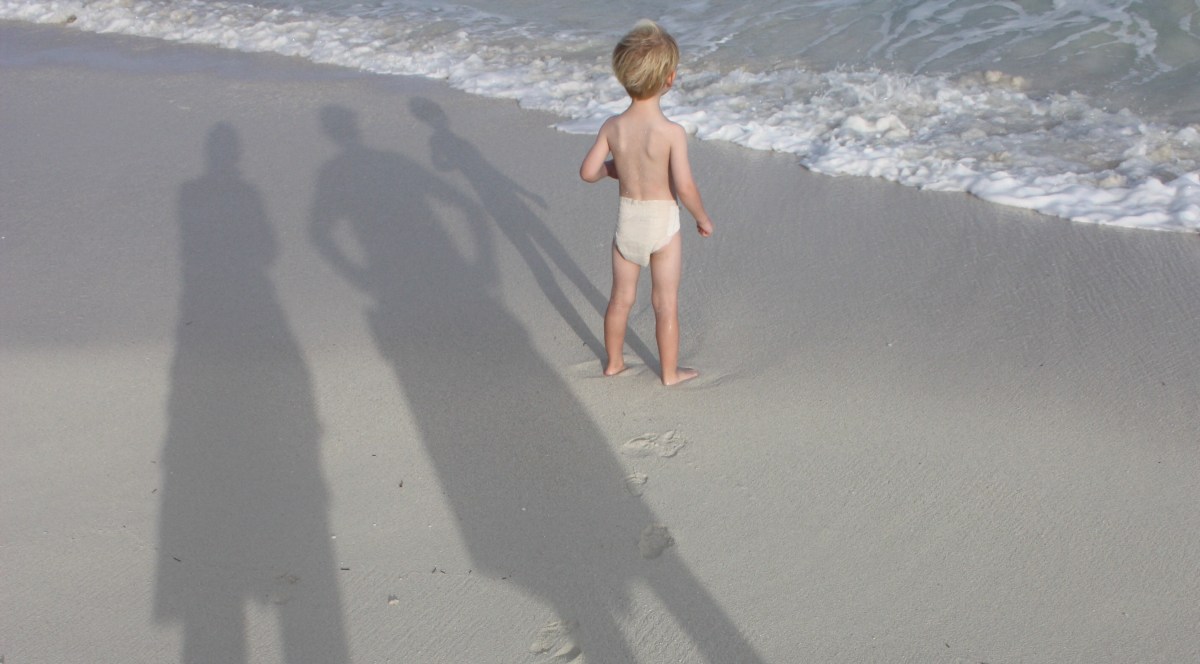
“…nothing we own, nothing we value, nothing we think we control in this life, will last.  Once we are gone, we cannot enjoy any amount of wealth, cannot use anything we once had to return us into present life.  We remain there forever – lost in that ocean of memory with none of the riches we once treasured.  We will not even have control over our own memory: everything will be in the hands of those we leave behind.”

This weekend, of course, is Memorial Day weekend.  It started as a sort of groundswell movement all over the North and South during and shortly after the Civil War: a day to place flowers on the graves of those who died in battle; a day to remember those we’d lost because of that war: It has grown to become a day of Remembrance for all who died in any of the wars our nation has fought.

Now I am not going to speak about the Civil War, or how it is still being fought today in so many ways, nor even about war in general.  But, I think the themes of Memorial Day’s narrative are reflected in this morning’s scripture readings – the themes of loss, and of the Love of God; and how that shapes our relationships with others, and even within ourselves.

Every death, whether expected or understandable – such as from old age, or perhaps in battle; or not understandable – such as from COVID, or a shooting in a classroom; is a loss.  The uniqueness of those who died, and all the richness and beauty and potential of their lives dies with them.  They are lost from the present, never to return; living on only in our memories.  But, human memory inevitably fades with time, and it vanishes entirely when those who knew that person pass on themselves.  I visualize this as a sort of tide, a tide of memory slowly receding from the shores of the present.  Yet, in reality it is the present that is advancing.  We are leaving that tide behind.

I grieve even when those who have been a royal pain to me or to those I whom love pass away – although I’ll admit, perhaps I don’t grieve quite as much. 

Even so, our lack of fond memories of them does not mean they were not loved by others, nor that they did not have value as human beings.  If nothing else, they were loved and valued by God.  And if God loves and values them, how can we not do the same?  To me, the question seems to be not whether we should love those who are in our past, but how to do so in our present.

Continue reading “Sermon: “The Ocean of Memory””