
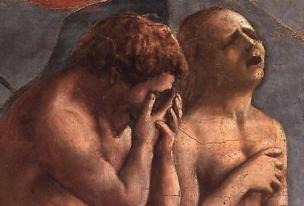
Did you know that the word “Lent” comes from an ancient Germanic word that means “To Lengthen”? (Lenten -> Lengthen) It was originally used as a term for the season of Spring– referring to the lengthening days of the season.
Lent is not mentioned at all in the Bible. So, it is not really “Biblical” in the strictest sense. Which is why many Protestants, such as the Puritans and their descendants (including us) did not observe it until just the last few decades.
And yet, Lent is deeply rooted in the Bible. Its 40 day duration is very deliberate, consistent with how the number 40 is used throughout the Bible. (Well actually, Lent is 46 days long, if you count Sundays. But, Sundays are already devoted to our relationship with God. So, Lent is about finding God is in the rest of our week as well!)
In the Hebrew Scriptures, we read of the 40 days and nights it rained during Noah’s great flood, cleansing the Earth. We are told Moses spent 40 days and nights on Mt Sinai, seeking God’s will and direction for his people. We know the Jews wandered for 40 years in the desert to free themselves from the presumption that they knew better than God. And, Elijah spent 40 days wandering in the desert before reaching that little cave on Mt Horeb where he encountered God. In this morning’s story from Matthew, Jesus fasts and prays in the desert for 40 days before his encounter with the Tempter.
In the Bible, the number 40 is used to represent times of contemplation, judgment and preparation. Its metaphorical significance thought to originate in the 40 weeks of a human pregnancy. And this is why the 40 days of Lent are devoted to fasting, to meditation and to other acts denying us of things we are used-to. It’s devoted to transformation. Lent breaks us out of our normal routines. By doing so, by breaking away from our normal lives, we open ourselves to God’s Word and the working of the Holy Spirit within us.
So, Lent was a very intentional creation by the Early Church. It is intended to help us to examine ourselves, and our relationship with God. It is meant to give us the space and time we need to discern what is really important in our lives, and in our faith. Lent challenges us to grow.
 One point I was hoping to make with the
  Our reading from Matthew chapter 4 this morning tells us how Jesus called his first four disciples – all fishermen; saying to them, “Follow Me.”
 A couple of weeks ago I woke up to find snow covering the ground outside our bedroom window. But there were warmer temperatures in the day’s forecast, I was concerned we’d soon have a thick layer of slush outside. And frankly, my snowblower is not terribly useful in slush! So I hopped right out of bed, taking care that my sleeping sweetheart, who’d been up a lot the previous night, was undisturbed, and ran to the front door.
 NB: The sermon was preceded by this
  It’s at just about this point in every election cycle, especially this one, that I realize the entire world is mad and doomed to certain destruction and that there’s nothing I can do about it: Frustration, Anger! How can supporters of that other candidate be so stupid?!? Can’t everyone see that it will be Armageddon if the other party wins on November 8th???
 Ten years ago today, a troubled man barricaded himself inside a small schoolhouse in West Nickel Mines, PA. He killed five children and severely injured five others, then killed himself. Afterwards, the grieving Amish community responded to their horrific losses in a surprising way. This morning we’ll reflect on their response, in light of today’s Lectionary reading. We’ll begin by listening to an interview of the killer’s mother,
 The world is a dismal, frightening place: Droughts, Hurricanes, Floods, Fires, Earthquakes, Wars, Riots, Terrorism, Pollution, Global Warming, Shootings, Plagues, Cancer, Death, … Politics.
