“…whether Women or Blacks or Jews or Japanese or Gays or Muslims or Hispanics or Native Americans are human is not the issue. They are, obviously. The real question is: are we?”
One point I was hoping to make with the “Hope” video I was going to show at the beginning of today’s service was that the “Women’s Marches” around the country on the day after the inauguration were not “Protests.”
Now, a “Protest” is where you stand against something – some event or social ill or person. And, certainly this was an impetus to the creation and organization of those demonstrations; but to “Protest” is not what I saw when I was there: it was not why millions of us came together.
We came to be with each other! We knew it was important to show through our physical presence, that we will support those who are being marginalized. We came because we care. We came because we will no longer stand by while our neighbors are being silenced and oppressed. We gathered together out of love, not out of hate.
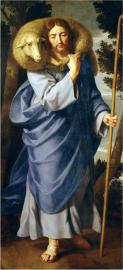
Our reading from Matthew chapter 4 this morning tells us how Jesus called his first four disciples – all fishermen; saying to them, “Follow Me.”
This puzzles me, because the first chapter of Matthew tells us that Jesus will be called “Emmanuel” – “God with us.” This speaks to how we see God as always right here, alongside us. Through Jesus-Emmanuel, we know God experiences what we experience. God feels what we feel. God knows birth and death just as we are born, and will someday die. “Emmanuel” is a statement of our equality before God. We are one of the many children of God standing alongside the first child of God, Jesus Christ.
So, how can the same Gospel teach that we are following behind Jesus (as the disciples were and at the same time walking with Jesus, our sibling, at the same time? Is Jesus our leader or our companion?
Now, how some interpret the idea that we “follow” Jesus troubles me. “Following Jesus” does not mean that we are desperately clutching at the hem of his robe to be dragged into Paradise. “Following Jesus” does not mean that we must adhere to some very specific interpretation of God’s Word or risk eternal damnation. “Following Jesus” does not mean we check our brains, or our hearts, at the door.
On the other hand, some people go a bit too far with the idea of Jesus as a companion. Yes, Jesus is Emmanuel, “God with us.” But, this does not mean that Jesus goes everywhere that we want to go. Jesus is our companion. But companions walk together. They support each other.
We do not slavishly follow Christ. But then again, we cannot expect Christ to follow us just because we want him to! And yet many, Fundamentalists and Progressives alike, believe exactly that: justifying their own particular perspectives as the only one that is blessed by God. (Well, except atheists, who just want you to believe their particular perspective!) Many go further, claiming we’ll be blessed only if we have enough faith in what they believe. Really?
Our faith is not a static set of rules, nor is it a deep understanding of tradition and scripture. Our faith is a constantly evolving and ever deepening and broadening dialog between our selves, our neighbors, and our God.
A couple of weeks ago I woke up to find snow covering the ground outside our bedroom window. But there were warmer temperatures in the day’s forecast, I was concerned we’d soon have a thick layer of slush outside. And frankly, my snowblower is not terribly useful in slush! So I hopped right out of bed, taking care that my sleeping sweetheart, who’d been up a lot the previous night, was undisturbed, and ran to the front door.
I stepped out to see what I had to deal with. Hmm: still pretty cold. So, I was pretty sure I had time for some coffee. As I turned around, I saw that the inner door had swung almost shut, but I knew it wouldn’t latch on its own. So, I pulled open the storm door to go back in and … “click.”
It was not quite 6:00am in the morning. It was 28 degrees outside. It was dark. I’m wearing only socks, sweat bottoms, and a T-Shirt.
Our image of God needed to change. In fact, God needed to change. God’s love could not live in a perfect place that was inaccessible to us. For God’s love to be real and meaningful, … God had to become human. God had to become one of us.
“The Family” by John D. Batten (1886)
The Gospels tell us a lot of things about what Mary must have gone through because of her pregnancy. She left town and stayed with her Cousin Elizabeth for months, probably to escape public shaming for being an unwed mother. Matthew tells us that Joseph could have abandoned her, but didn’t.
And, shortly before Jesus’ birth, Mary and Joseph had to take a long trip. Mary, at full term, bounced up and down on that (d****d!) donkey all the way from Nazareth to Bethlehem. They hoped their poverty would discourage robbers. And when they get there, there is no room at the Inn, so they have to stay in a stable.
Then, after the birth, Herod wants to kill them! They had to flee into exile. They became refugees. Once it is safe to return, they settle in Nazareth. But, it is a hard life: many there believed Mary had been unfaithful. And, because of that “sin,” Mary and her son were not looked-on kindly or with compassion; and we see hints of that throughout the Gospels.
Joseph is said to have been a Carpenter, but a more correct term might be “Day Laborer.” He probably walked several miles every morning from Nazareth in the hills down to Sepphoris, a city being built as the new capitol of Galilee at the time. Once there, he hung out at the local equivalent of Dunkin’ Donuts: hoping someone would hire him to haul rocks and lumber, or perhaps saw wood for the day. It was a hard life: exhausting, dangerous work; harsh overseers; long hours; terrible pay andno job security. …Not unlike the lives of many of our friends and neighbors here and now.
Joseph was a good man, and like so many people back then (and now) he did what he had to do to survive and provide for his family. His grim situation was common throughout Galilee at the time. Rich foreigners were moving in: confiscating farms; forcing families like the family of Joseph and Mary into poverty. Their fields became vineyards. The people were being taxed beyond reason. Huge villas were being built on those country estates, their absentee owners were living in luxury in cities like Sepphoris, which were built on the backs of men such as Joseph.
There was no hope for the future. Rome and its vassals controlled Judea and Galilee; and the Jews, especially the people in the countryside, starved and suffered. Life for the poor was short, and painful, and brutal.
What does this have to do with Christmas? The Bible teaches us that Christ’s birth marks the moment when God manifested among us; becoming Emmanuel, “God with us,” walking the earth alongside us. It began there in Galilee among the poor and dispossessed. God became fully human; but was still, and at the same time, fully divine.
What does this mean for us now, in this world where nothing seems to be going right? We too are constantly battling to survive, and grieving our losses. We fight for a good life. Yet, no matter what we do, we know it will end in death: the death of those dear to us, the death of everything that matters to us, and ultimately our own death. How can we possibly be joyful when the end of our story is already known, and inescapable, and depressing, and futile? Why is it important that God became a human being?
The other day, while pondering this and sharing my thoughts with others, someone asked me “Why is it so important that God was not human [to begin with]?”
Would God’s love for us have any meaning or value if God did not expect something of us in return? The death of Christ on the Cross is proof that Love does not come cheap. So, while the Love of God is freely given to all, there is a price to accepting it. And, that price is Repentance.
There are lots of wonderful old traditions we celebrate this time year: the annual church rummage sale. The men’s pancake breakfast. The live nativity scenes. Going Caroling. Maybe in some churches the youth group sets up a tree in the sanctuary; and the younger children make ornaments to hang on them. Perhaps we have an “Angel Tree” or a box to donate gifts for those who would not otherwise have a Christmas at all. And then there’s my personal favorite: all those Christmas cookies!
These are all beautiful and very worthwhile traditions; they express who we are and what is important to us. And, many if not most of them are centered on Christ’s call to take of each other and take care of those in need. This is a good thing. But, such traditions, as wonderful and good and appropriate to Christmas as they are, are not what Advent is about.
Advent is about who we are about to become, not about who we are now. Advent is about preparing for the gift of God: the Christ Child who is not yet here. It is a call to prepare for what is about to happen.
So, what is Repentance? And, why is it a theme of this, our Second Sunday of Advent? I’d like to begin by exploring what Repentance isn’t.
Christ calls us to see the unseen, and right now the unseen include many who are rejecting the wisdom that we hold dear. They reject it because they see nothing in it for them, and nothing in it that respects who they are or what they need. And, until that changes, nothing we do will have a lasting impact, no matter how well intentioned we are. …And that’s a hard truth to face.
I’m starting today’s message with a slideshow. Each and every quote and image you’ll be seeing in these slides was said or written by someone I know well, or by a friend of someone I know well; and many of the locations shown in these slides (except for the very last one) are probably places you know of and may well have been to, or at least near… So, these are all people and locations with a relatively close connection to me.
These quotes and images demonstrate how this election has caused fear to overwhelm so many people that we know. This is not a criticism of whoever ran. It is trying to help us understand that there are a lot of scared and hurting people out there. People close to us, living in places close to us. I’m hoping they help us see how these reports of terror, bullying, and oppression are not just something from a newscast about a distant place, but are happening to our neighbors and friends and relatives right here, and right now.
I am confident that no matter how this election turns out, God’s plan will not die. The world was created by God as an act of Love. That love is still here, in everything, in us, in our neighbor. All we are called to do is to let God’s Love work as it should, though us. Because, that is what is at the core of who we really are, deeper than any Tradition.
Last week we observed All Saints Day – a day to remember and honor all those who came before us, particularly those whom we have loved, and who loved us, during their journey here on earth. I know that Sharon also mentioned it was Reformation Sunday: the anniversary of that day 499 years ago, when Martin Luther nailed his list of 95 Theses to the door of All Saints Church in Wittenberg, Germany.
And this morning, we heard the theme song from the Fiddler on the Roof, a musical that portrays the challenges of maintaining one’s faith, traditions and identity in the face of change and loss.
So you ask – how do all these tie-in with our scripture reading(s) this morning?
To begin with, our traditions are central to how we express who we are. They are an essential part of our identities as individuals and as a people. As Tevye said in the film clip: Tradition helps us know who we are and what God wants for us.
But, what he learns over the course of his story is that Tradition and Faith are not synonymous. Tradition expresses the truths of our Faith, but those expressions must change as the world changes, and as our understanding of God’s teachings and plans for us deepen and grow.
Tradition. A symbolic act that defines what it means to be us, or express what is an essential part of who we are, or what is important to us. Like: singing the Star Spangled Banner at a ballgame; or helping run the annual church fair; making cookies at Christmas, or celebrating the Holidays each year with our extended family. The rituals of Communion, Baptism, and Weddings are filled with all sorts of traditions – something borrowed, something blue, something old, something new.
Changing our traditions means changing our perceptions of who we really are, and what is important to us. This is a problem we constantly face as we change and grow. We are constantly having to ask ourselves how to remain true to who we are and what is important to us as the world around us changes.
It’s at just about this point in every election cycle, especially this one, that I realize the entire world is mad and doomed to certain destruction and that there’s nothing I can do about it: Frustration, Anger! How can supporters of that other candidate be so stupid?!? Can’t everyone see that it will be Armageddon if the other party wins on November 8th???
And I don’t think I’m alone on this; no matter whether our favorite color is Red, or Blue; or even Yellow or Green.
Quick verbal assurances of healing and redemption and glory in the afterlife – “they’re in a better place” – are bull. Offering cheap grace doesn’t fix the problem, it only deepens the grief of the very people we need to help.
Ten years ago today, a troubled man barricaded himself inside a small schoolhouse in West Nickel Mines, PA. He killed five children and severely injured five others, then killed himself. Afterwards, the grieving Amish community responded to their horrific losses in a surprising way. This morning we’ll reflect on their response, in light of today’s Lectionary reading. We’ll begin by listening to an interview of the killer’s mother, Terri Roberts, as heard on NPR’s “Morning Edition” this past week.
“I will never forget the devastation caused by my son” she said. The devastation inflicted upon the Amish, upon the Roberts family and their entire community. It wasn’t just the loss of loved and innocent lives, but the loss of innocence, the loss of the identity they thought they had. Their rural existence, isolated from the tumult and pains of the outside world, was replaced with the isolation of their grief.
On that day, Terri Roberts, the ordinary mother of an ordinary man, living an ordinary life, in an ordinary little town, became the mother of a mass murderer. She later wrote “I was – always will be – his mother. Surely if anyone could spot signs of trouble it would be the woman who gave birth to him.” But she didn’t, no one did.
We see these same emotions: guilt, grief, unresolved and unresolvable questions, in this morning’s reading. The surviving Jews in Psalm 137 are exiles in Babylon: strangers in a strange land. Their homes and their stable and prosperous lives are gone forever.
Why were they spared when so many of their friends and family died? Their city and nation are destroyed. Their identity is gone. Even their God is gone. The Temple that connected them to their Creator and Protector is in ruins.
Evil is sneaky. It rarely announces itself at the door. It sneaks into our lives through the pain and the loss we all encounter every day. Grief is not to be minimized or ignored. It is a valid emotion. Essential, in fact: because all things have an opposite. For light, there is dark. For wealth there is poverty. For evil there is good. For loneliness there is companionship. We cannot really know one until we know the other.
Our world is always changing, and yet we hang on to our old traditions and ways of seeing and doing things. We just sort of muddle along: usually (but not always) aware of these changes happening all around us. It often takes a crisis for us to fully appreciate how things have changed: that the old ways no longer work; that we must adapt.
The restored 4th Century Synagogue at Capernaum, built on the foundations of the Centurion’s Synagogue
As you may know, my father was a Minister, too. And, it’s both humbling and surprising to find myself standing here nearly 60 years after he entered Seminary, a Minister myself. It was not a career I had any wish or plan to pursue – ever!
But, things change…
Some of my earliest memories are of my Father leading a worship service. I particularly remember his voice booming out over the congregation as we sang hymns. But, I have no memory of this from when I was older!
When I asked him about this a few years ago, he told me the following story. You see, he was called to the church (that I first remember him in) when I was about 3. On Sundays, he’d sing from the pulpit as he’d always done in his other churches. But, in this new church something was different, something that he did not realize mattered.
His previous churches had no audio system. So, singing from the pulpit had never been an issue, he’d never thought about it. And, he didn’t think about it in the new Church either, because the speakers pointed towards the congregation, not towards him. He didn’t hear what everyone else heard.
As a three year old, I had no idea that hearing the preacher sing so LOUDLY was not normal. To me, that was just the way things were, and should be. My perspective was never challenged until that moment in my late 40’s when my Father told me how “Pony” Felch, the church moderator, took him aside one day. Then, in his wonderful old Vermont twang he said, “You know Reverend, we really appreciate your singing. But, the next time you sing a hymn from the pulpit, take a step or two back!”
You can’t rescue someone who doesn’t think they’re lost. We try to rescue them from their ignorance, but they keep on prancing along as they always have, oblivious to our good intentions. They see us as a bunch of obstructive, dense “know it alls” who really know nothing. They’re right, because we’re ignoring the anger, despair and hopelessness that drives their anger and frustration; and don’t forget, we’re just as lost as they are.
The world is a dismal, frightening place: Droughts, Hurricanes, Floods, Fires, Earthquakes, Wars, Riots, Terrorism, Pollution, Global Warming, Shootings, Plagues, Cancer, Death, … Politics.
We’re tired: one crisis after another; never ending. We learn that another old friend died – months ago – and we never knew. Yet another ridiculous posting from that clueless idiot on Facebook. And, that politician or radio pundit said something outrageous – again!
And, we just got sick again, or the kid got sent to the Emergency Room, or maybe we were “downsized.” No job, no income, huge bills; and so we ask ourselves, “What now? Become a greeter at Walmart?”
Maybe … maybe we should just get angry. Lash out at the people that are the source of our problems. Maybe post a really nasty to the point Facebook meme. (That’ll show ‘em!) Or, smash a few store windows. Throw a Molotov cocktail or two. Vote for Trump, or Bernie, or Jill Stein, – but certainly not the establishment candidate!
But to ignite anger requires fuel that burns well and with intensity. It requires someone or something to blame. It requires a simple solution to fire the imagination, to focus our energies, to be the target of our anger, and our hate, and our fear.
We don’t want to be lost, anymore. We don’t want to be alone, anymore. We don’t want to live in this world of uncertainty and hopelessness and despair any more. It’s been too damn long. Doing the right thing hasn’t worked. We paid our dues, and now more than we can bear, or afford, is being demanded of us, again. Time to lash out.
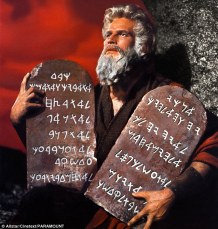
There has been a debate since at least the time of the Judges in Israel, more than three thousand years ago, as to where we should draw the line between Communal Faith and Personal Faith: Should our personal faith and practices take precedence? Or, should they be subservient to those of the community of which we are a part?
This morning’s reading from Luke is part of a sequence of parables that all have to do with how to live a life that reflects one’s devotion to the Torah; or, in other words, how to live faithfully.
At beginning of Luke 13 we read of Pilate murdering Jews at sacrifice and the deaths of others at the collapse of the Tower of Siloam; and the people ask “What sin did those who died need to repent of?” Jesus responds by teaching that we are not called to worry about others’ sins, just our own: and that repentance is an ongoing process, not a one-time event.
The remainder of this chapter contains the Parable of Mustard Seed, among other parables, in which we learn that the seeds of the Kingdom of God are all around us: hidden, but ready to spring forth in a wonderful way without warning, and that we cannot stop it.
All of these stories and parables are used here to show us how to live a faithful life – one that is conforms to the faith traditions, laws and customs of the community, or the Torah, which is far more than merely the Law. But, this morning’s story about the crippled woman, in the middle of this chapter, is unique in the Gospels, and presents a different lesson. …So, why is it here, in between these other two sequences of stories?
But first, let’s talk about Sabbath.
The Sabbath is a day of “Rest” although it’s hard to get agreement on what a “Sabbath Rest” actually is. All would agree that it is more than merely a day to not work. It is a break in the rhythm of our week, intended to get our minds and spirits off of the drudgery and challenges of life that we face each and every day. Sabbath is meant to give us room to reorient ourselves, to focus on what is really important rather than on what keeps us busy.
Many through the centuries have tried to enforce “Sabbath” practices through the law and stern teaching. The Puritans did so: forbidding all “nonreligious” activity on the Lord’s Day. Meals had to be prepared the day before; only the Bible and other religious texts could be read; and games and sports were banned.
The problem with this approach is that it enforces the appearance of Sabbath without necessarily making room for what is at its heart; and so for many, the Sabbath is a day of dread. Those who impose such rules, often even on those who are not of the same faith, are resented and sometimes even feared. Legalism supplants Grace; oppression overwhelms joy.
And, this is not just some long-ago quirk of our ancestors. Some of us may have ovens with a “Sabbath” setting, included so that observant Jews can have a hot meal without having to do the work of cooking on the Sabbath – it cooks itself. And, how many of us have been given a guilt trip at one time or another for not attending church on Sunday? Or worse yet, for going to a sports game, or even one of those godless rock concerts, instead?

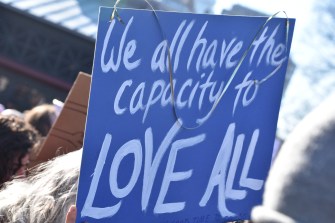 One point I was hoping to make with the “Hope” video I was going to show at the beginning of today’s service was that the “Women’s Marches” around the country on the day after the inauguration were not “Protests.”
 Our reading from Matthew chapter 4 this morning tells us how Jesus called his first four disciples – all fishermen; saying to them, “Follow Me.”
 A couple of weeks ago I woke up to find snow covering the ground outside our bedroom window. But there were warmer temperatures in the day’s forecast, I was concerned we’d soon have a thick layer of slush outside. And frankly, my snowblower is not terribly useful in slush! So I hopped right out of bed, taking care that my sleeping sweetheart, who’d been up a lot the previous night, was undisturbed, and ran to the front door.
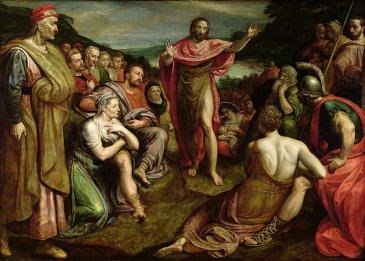
 NB: The sermon was preceded by this
 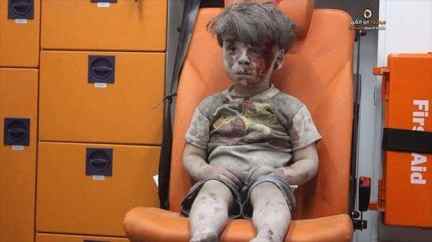 It’s at just about this point in every election cycle, especially this one, that I realize the entire world is mad and doomed to certain destruction and that there’s nothing I can do about it: Frustration, Anger! How can supporters of that other candidate be so stupid?!? Can’t everyone see that it will be Armageddon if the other party wins on November 8th???
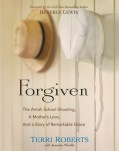 Ten years ago today, a troubled man barricaded himself inside a small schoolhouse in West Nickel Mines, PA. He killed five children and severely injured five others, then killed himself. Afterwards, the grieving Amish community responded to their horrific losses in a surprising way. This morning we’ll reflect on their response, in light of today’s Lectionary reading. We’ll begin by listening to an interview of the killer’s mother,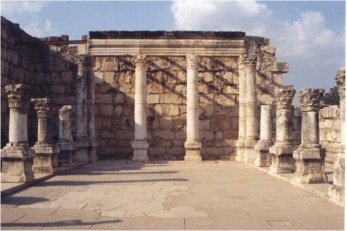
 The world is a dismal, frightening place: Droughts, Hurricanes, Floods, Fires, Earthquakes, Wars, Riots, Terrorism, Pollution, Global Warming, Shootings, Plagues, Cancer, Death, … Politics.
 This morning’s reading from Luke is part of a sequence of parables that all have to do with how to live a life that reflects one’s devotion to the Torah; or, in other words, how to live faithfully.
 The Here and the Hereafter