Sermon: A Mighty River

We’re all in this together, which is a good thing. We all have a stake in the outcome, which means we all have a role in the solution; and there is a solution.  Amos teaches that God’s plan is for us to work together: caring for the poor, the hungry, the destitute, and the land; looking for the good, and rejecting the evil.

Amos and Dr. Martin Luther King present salvation in a way we don’t normally think about  … for them salvation is communal, not individual.  We cannot achieve salvation for ourselves if we allow our community, our nation, and its people, and our world, to suffer and die.

Please join me in prayer.  Lord God, may your peace and Holy Spirit fill this place. Open your scriptures to us, and may I clearly communicate that which you intend us to receive. May your Word take root and flourish within each and every one of us. And through it may we be strengthened and transformed by your unconditional, living, and limitless love for all of your Creation.

In Jesus Name, Amen.

The other day, my son and I saw a truck driving on Route 2. It was what is known as a stake body truck (I had to look that one up!): it has a flat bed with metal rails on each side, mounted on stakes.  It had a tailgate on the back, which is little unusual.  It was very old and had seen hard use: battered, bald tires. It was driven by an equally ancient man.  (As my son would say, he was even older than I am.)  The truck was filled with what looked to me like a huge pile of random tools, equipment, mysterious bags and boxes.

The bed of the truck tilted to one side at an alarming angle.  The broken tailgate was held on by a single ancient strap fastened across the back, tied to the rails on each side – which was a good thing because otherwise they would have collapsed into the road.

The driver had trouble keeping his truck in the lane.  I shudder to think of what would have happened in a sudden stop.  I could not believe he dared to drive it, let alone at highway speeds.  What was so important that he felt such a risk with all of his mysterious cargo was worth it?

Continue reading “Sermon: A Mighty River”

Sermon: Knowledge, Faith, and Love

Solomon is certain he has built a place worthy of being God’s dwelling place forever.  … Forever is a long time: building a permanent dwelling place for God strikes me as an attempt to create boundaries for God that work for us, but perhaps not for God.  God’s former home was that tent made out of cloth, and skins, not stone.  It was not a permanent dwelling.  And so I think of that tent as representing how our Faith is a journey, not an endpoint; a path we must walk.  We might stop occasionally to dwell for a time, but we always move on.  A tent is not a monument.

Lord God, may your peace and Holy Spirit fill this place. Open your scripture to us, and may I clearly communicate that which you intend us to receive. May your Word take root and flourish within each and every one of us; and through it may we be strengthened and transformed by your unconditional, living, and limitless love for us and all of your Creation. 

In Jesus Name, Amen.

Tom texted me yesterday and asked if I would fill in for him this morning.  I immediately said yes, certain I had a sermon somewhere in my archive that would provide a good starting point for a meditation on this morning’s scripture.  Oops.  It took a lot more work than I thought; which is probably a good thing, actually: because if it wasn’t a journey to write this sermon and prepare for this service, then it probably wasn’t worth doing.

This morning’s reading is about Israel redefining its relationship with God in the time of Solomon the Wise.  The old tent that long housed the Ark of the Covenant no longer seemed fitting to them, for their prosperous and peaceful Kingdom.  

At the end of our reading, Solomon is certain he has built a place worthy of being God’s dwelling place forever.  …Forever is a long time: building a permanent dwelling place for God strikes me as an attempt to create boundaries for God that work for us, but perhaps not for God.  God’s former home was that tent made out of cloth, and skins, not stone.  It was not a permanent dwelling.  And so I think of that tent as representing how our Faith is a journey, not an endpoint; a path we must walk.  We might stop occasionally to dwell for a time, but we always move on.  A tent is not a monument.

Also, for a while now, I’ve been pondering how Faith operates in and through us on our journey through life.

For example, we saw Faith at work last week here, at our Special Congregational Meeting  – a major stepping stone in a long period of our congregation evaluating what works, what doesn’t, what’s broken, and what needs to be replaced or rethought.  We were asked to commit ourselves to the next step in that journey in the form of a Capital Campaign, to prepare our church’s infrastructure for the future. 

That meeting, just like this worship service, and so many other things that we do – either individually or jointly – are all expressions of faith.

Continue reading “Sermon: Knowledge, Faith, and Love”

Sermon: Amos and the Good Samaritan

If you think about it, the Parable of the Good Samaritan is the prophecies of Amos told from the inside out. Instead of future catastrophe caused by a refusal to love God and our neighbors, the loss and suffering are already here: right in front of us. The man is a victim of those Amos condemned: those who do not love and who refuse to be held accountable.

Allen Vander Meulen, July 13, 2025
Video of the sermon, including scripture readings and the children’s message.

The themes this morning’s readings have in common are of Samaritans, strangers, loss, and restoration.

Northern Israel, where Amos prophesied, was known as Samaria.  The Samaritans of Jesus time (and even today) claim descent from those left behind in the devastated land after Samaria was conquered and most of its people exiled in about 720 BC.

In Jesus’ parable, the stranger is a Samaritan. In Amos, the stranger is Amos himself. Amos is the earliest of the 12 minor prophets. (“Minor” because their books are short, not because anyone thought them unimportant.) Amos is the model for prophetic ministry that all of his successors followed, including John the Baptist and Jesus.

Amos ministered in Samaria about 25 or 30 years before it was conquered, shortly after the first Olympics were held in Greece; and about the time legend says Rome was founded.

The Kingdoms of Samaria and Judah were both at the height of their power, wealth, and influence. Things were good – the borders were secure. People were getting rich. The land was at peace.

But Amos is a gloomy guy … don’t invite him to a party! He prophesied the unthinkable: that their glorious and wealthy Kingdom would be destroyed by the Assyrians.

Continue reading “Sermon: Amos and the Good Samaritan”

Sermon: What’s Missing?

Lord God, may your peace and Holy Spirit fill this place. Open your scriptures to us, and may I clearly communicate that which you intend us to receive. May your Word take root and flourish within each and every one of us. Through it may we be strengthened and transformed by your unconditional, living, and limitless love for all of your Creation.

In Jesus Name, Amen.

One of my earliest memories is of sitting in the front pew at our new church with my mother and brother; my father’s voice booming out as he sang hymns and preached.  (Although I was mostly interested in raiding the treat table after the service, before they all disappeared.)

Eventually I realized that something went missing during our first few weeks there. I overlooked it for a long time, a very long time, before realizing it was gone. So, five decades later, I asked him about it.  In response, he told me the following story…

The church had a new sound system. The first one Dad ever used; and he wasn’t sure how to work with it.  The Church Moderator was Pony Felch, a true old time Vermonter, right down to his accent. One day, Pony came to my Dad and said “You know Reverend, we appreciate your strong voice.  But when singin’ the hymns, could you take a step or two back from the Mic?”

Continue reading “Sermon: What’s Missing?”

Sermon: Out of Darkness

No, we cannot fix our nation’s ills right now. But we can hope. We can nurture that hope, we can help it grow and spread. For this reason Jesus was born.
And, hope is what we need now in this time of darkness, confusion, hate, and fear. For if there is hope, hate and fear fall away. If there is hope, confusion and darkness are not nearly so scary.

Please join me in prayer…

Lord God, may your peace and Holy Spirit fill this place. Open your scriptures to us, and may I clearly communicate that which you intend us to receive. May your Word take root and flourish within each and every one of us. Through it may we be strengthened and transformed by your unconditional, living, and limitless love for all of your Creation.

In Jesus Name, Amen.

I’ll begin with a quote I heard in Seminary. But, I’ve been unable to find the source or exact wording. So, I’m quoting from memory … plagiarizing and paraphrasing, all at the same time! What a Jewish scholar said (more or less) was, “Christianity did what Judaism never has. It envisioned God in an infant. This is an amazing thing.”

For me, his words are helpful in this era of darkness and uncertainty. Especially now, at the start of Advent. Itself a season of darkness in which we prepare ourselves for the days when hope is reborn, the hope that Jeremiah spoke of.

Infants can do nothing for themselves. For a newborn, that first breath (or any bodily function or sensation) is often a traumatic event. It’s all new, all unknown, it’s scary. They need help, they need comforting, they need nurturing. They need us.

So, why did God begin Jesus’ ministry in a position of absolute vulnerability? Jesus had no choice but to rely entirely upon others, upon us, for everything. Why did the Savior begin his earthly ministry as a helpless, fragile, infant?

Well, since I’m the one preaching this morning, I’ll tell you. … At least I’ll tell you what I think! But first, let’s step back a bit and consider the context of this birth to come.

Continue reading “Sermon: Out of Darkness”

Sermon: “Joseph of Arimathea”

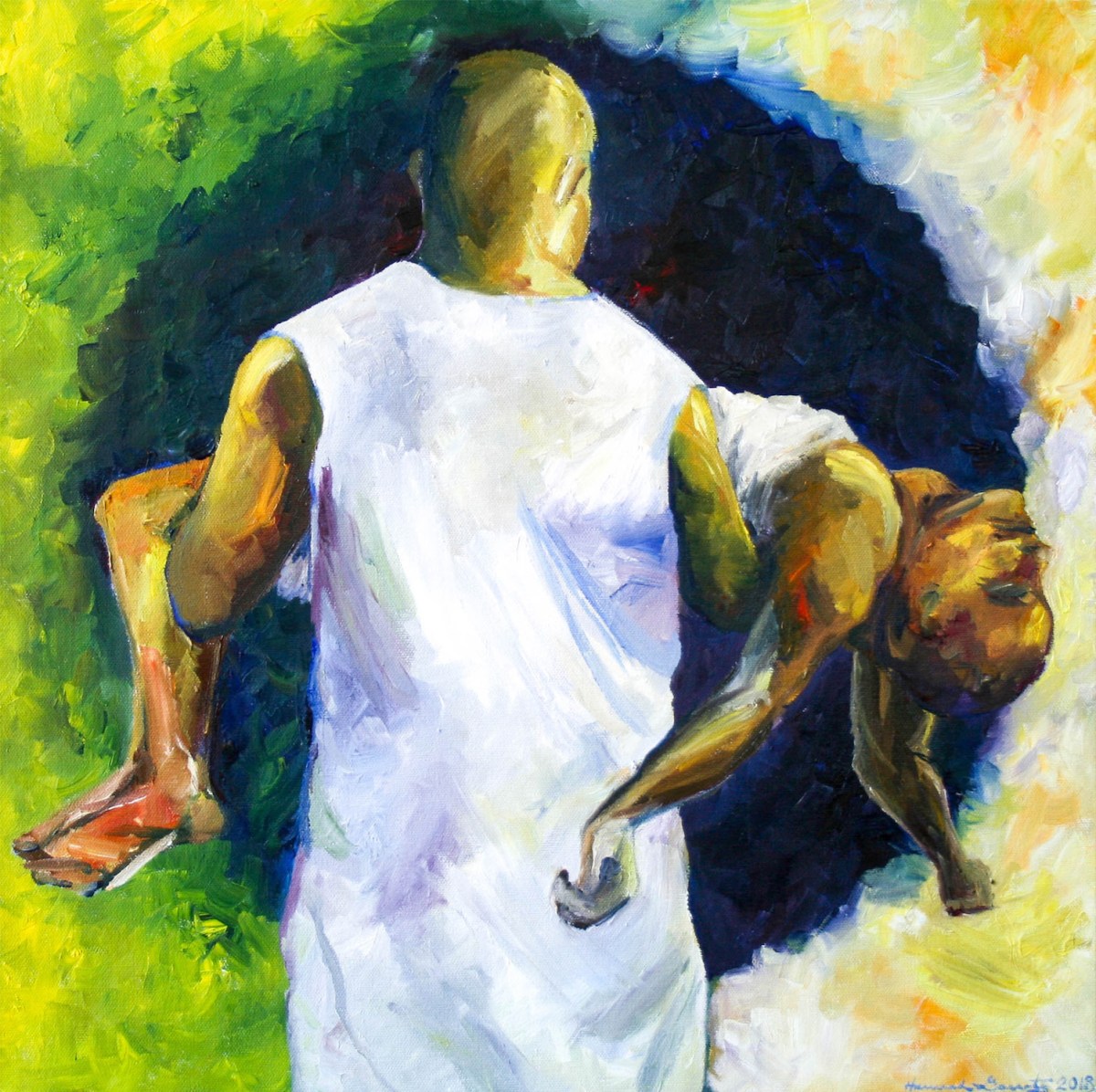
Joseph of Arimathea inspires me because his deed is a lesson for us all on what it means to have a living faith. He was the first. Like him, we are called to see what others can’t see, or don’t want to see, and do what we can to help.

Please join me in prayer… 

Lord God, may your peace and Holy Spirit fill this place. Open your scriptures to us, and may I clearly communicate that which you intend us to receive. May your Word take root and flourish within each and every one of us. Through it may we be strengthened and transformed by your unconditional, living, and limitless love for all of your Creation. 

In Jesus Name, Amen.

Our journey through the Christian year often seems like a rush from one major event to the next, skipping over the smaller stories in-between.  But then again, that’s the point of this summer’s series of sermons; such as this morning’s meditation on the story of Joseph of Arimathea. 

Like Joseph and the others we’ve studied, there’s a whole chorus of us here at MCC – seen and unseen – whether officially members of this congregation or not – who make this service, this congregation, this community of Faith, and its many ministries and outreaches, part of our own stories. We are all part of that community. All of us make the Body of Christ a living reality.  It works because of all of us.

There are no heroes here, nor in the stories we’ve studied. There is no one waving a magic wand to make it all happen. They and we are just one of a bunch of people working together to help all of us move along on our journeys of faith. And in that light, our subject this morning fascinates and inspires me for three reasons.  

Continue reading “Sermon: “Joseph of Arimathea””

Sermon: Who We Are

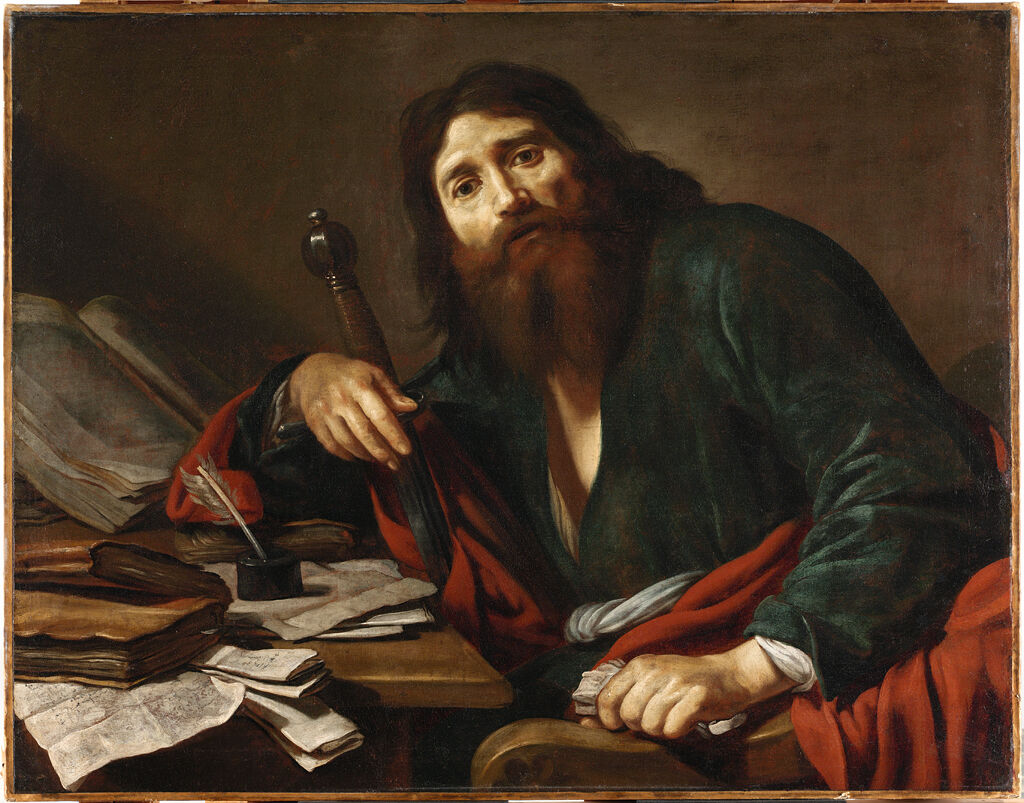
Paul had to address problems that we still face today. People still talk at each other rather than with each other. People still seem unable to appreciate their neighbor’s points of view. Many don’t give credence to others’ perspectives including our own – if they hear us at all. So, What does Paul do?

Please join me in prayer…  

Lord God, may your peace and Holy Spirit fill this place. Open your scriptures to us, and may I clearly communicate that which you intend us to receive. May your Word take root and flourish within each and every one of us. Through it may we be strengthened and transformed by your unconditional, living, and limitless love for all of your Creation. In Jesus Name, Amen.

I’ve been thinking a lot about community recently. Especially communities of faith – such as ours, here at MCC. In our reading, Paul talks about what a community of faith is, and how to make it work.

In Paul’s time, Corinth was a young city of several hundred thousand inhabitants, rebuilt long after Rome destroyed the original city and all of its people.

Everyone was an immigrant, or descended from immigrants. The social hierarchy was still fluid and evolving. So, improving one’s social status was possible, unlike most Roman cities. This may be why many came to Corinth in the first place. But even so, there were great disparities in wealth, power, and privilege. Most of the population were slaves and freedman, and very poor. Some were newly wealthy, but often had a low social status due to their own humble origins. 

Back then, Christians were seen as slightly bonkers (we still are). But we worship together regardless of class, which was very odd to folks back then, because it challenged the social norms of the time.

In Corinth at this time, there were perhaps 200 Christians over all, meeting in tiny house churches scattered around the city. Their members are known to include Jews, longtime Gentile believers, new converts, slaves, the wealthy, and perhaps a few soldiers and Roman officials as well. It was a tiny and diverse but fragmented, community of faith. They worshiped together, but their divergent perspectives and lives created friction.

Paul had to address problems that we still face today. People still talk at each other rather than with each other. People still seem unable to appreciate their neighbor’s points of view. Many don’t give credence to others’ perspectives including our own – if they hear us at all.

Continue reading “Sermon: Who We Are”

Sermon: An Expository Reading of John 18:33-37

In any debate, facts are rarely the real issue. … Instead, what is at stake in any debate is how we view the facts: What we believe those facts are telling us, and what facts are relevant to us in light of what we already know.  In other words, it is what we believe that counts.

I presented this sermon during my second year as a ministerial intern, at Sudbury Memorial Congregational Church, UCC, on November 25th, 2012. At the time I had not yet set up this, my “Ministerial Blog.” So, it was more or less forgotten until I rediscovered it the other day. Given its relevance to the current liturgical season, and also the challenging socio-political debates we all experience, it seemed helpful to publish it now.

Allen (Narrator)’s Prologue…

Today we celebrate “Christ the King” or “The Reign of Christ” Sunday, the last Sunday of the Liturgical year, a time when we ponder the meaning of Christ’s Lordship here on earth, and in our lives.  

 In pondering this issue, Tom and I focused on the topic of Fact vs. Faith.  For us to allow the Son of God to have Lordship over our lives, then Christ must be real and tangible truth to us in some way.  But, what does that mean?  How do faith, fact and truth intersect?  How does the truth of Christ become reality in our lives?

In 1975, James Cone, a well known African American Theologian, got right to the heart of this issue when he wrote that “Jesus is Black.”  People were shocked by this, as you might imagine.  Many rejected the idea, others tried to understand it as a metaphor.  But Cone insisted, saying that his critics didn’t understand, the TRUTH is that for Black people, Jesus is Black.

He must be, otherwise, Jesus is not talking to those of us who are Black, but only to those who are White.  In order for Jesus to speak to us, to really be what he says he is – God with Us – then, for Cone and many others, Jesus must be Black.  Otherwise, Jesus is not someone that Cone can relate to as a Black person, as a member of a race that has been oppressed and marginalized for centuries because of the color of their skin.

In hearing this, our reaction may we be “But, that’s not the truth!”

Really?  How can we be sure?  …Does it matter?


In any debate, facts are rarely the real issue.  If they were, the billions given to all those nonprofits for political advertising in the recent election would never have been donated, or spent.  Instead, what is at stake in any debate is how we view the facts: What we believe those facts are telling us, and what facts are relevant to us in light of what we already know.  In other words, it is what we believe that counts.

Facts can influence what we believe, and may cause us to modify our beliefs, but a fact by itself is meaningless and useless – it is our belief in that fact, and how that belief influences us and what we do, that makes all the difference.

As you can see, we’re doing things a bit differently for today’s Meditation and scripture reading.  Tom and Kim are going to read the text, with Tom taking the part of Pilate and Kim taking the part of Jesus.  

The setting is the morning after Jesus’ arrest.  Jesus has already been convicted by the Sanhedrin and has now been handed over to Pilate. Pilate is about to begin cross-examining Jesus, to elicit the facts of the case before he determines Jesus’ fate.

We will read through the scripture twice.  The first time will be uninterrupted.  We will then go through it a second time, pausing at each critical point to provide background and commentary.  Once done, we will have a time of silence to meditate on who Jesus is for each of us.

And now we will begin.  The reading is John 18:33-37.  You are invited to follow along in your bulletin…

John 18:33-37

Then Pilate entered the headquarters again, summoned Jesus, and asked him, “Are you the King of the Jews?” Jesus answered, “Do you ask this on your own, or did others tell you about me?” Pilate replied, “I am not a Jew, am I? Your own nation and the chief priests have handed you over to me. What have you done?” Jesus answered, “My kingdom is not from this world. If my kingdom were from this world, my followers would be fighting to keep me from being handed over to the Jews. But as it is, my kingdom is not from here.” Pilate asked him, “So you are a king?” Jesus answered, “You say that I am a king. For this I was born, and for this I came into the world, to testify to the truth. Everyone who belongs to the truth listens to my voice.”

The NRSV [New Revised Standard Version] Bible.

[PAUSE]

Tom and Kim’s Script… (used both times)

Narrator (Allen): So Pilate reentered the governor’s palace and called for Jesus to follow him.

[PAUSE]

Pilate (Tom): Are You the King of the Jews?

[PAUSE]

Jesus (Kim): Are you asking Me because you believe this is true, or have others said this about Me?

[PAUSE]

Pilate: I’m not a Jew, am I? Your people, including the chief priests, have arrested You and placed You in my custody. What have You done?

[PAUSE]

Jesus: My kingdom is not recognized in this world. If this were My kingdom, My servants would be fighting for My freedom. But My kingdom is not in this physical realm.

Pilate: So You are a king?

[PAUSE]

Jesus: You say that I am king. 

[PAUSE]

Jesus [continued]: For this I have been born, and for this I have come into the cosmos: to demonstrate the power of truth. Everyone who seeks truth hears My voice.

Allen’s Script & Notes… (Second time through)

Allen: Now, as we said we’d do, we’ll run through the text again, this time pausing at each critical point.

Narrator (Allen): So Pilate reentered the governor’s palace and called for Jesus to follow him.

[PAUSE]

Allen: By inviting Jesus into the governor’s palace, Pilate is demonstrating to Jesus that Pilate is the one who is in control, that things are going to play out according to Pilate’s rules.  Pilate believes he has control of the situation…

Pilate (Tom): Are You the King of the Jews?

[PAUSE]

Allen: Pilate was the son of one of the most prominent patrician families in Rome, a family that had been in the center of Roman political and economic power for generations – a power that was accepted by everyone at the time.  Pilate was used to having and exercising power, and had been educated in the best schools, schooled in logic, debate, rhetoric, and Roman Law.

So, he knew about facts.  By asking “Are You King of the Jews?” Pilate is asking Jesus to confirm that the facts are as Pilate already knew them to be.

But, Jesus goes a level deeper, responding to Pilate in a completely unexpected way…

Jesus (Kim): Are you asking Me because you believe this is true, or have others said this about Me?

[PAUSE]

Allen: Astonishingly, Jesus is not concerned with what the facts are, but with what Pilate believes.  This question cuts right to the chase, short circuiting any potential for bickering over whose facts are relevant or true, and throwing it all back at Pilate, asking the only question that really matters – “What do you believe?”

Pilate doesn’t grasp this, and so proceeds by reciting the facts as he knows them…

Pilate: I’m not a Jew, am I? Your people, including the chief priests, have arrested You and placed You in my custody. What have You done?

[PAUSE]

Allen: Pilate is still focused only on the facts, and his facts are these: I’m not a Jew.  You’ve been arrested by your own people.  You are now in my power.  So, based on these facts, Pilate demands a new fact: “What have you done?”

But, Jesus is not concerned with these facts. Jesus is trying to help Pilate see the bigger picture.  The issue is not about Jesus’ fate, which Jesus is already certain of.  The issue is what does PILATE believe – what does Jesus’ existence mean to Pilate?

So, Jesus tries to get Pilate off of this fact-based line of thought.  Jesus tries to get Pilate to understand that Jesus’ Kingdom is something bigger, something deeper, something harder to grasp than a straightforward claim to worldly power and prestige… 

Jesus: My kingdom is not recognized in this world. If this were My kingdom, My servants would be fighting for My freedom. But My kingdom is not in this physical realm.

Pilate: So You are a king?

[PAUSE]

Allen: Pilate is still going down the fact-based road, he just doesn’t get it!  I must say that history does not have a high opinion of him or his capabilities.  He was described by some of his contemporaries as unimaginative and inflexible. 

What Pilate seems to have gotten is that the truth is that Jesus is claiming to have a Kingdom.  What Pilate isn’t accepting – isn’t believing – is the other fact Jesus presents, which is that it is a Kingdom that is not of this world.

Jesus: You say that I am king. 

[PAUSE]

Allen: Jesus is saying that Pilate has admitted that Jesus is King.  But note the subtle difference between what Pilate said “So, You are a King” and how Jesus responded: “You say that I AM King”   … “A King” vs. “I AM King” … Jesus is not only pointing out what Pilate believes, but emphasizing that Christ is not a King of this world, but is the Great I AM, the one and only King of the entire Cosmos.

Jesus [continued]: For this I have been born, and for this I have come into the cosmos: to demonstrate the power of truth. Everyone who seeks truth hears My voice.

Allen: Now we get to the heart of it.  This discussion was never about the facts, but about the Truth, and Pilate – like any good politican – would know this.  No discussion is ever about the facts, but is rather about what people believe.  Facts are tools that we employ to support our beliefs.  

And facts are important tools, admittedly, because if the facts everyone accepts don’t support what we believe, then we feel rootless, broken, oppressed.  

Jesus claims to have come to demonstrate the power of truth.  Truth is beyond a mere recitation of individual facts and statistics.  Truth is deeper than that.  Truth requires belief, and truth is believable only if we find it to be relevant to us.  Truth is also powerful: it helps us understand who we are, where we are, how we relate to our past, and what we aspire to in the future.

Truth is powerful.  It is truth that overturned the accepted fact that once governed this land, which was that Blacks were less capable than whites, and happy in their enslaved condition.  It is truth that is overturning our own conceptions of who can marry whom.  And, it is truth, the truth that Jesus loves each and every one of us, just as we are, that enables us to overcome the judgment and oppression of this world, and to be the persons God created us to be.

If we seek truth, we will hear Jesus’ voice.   Pilate hasn’t heard, but do we?

How does what we believe make Jesus relevant to us?  

Let us now sit for a moment and ask ourselves “How does what we have learned here this morning help us to reject the accepted wisdom of the world and stand for the truth that is embodied in the Gospel of Christ?”


Delivered at Memorial Congregational Church UCC in Sudbury MA, November 25, 2012: (Reign of Christ Sunday).

Copyright 2023, Allen Vander Meulen III, all rights reserved.

This work is licensed under a Creative Commons Attribution-NonCommercial 4.0 International License.

Sermon: “We Shall Overcome”

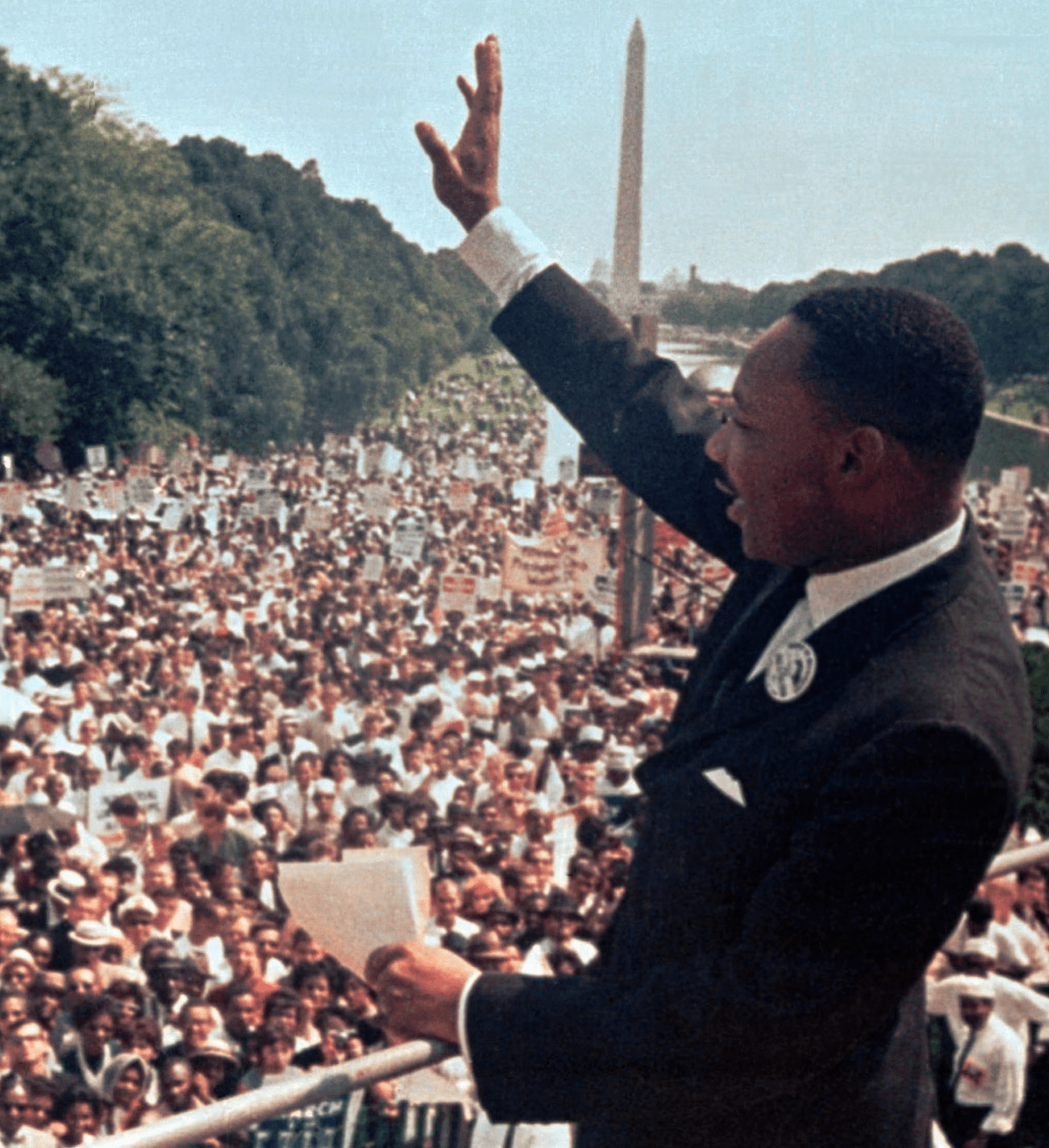
“…Our role is one of support, not leadership. We are not here to solve the problem, but to help make sure it is solved; not set aside, not weakened, not forgotten. We are not the light that chases away the shadows within which injustice thrives. We are a lens others use to focus and strengthen that light. We are here to be take part in the journey, not lead it.”

A Meditation on the “Great March on Washington” of August 28, 1963

Sermon Video:

Before I begin, I must thank Rev Gail Wright and her son, Peter Wright, for stepping in at the last minute once they knew of my need to isolate due to COVID exposure.  

I particularly wish to thank the Rev. Sarah Hubbell: Last week, while describing my struggles and thoughts as I prepared for this service, I mentioned that I’d found the materials my Father had saved from his witnessing of Dr. Martin Luther King’s “I Have a Dream” speech at the finale of the Great March on Washington DC on August 28, 1963.

She pointed out that this month is the 60th Anniversary of that event.  So, now you know how the theme of today’s service came about. The music, hymns, scripture readings, and sermon are all connected with the events of that day.

Continue reading “Sermon: “We Shall Overcome””

Sermon: “Perfection”

If we were perfect, would we need God at all?

Paul’s Epistle to the Romans is a dense and complex text.  We will examine just one thread of the many he surfaces in this morning’s reading…

Please join me in prayer…  …   Lord God, may your peace and Holy Spirit fill this place.  Open your scriptures to us, and may I clearly communicate what you intend us to receive.  May your Word take root and flourish within each and every one of us, and through it may we be strengthened and transformed by your unconditional, living, and limitless love for each and every one of your children.  In Jesus Name, Amen.

The world is a dismal, frightening, imperfect place; and we’re tired.  It isn’t like it was in the “Good Old Days.” (On the other hand, even the good old days were not like the Good Old Days.)

But seriously, we’re tired. Tired of one crisis after another. Tired of existential problems that never go away. Tired of our own endlessly repeating kaleidoscope of challenges and problems. We’re even tired of being tired.

Continue reading “Sermon: “Perfection””

Sermon: Those Who Would Not See

The late Marcus Borg, a well known New Testament scholar and theologian, once wrote that American Indians would often begin a story by saying: “Now I’m not sure all of this happened this way, but I know it is all true.”

“The Story of the Man Born Blind” in the Gospel of John is the story of a community cast aside. They were thrown out: unseen, unheard, unwanted. They were rejected by those whom they loved; and who they thought loved them in return.  

Continue reading “Sermon: Those Who Would Not See”

Sermon: “The Ocean of Memory”

“…nothing we own, nothing we value, nothing we think we control in this life, will last.  Once we are gone, we cannot enjoy any amount of wealth, cannot use anything we once had to return us into present life.  We remain there forever – lost in that ocean of memory with none of the riches we once treasured.  We will not even have control over our own memory: everything will be in the hands of those we leave behind.”

This weekend, of course, is Memorial Day weekend.  It started as a sort of groundswell movement all over the North and South during and shortly after the Civil War: a day to place flowers on the graves of those who died in battle; a day to remember those we’d lost because of that war: It has grown to become a day of Remembrance for all who died in any of the wars our nation has fought.

Now I am not going to speak about the Civil War, or how it is still being fought today in so many ways, nor even about war in general.  But, I think the themes of Memorial Day’s narrative are reflected in this morning’s scripture readings – the themes of loss, and of the Love of God; and how that shapes our relationships with others, and even within ourselves.

Every death, whether expected or understandable – such as from old age, or perhaps in battle; or not understandable – such as from COVID, or a shooting in a classroom; is a loss.  The uniqueness of those who died, and all the richness and beauty and potential of their lives dies with them.  They are lost from the present, never to return; living on only in our memories.  But, human memory inevitably fades with time, and it vanishes entirely when those who knew that person pass on themselves.  I visualize this as a sort of tide, a tide of memory slowly receding from the shores of the present.  Yet, in reality it is the present that is advancing.  We are leaving that tide behind.

I grieve even when those who have been a royal pain to me or to those I whom love pass away – although I’ll admit, perhaps I don’t grieve quite as much. 

Even so, our lack of fond memories of them does not mean they were not loved by others, nor that they did not have value as human beings.  If nothing else, they were loved and valued by God.  And if God loves and values them, how can we not do the same?  To me, the question seems to be not whether we should love those who are in our past, but how to do so in our present.

Continue reading “Sermon: “The Ocean of Memory””