Sermon: What’s Missing?

Lord God, may your peace and Holy Spirit fill this place. Open your scriptures to us, and may I clearly communicate that which you intend us to receive. May your Word take root and flourish within each and every one of us. Through it may we be strengthened and transformed by your unconditional, living, and limitless love for all of your Creation.

In Jesus Name, Amen.

One of my earliest memories is of sitting in the front pew at our new church with my mother and brother; my father’s voice booming out as he sang hymns and preached.  (Although I was mostly interested in raiding the treat table after the service, before they all disappeared.)

Eventually I realized that something went missing during our first few weeks there. I overlooked it for a long time, a very long time, before realizing it was gone. So, five decades later, I asked him about it.  In response, he told me the following story…

The church had a new sound system. The first one Dad ever used; and he wasn’t sure how to work with it.  The Church Moderator was Pony Felch, a true old time Vermonter, right down to his accent. One day, Pony came to my Dad and said “You know Reverend, we appreciate your strong voice.  But when singin’ the hymns, could you take a step or two back from the Mic?”

Continue reading “Sermon: What’s Missing?”

Sermon: An Expository Reading of John 18:33-37

In any debate, facts are rarely the real issue. … Instead, what is at stake in any debate is how we view the facts: What we believe those facts are telling us, and what facts are relevant to us in light of what we already know.  In other words, it is what we believe that counts.

I presented this sermon during my second year as a ministerial intern, at Sudbury Memorial Congregational Church, UCC, on November 25th, 2012. At the time I had not yet set up this, my “Ministerial Blog.” So, it was more or less forgotten until I rediscovered it the other day. Given its relevance to the current liturgical season, and also the challenging socio-political debates we all experience, it seemed helpful to publish it now.

Allen (Narrator)’s Prologue…

Today we celebrate “Christ the King” or “The Reign of Christ” Sunday, the last Sunday of the Liturgical year, a time when we ponder the meaning of Christ’s Lordship here on earth, and in our lives.  

 In pondering this issue, Tom and I focused on the topic of Fact vs. Faith.  For us to allow the Son of God to have Lordship over our lives, then Christ must be real and tangible truth to us in some way.  But, what does that mean?  How do faith, fact and truth intersect?  How does the truth of Christ become reality in our lives?

In 1975, James Cone, a well known African American Theologian, got right to the heart of this issue when he wrote that “Jesus is Black.”  People were shocked by this, as you might imagine.  Many rejected the idea, others tried to understand it as a metaphor.  But Cone insisted, saying that his critics didn’t understand, the TRUTH is that for Black people, Jesus is Black.

He must be, otherwise, Jesus is not talking to those of us who are Black, but only to those who are White.  In order for Jesus to speak to us, to really be what he says he is – God with Us – then, for Cone and many others, Jesus must be Black.  Otherwise, Jesus is not someone that Cone can relate to as a Black person, as a member of a race that has been oppressed and marginalized for centuries because of the color of their skin.

In hearing this, our reaction may we be “But, that’s not the truth!”

Really?  How can we be sure?  …Does it matter?


In any debate, facts are rarely the real issue.  If they were, the billions given to all those nonprofits for political advertising in the recent election would never have been donated, or spent.  Instead, what is at stake in any debate is how we view the facts: What we believe those facts are telling us, and what facts are relevant to us in light of what we already know.  In other words, it is what we believe that counts.

Facts can influence what we believe, and may cause us to modify our beliefs, but a fact by itself is meaningless and useless – it is our belief in that fact, and how that belief influences us and what we do, that makes all the difference.

As you can see, we’re doing things a bit differently for today’s Meditation and scripture reading.  Tom and Kim are going to read the text, with Tom taking the part of Pilate and Kim taking the part of Jesus.  

The setting is the morning after Jesus’ arrest.  Jesus has already been convicted by the Sanhedrin and has now been handed over to Pilate. Pilate is about to begin cross-examining Jesus, to elicit the facts of the case before he determines Jesus’ fate.

We will read through the scripture twice.  The first time will be uninterrupted.  We will then go through it a second time, pausing at each critical point to provide background and commentary.  Once done, we will have a time of silence to meditate on who Jesus is for each of us.

And now we will begin.  The reading is John 18:33-37.  You are invited to follow along in your bulletin…

John 18:33-37

Then Pilate entered the headquarters again, summoned Jesus, and asked him, “Are you the King of the Jews?” Jesus answered, “Do you ask this on your own, or did others tell you about me?” Pilate replied, “I am not a Jew, am I? Your own nation and the chief priests have handed you over to me. What have you done?” Jesus answered, “My kingdom is not from this world. If my kingdom were from this world, my followers would be fighting to keep me from being handed over to the Jews. But as it is, my kingdom is not from here.” Pilate asked him, “So you are a king?” Jesus answered, “You say that I am a king. For this I was born, and for this I came into the world, to testify to the truth. Everyone who belongs to the truth listens to my voice.”

The NRSV [New Revised Standard Version] Bible.

[PAUSE]

Tom and Kim’s Script… (used both times)

Narrator (Allen): So Pilate reentered the governor’s palace and called for Jesus to follow him.

[PAUSE]

Pilate (Tom): Are You the King of the Jews?

[PAUSE]

Jesus (Kim): Are you asking Me because you believe this is true, or have others said this about Me?

[PAUSE]

Pilate: I’m not a Jew, am I? Your people, including the chief priests, have arrested You and placed You in my custody. What have You done?

[PAUSE]

Jesus: My kingdom is not recognized in this world. If this were My kingdom, My servants would be fighting for My freedom. But My kingdom is not in this physical realm.

Pilate: So You are a king?

[PAUSE]

Jesus: You say that I am king. 

[PAUSE]

Jesus [continued]: For this I have been born, and for this I have come into the cosmos: to demonstrate the power of truth. Everyone who seeks truth hears My voice.

Allen’s Script & Notes… (Second time through)

Allen: Now, as we said we’d do, we’ll run through the text again, this time pausing at each critical point.

Narrator (Allen): So Pilate reentered the governor’s palace and called for Jesus to follow him.

[PAUSE]

Allen: By inviting Jesus into the governor’s palace, Pilate is demonstrating to Jesus that Pilate is the one who is in control, that things are going to play out according to Pilate’s rules.  Pilate believes he has control of the situation…

Pilate (Tom): Are You the King of the Jews?

[PAUSE]

Allen: Pilate was the son of one of the most prominent patrician families in Rome, a family that had been in the center of Roman political and economic power for generations – a power that was accepted by everyone at the time.  Pilate was used to having and exercising power, and had been educated in the best schools, schooled in logic, debate, rhetoric, and Roman Law.

So, he knew about facts.  By asking “Are You King of the Jews?” Pilate is asking Jesus to confirm that the facts are as Pilate already knew them to be.

But, Jesus goes a level deeper, responding to Pilate in a completely unexpected way…

Jesus (Kim): Are you asking Me because you believe this is true, or have others said this about Me?

[PAUSE]

Allen: Astonishingly, Jesus is not concerned with what the facts are, but with what Pilate believes.  This question cuts right to the chase, short circuiting any potential for bickering over whose facts are relevant or true, and throwing it all back at Pilate, asking the only question that really matters – “What do you believe?”

Pilate doesn’t grasp this, and so proceeds by reciting the facts as he knows them…

Pilate: I’m not a Jew, am I? Your people, including the chief priests, have arrested You and placed You in my custody. What have You done?

[PAUSE]

Allen: Pilate is still focused only on the facts, and his facts are these: I’m not a Jew.  You’ve been arrested by your own people.  You are now in my power.  So, based on these facts, Pilate demands a new fact: “What have you done?”

But, Jesus is not concerned with these facts. Jesus is trying to help Pilate see the bigger picture.  The issue is not about Jesus’ fate, which Jesus is already certain of.  The issue is what does PILATE believe – what does Jesus’ existence mean to Pilate?

So, Jesus tries to get Pilate off of this fact-based line of thought.  Jesus tries to get Pilate to understand that Jesus’ Kingdom is something bigger, something deeper, something harder to grasp than a straightforward claim to worldly power and prestige… 

Jesus: My kingdom is not recognized in this world. If this were My kingdom, My servants would be fighting for My freedom. But My kingdom is not in this physical realm.

Pilate: So You are a king?

[PAUSE]

Allen: Pilate is still going down the fact-based road, he just doesn’t get it!  I must say that history does not have a high opinion of him or his capabilities.  He was described by some of his contemporaries as unimaginative and inflexible. 

What Pilate seems to have gotten is that the truth is that Jesus is claiming to have a Kingdom.  What Pilate isn’t accepting – isn’t believing – is the other fact Jesus presents, which is that it is a Kingdom that is not of this world.

Jesus: You say that I am king. 

[PAUSE]

Allen: Jesus is saying that Pilate has admitted that Jesus is King.  But note the subtle difference between what Pilate said “So, You are a King” and how Jesus responded: “You say that I AM King”   … “A King” vs. “I AM King” … Jesus is not only pointing out what Pilate believes, but emphasizing that Christ is not a King of this world, but is the Great I AM, the one and only King of the entire Cosmos.

Jesus [continued]: For this I have been born, and for this I have come into the cosmos: to demonstrate the power of truth. Everyone who seeks truth hears My voice.

Allen: Now we get to the heart of it.  This discussion was never about the facts, but about the Truth, and Pilate – like any good politican – would know this.  No discussion is ever about the facts, but is rather about what people believe.  Facts are tools that we employ to support our beliefs.  

And facts are important tools, admittedly, because if the facts everyone accepts don’t support what we believe, then we feel rootless, broken, oppressed.  

Jesus claims to have come to demonstrate the power of truth.  Truth is beyond a mere recitation of individual facts and statistics.  Truth is deeper than that.  Truth requires belief, and truth is believable only if we find it to be relevant to us.  Truth is also powerful: it helps us understand who we are, where we are, how we relate to our past, and what we aspire to in the future.

Truth is powerful.  It is truth that overturned the accepted fact that once governed this land, which was that Blacks were less capable than whites, and happy in their enslaved condition.  It is truth that is overturning our own conceptions of who can marry whom.  And, it is truth, the truth that Jesus loves each and every one of us, just as we are, that enables us to overcome the judgment and oppression of this world, and to be the persons God created us to be.

If we seek truth, we will hear Jesus’ voice.   Pilate hasn’t heard, but do we?

How does what we believe make Jesus relevant to us?  

Let us now sit for a moment and ask ourselves “How does what we have learned here this morning help us to reject the accepted wisdom of the world and stand for the truth that is embodied in the Gospel of Christ?”


Delivered at Memorial Congregational Church UCC in Sudbury MA, November 25, 2012: (Reign of Christ Sunday).

Copyright 2023, Allen Vander Meulen III, all rights reserved.

This work is licensed under a Creative Commons Attribution-NonCommercial 4.0 International License.

Conspiracy Theories

roy-moore-3-x750

Here’s why I have no patience for conspiracy theories, and come down hard on those who unthinkingly repeat them…

With conspiracy theories, everything The Other says is assumed to be a false front for a hidden agenda.

The Other has no recourse, no ability to challenge what is being said, because anything they say is assumed to be in support of the conspiracy, even if what they say is objective fact or truth.

The Other, and everything they say, is judged as invalid (if not evil) even before they say it because they are seen as invalid for being (or believing in) the conspiracy.

Such thinking led to the deaths of millions of Jews (and others) in World War II, not to mention many other massacres of Jews and other minorities throughout history, all over the world.

Such thinking led to the U.S’s invasion of Iraq in 2003, and to the Vietnam War in the 1960’s and 70’s.

And yet, we all do this. Continue reading “Conspiracy Theories”

Sermon: Wisdom

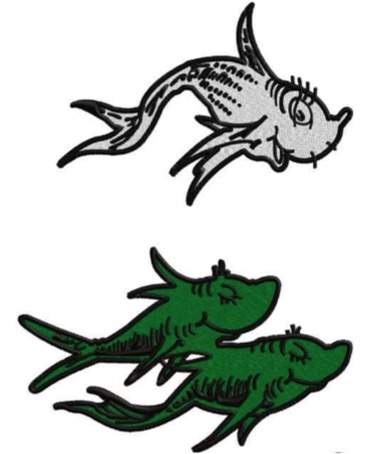
Detail from the cover of “One Fish, Two Fish, Red Fish, Blue Fish” by Dr. Seuss

Two young fish were swimming along and happened to pass by an older fish. The older fish says “Morning, boys. How’s the water?” The two young fish swim on. Eventually, one of them looks over at the other and says “What the heck is water?”

Please join me in prayer… 

Lord God, we lift up this morning’s lessons.  May they touch our hearts, and speak clearly to our souls, that we may come to more fully comprehend your eternal and undying love for us and for all of your Creation. Amen.

This Sunday we consecrate our Christian Education Ministry’s programs for the year. So, it is fitting that our topic is Wisdom.

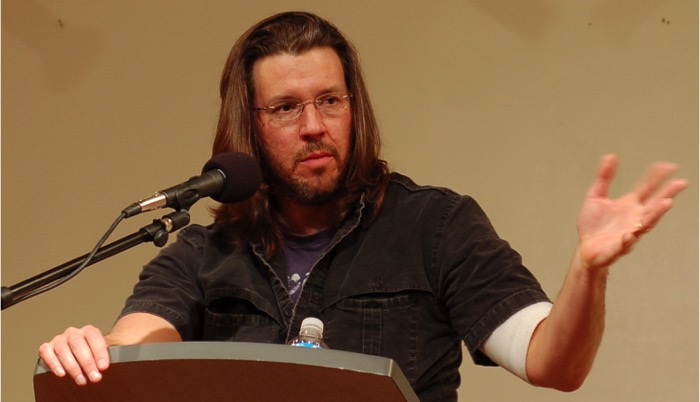
As I was preparing this message, I came across a Commencement Address by the late David Foster Wallace, given at Kenyon College in May of 2005.

Professor Wallace gave the fish story I related at the beginning of this message and then said its point “is merely that the most obvious, important realities are often the ones that are hardest to see and talk about.”

Dr. David Foster Wallace (1962-2008)

He then related another story:

Two guys are sitting in a bar in Alaska. One guy is religious, the other an Atheist. After a few beers, they begin to argue about the existence of God with great intensity. Finally the Atheist says: “Look, I have reasons for not believing in God. Just last month I got in a terrible blizzard. I was lost and couldn’t see a thing, and it was fifty below. So I fell to my knees and cried out ‘Oh, God, I’m lost in this blizzard, and I’m gonna die if you don’t help me.’”  

The religious guy gives the atheist a puzzled look: “Well, you must believe now. After all, here you are, alive.” The atheist rolls his eyes. “Nope, two Eskimos happened to wander by and showed me the way back to camp.”

The lesson here, Wallace points out, is just as obvious as that of the first story: the exact same experience can mean totally different things to different people, because their templates of how the world works are very different.

Google Glass
Google Glass

These “templates of meaning” are the maps we carry inside ourselves, the lens through which we see and interpret everything we experience.

This is an important point: all of our meaning-making depends on how we see and interpret what we witness in the world around us. Meaning and understanding are the result of interpretation. The teachings of our faith – teachings of any sort, in fact – are meaningless without interpretation. Interpretation is the process of taking our own observations or knowledge and making them real and relevant to ourselves or others.

Continue reading “Sermon: Wisdom”

“Bible Mindedness”

bibleI find a recent survey done by the “American Bible Society” quite troubling, not just because of the conclusions the survey’s authors present, but also because of the criteria used in evaluating where people stood on what the ABS termed “Bible Mindedness.”

The authors of this study evaluated “Bible Mindedness” using the following criteria: “Respondents who report reading the bible within the past seven days and who agree strongly in the accuracy of the Bible are classified as ‘Bible Minded…’”

I take strong exception to this, as I find just as many devout and thoughtful Christians here in the Boston area (which was near the bottom of the study’s rankings) as I do anywhere.  The criteria used here heavily skew the results towards a very narrow and slanted view of what “Bible Mindedness” means.

For me, reading the Bible on a nearly constant basis should not equate to “Bible Mindedness” because such a practice assumes the Bible can be relevant and useful to us in our daily lives entirely without reference to the world in which we live, an assumption that is deeply flawed.

Reading other works that reflect upon the Bible and our faith, such the writings of various theologians, works of poetry, histories, science, novels, the Talmud, the Koran, etc; all provide new insights about how our faith impacts us and impacts the world around us.  Such readings help us gain a greater appreciation of the variety and magnificence of God’s Creation.  And, they provide new and deeper revelations of what our faith means to us, and how we can apply that faith to the challenges of life, as well as helping us attain a broader perspective of what it means to be a person of faith.

Since God is infinite, God must encompass an infinitude of perspectives.  Therefore, limiting ourselves to a single (and literal) perspective of the Bible limits us in our understanding of Creation and of our relationship with our Creator.

So for me, being a person of faith – being “Bible Minded” – means using the Bible as a starting point – not an end point.  A view shared by many who were dismissed (by the criteria used in this survey) as “not engaged with the Bible” and not using the Bible to make sense of [their] life.

Copyright (c) 2014, Allen Vander Meulen III, all rights reserved.  I’m happy to share my writings with you, as long as you are not seeking (or gaining) financial benefit for doing so, and as long as proper credit for my authorship is given (e.g., via a credit that gives my full name and/or provides a link back to this site). 

Standing in a New Place

Standing in a new placeSermon: “Standing in a New Place”
Presented at ARK Community Church in Dalton, MA
October 20, 2013

Scripture readings:
Job 38:1-18, 24-30, 34-5 and 42:1-6 (from “The Message”),
Luke 18:18-25  
(from “The Message”)

A Prologue…

I held up a card with one word in large block letters on each side, as follows…

RED         GREEN

and then said (more or less)…

All of us can see one side of this card, but not the other.  Most of you see Green, the rest of us see Red.   Each of you can appreciate part of what this card is, but not the whole thing.  You can see one aspect of its truth, but not all of it.  What you see depends on where you are sitting, but you cannot appreciate all that this card is without your changing positions or my rotating the card – there has to be movement of some sort.  Bear this in mind as you hear this message…

Please pray with me…

Lord, open our eyes that we may see the truth you have for us here today; place in our hands and hearts the wisdom and courage to follow your Truth wherever it may lead us, and so come to a deeper appreciation of your Gospel from a new perspective. Open my mouth, Lord, that I may be a faithful witness to your Gospel, that the eyes of our hearts might be opened, and that your love for all of us, your children, is made manifest.  Prepare our hearts to share your gospel with all we whom encounter today, and in the days ahead.  Amen.

The Message…

I recently visited a dear friend, Carolyn, and we began talking about my ideas for this week’s sermon.  This in turn reminded her of a story, one that I’m sure most parents have run into (at least a few times).

When her family was much younger, they all went to a ball game.  Later, in talking about an event during the game, the narrative that Carolyn related to her children differed a great deal from the one her husband Don gave about the same incident.  When Carolyn realized this, she sat her kids down and told them that even though mommy and daddy’s versions were very different, neither of them were lying, and neither of them were wrong, it was just that they remembered it differently because different aspects of the event mattered to each of them.  They saw the same thing from different perspectives, which is why their memories of it, and their narratives, differed.

Continue reading “Standing in a New Place”

Children’s Message: Different Colors

Two-Face-Optical-Illusion-cSummary…

Scriptural basis: Job 38:1-18, 24-30, 34-5; Job 42:1-6; Luke 18:18-25

The point: Once we have a good “recipe” for doing something, we tend to keep on using it even though will sometimes give us the wrong answers.  Most adults playing this game alongside the kids will shout out GREEN for one of the sheets that you hold up, even though the letters are blue.

Truth is the same way.  We assume that when something works as we expect it to, then we know the truth; but, details can be important – there is often more there than meets the eye.  The truth we see is never the whole truth.

The goal is to learn that the truth of God is unchanging, but that the truth as we see it will always change and deepen as we learn more.

Continue reading “Children’s Message: Different Colors”