Blame

You know – with regards to the recent massacre in Orlando, we are sliding back into the same old same old set of accusations and counter-accusations we see every time: “Who’s fault is it?”

Is it the Muslims?

The Gays?

Bigots?

Obama?

The GOP?

The NRA? (Well …)

Trump?

Blaming is an old game: based on the idea that we must have winners and losers. And yet, nobody ever wins.

How long must we keep up this mindless charade?

And then we have the next layer of this old game, that of hitching one’s own cause (and/or -ism) to the issue…

Gun Control

Lifting the ban on allowing Gays to donate blood

Immigration

Racism

All of these causes are important and worthwhile, and many of them do intersect with what happened in Orlando this past weekend.  But, by linking a cause dear to us with the terror in Orlando, are we obscuring what happened?  …Obscuring what happened by insisting the event be viewed only through a lens of our choosing?

Look: 50 people died, and and another 53 were physically injured.  Uncounted others have lost loved ones, many more will be dealing for the rest of their own lives with the trauma they experienced that night, and others will spend a lifetime caring for those who have been forever scarred by this attack.

And, we see pain erupting from many in the LGBTQ community because of this, and you can understand why: clubs such as Pulse were a refuge from the judgment and pain they experienced in the outside world.  Those refuges are now no longer safe.  LGBTQ people have become a new target of domestic terrorism just when the laws and society here in the U.S. finally seemed to be on the verge of forever setting aside homophobia.  The newly blossoming reality of being able to live their lives unmolested and free from fear has been taken away from them, perhaps forever.  For an LGBTQ person, this attack was very personal, and very scary: a very real threat to their very existence, carried out against them purely because of who they are.  I can’t imagine feeling like I’m living with a target painted on my back, but I’m sure many in the LGBTQ community feel exactly that way right now.

50 people have died.  Hundreds if not thousands more will never escape the pain and fear planted within their souls that night.

Let’s focus on that.

As a Christian, I see the Bible, particularly Jesus own teachings in the Gospels, as making it very, very, clear that we must take responsibility for our own actions and attitudes, and not seek to escape such responsibility.  Laying blame on others is exactly that: an attempt to say “it’s somebody else’s problem, not mine.”

So, instead of trying to figure out who to blame, ask instead “What have I not done that I should be doing, to keep such things from happening?”  Because, our own attitudes and prejudices and fears definitely played a part – however small – in causing this to happen.

And, instead of hitching one’s own cause to the pain of others, respect the pain and loss that has occurred.  Embrace those who have lost loved ones.  Walk at the side of those who cannot stop the pain of this trauma from leaking out of their souls.  We cannot directly feel their pain, nor can we (nor should we) try to minimize it.  Instead, we must allow them to work through their pain – and be there for them when they need help, or need someone to listen to what they have to say.

Jesus’  taught that we must love God without limit, and love one another in the same way.

The world can be a cruel, hard place.  Bad things will happen.  As Christians, we are called not to judge, but to heal.  So in the end, ask how you can help bring healing.  Ask how you must change in response to what has happened.

Love is the answer, not blame.

Amen.


On Restrooms, Gender, and Fear

I’ve met Rev. Heath only briefly, but her spouse was a classmate of mine in Seminary.  She is far from the only trans or gender non-conforming person I know; and they all relate the same narrative that Emily gives voice to here: “I’m telling you that no trans or gender non-conforming person wants to use the bathroom for any other reason than you do. I’m telling you that this has never been about sexual predators (who don’t need bathrooms to hurt people, and who won’t be discouraged by an anti-trans bathroom law), but about harming trans people. I’m telling you that I’d like to spend a whole lot less time thinking about bathrooms than I do.”

If we are serious about our Christian faith, then we need to ask – FIRST – how our attitudes to others express the love that Christ mandates – MANDATES (via the Second Great Commandment) – that we show in all our dealings them, and that we do so without condition or exception.

And, will they see that love in how we are acting and speaking towards them?  If they don’t, then we are failing to love them as we are required to do by the most basic tenets of our faith.

The anti-LGBTQ laws recently passed in NC and elsewhere do not pass this test.  And so, we must seriously and deeply re-examine our own motivations and faith principles if we believe this was the Christian thing to do.

Source: On Restrooms, Gender, and Fear

An Easter Sermon: A Sissified Jesus?

No, we (who are seen by some as “Liberal” Christians) do not believe in a sissified Jesus. We follow a Jesus who died for us. A Jesus who will never let us go, and a Jesus who loves us no matter what. That kind of love, that walks through any fire, endures any cross, is an uncompromising and fierce love. This is a Jesus who’s Gospel – in whatever form it may take – is for all, not just for some.

Kneeling at The CrossYou know, loving others is hard.

Loving those lost in grief or pain, loving those who have turned away from the world out of their illness or fear or abuse, is hard.

Loving those who are different from us; who’s ways are alien to us; who’s politics or faith, or piercings and tattoos, are offensive to us; is hard.

Loving people when they shout at you, when they refuse to hear what you have to say, when they call you ugly names, when they slander you and despise you and shut you down, is hard.

Loving those who abuse or oppress you, loving those who cannot or will not love you in return, loving others when you are in such pain yourself, loving those who are nailing you to a cross, is hard.

Continue reading “An Easter Sermon: A Sissified Jesus?”

Blaming The Victim

Claiming that our Christian faith is strong is a lie unless we put into action our belief that this nation must embody Christian principles in the governance of its people. Providing subsidies to help those who do not have the resources to begin building a good life for themselves on their own is a good place to start. Likewise, those who claim that this is a “Christian Nation” are deluding themselves if they allow our leaders to ignore and even demonize those in need.

21sun1-superjumboIn a recent Op-Ed piece entitled “The Crisis of Minority Employment,” the New York Times Editors make it clear that  Congress’s abandonment of subsidized work programs for minorities is not only a threat to the economic viability of our cities, but is also shortsighted – sacrificing the long term economic and social wellbeing of a large segments of our population with the excuse that we can’t afford it.  “…Getting jobless young people into the world of work is valuable in itself. Work reduces alienation, gives people a stake in society and allows children in poor communities to absorb the ethic they need to be successful.”

And they are correct: by shutting down such programs, Congress is abandoning its responsibility to provide for the common good – of all, not just for some.

The common complaint we hear from many – both in and out of Congress – who reject the idea of providing help to the poor in any form is that all “they” want is a handout.  The thinking is that somehow (because of the stereotype we have created in our own minds that they are uneducated druggies and street criminals) minority youth do not deserve our help.

Continue reading “Blaming The Victim”

The Sadness and Love of Valentines Day

…I ask that you share not just the joys of romantic love, but the sadness that is within all of us, show your love by reaching out to them, helping to share the burden that they carry hidden in their heart, even if only for a little while; because, walking with another through their sadness and hard times is central to what our faith is all about.

tumblr_m4r98e7tDL1r0ou82o1_500On this Valentines Day and the First Sunday of Lent, I ask that we remember not only the importance of Romantic Love; but of Divine Love, the Love of a friend or sibling, LovingKindness, Self Love, and the many other kinds of love out there.

There are many out there who celebrate and remember the romantic aspects of Valentines Day – of marriage proposals and weddings, of building family. But, there are many, many people for whom this day carries a tinge of sadness, such as…

Continue reading “The Sadness and Love of Valentines Day”

Why #MerryChristmasStarbucks is Everything Wrong with American Christianity

Mr. Lake is absolutely right. Even if the point being made had any validity (which it doesn’t), the “Merry Christmas Starbucks” furor is far more a statement of our inability to be welcoming and loving of all of our neighbors than it is a “defense” of our Faith.

And frankly, our God is a pretty big god. I’m certain that our infinite and omnipresent Creator is more than capable of handling any and all insults without our help. In fact, volunteering to defend our faith due to such perceived slights says far more about our own insecurities and our misunderstanding of the teachings of Matthew 22:37-40 than it does about the strength or quality of our faith.

Nate Lake's avatarNATE LAKE

#MerryChristmasStarbucks Blog Photo

A few days ago, former pastor Joshua Feuerstein posted a video announcing a campaign against Starbucks due to their switch from festive holiday cups in previous years to a new plain red look for the 2015 holiday season. In the video, Feuerstein claims that Starbucks wanted to “take Christ and Christmas off of their brand new cups” because, according to the caption on his video, “they hate Jesus.”

Feuerstein goes on to explain that when he visited a Starbucks store, he told the employee making his drink that his name was “Merry Christmas” so that his cup would read “Merry Christmas.” He later says “Guess what, Starbucks? Just to offend you, I made sure to wear my Jesus Christ shirt into your store, and, since you hate the 2nd Amendment, I even carried my gun!” Three days after the initial post of the video, it has over 130,000 likes and 380,000 shares. Feuerstein…

View original post 1,352 more words

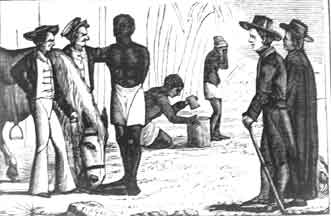
#BlackLivesMatter and The Legacy of Slavery

Much of what the “Black Lives Matter” movement is doing makes us uncomfortable, particularly those of us who are white. This is as it should be. If we’re comfortable where we are “at”, we won’t move, we won’t improve, we won’t change. If the injustices that exist are to be righted, we must be made uncomfortable. We must be made to see those things which are invisible to us because they’ve “always been that way” – working well for us, and so we ignore them or are unaware that they operate in our favor: that’s the very definition of “structural racism.” Yet, these same structural prejudices that are so deeply intertwined within our society and legal system do not work so favorably for others.

The first slaves arrive in Massachusetts on board the Desire, December 12, 1638.

We often forget that slavery was everywhere in the US until the early 1800’s, and it was no prettier in Massachusetts, New York, or New Hampshire than it was in Texas, Delaware, or Virginia.

Some of the best known Blacks in U.S. History – such as Sojourner Truth, William Still, and Lucy Terry Prince – were born into slavery in the North, or were transported here as slaves from Africa.  Many of our most famous native sons here in New England (such as John Winthrop, founder of the Massachusetts Bay Colony) sanctioned slavery.  Many of the wealthiest families of New England and New York in the 17th, 18th and 19th centuries built their fortunes upon the slave trade.  And, we forget that slavery was very much present in places like Massachusetts for over 150 years.  In fact, with the sole exception of Vermont, slavery was not abolished in any Northern State until after the American Revolution, and was not fully abolished from all Northern States until 1865.

Another aspect of oppressive systems, such as slavery – and like any institution or behavior deeply embedded in any society or organization – is that its effects persist long after people even remember that it was there. You see this in how some churches keep on “chewing up” new Ministers, in how corruption keeps on toppling one political figure after another in certain communities, or in why we here in America drive on the right hand side of the road, or why we set the table with the fork on the left.

Continue reading “#BlackLivesMatter and The Legacy of Slavery”

The Myth of Legislated Morality

Matthew 22:36-40 (NIV)

36 “Teacher, which is the greatest commandment in the Law?”
37 Jesus replied: “‘Love the Lord your God with all your heart and with all your soul and with all your mind.’ 38 This is the first and greatest commandment. 39 And the second is like it: ‘Love your neighbor as yourself.’ 40 All the Law and the Prophets hang on these two commandments.”

In my ten or so years as a Project Manager and Software Developer at the Mayo Clinic in Rochester, MN, I was frequently involved in discussions with physicians about what limits to incorporate into system designs.

Software development, and any sort of engineering or design for that matter, focuses to a large extent on limits.  We often needed to address questions like:

  • How large a number does this data field need to be able to store?
  • How wide should this column be on this report?
  • How flexible does this screen’s functionality need to be?

At Mayo, the underlying attitude was always “Limit our options and flexibility as little as possible.”  This was because physicians are dealing with people’s lives.  They absolutely do not want anything getting in the way of their ability to provide the best possible care for their patients. Is our “Great Physician,” Jesus, any different?

People constantly come to Doctors with all sorts of symptoms and issues that were well outside of what is expected, and so the tools they use in caring for those patients cannot limit their ability to provide the care that is needed.  Since we cannot accurately predict what situations the future will hold, we must provide tools that “flex” well in unexpected situations, and that do not needlessly place restraints on what can be done.

This same logic applies when talking about moral issues in everyday life, things like abortion, or gay marriage, or adoption across cultural or ethnic boundaries.  In all of these situations, people are involved.  Therefore, each such situation has its own unique circumstances.  Each one involves difficult, sometimes painful choices and adjustments.  Like a physician’s care of a patient, all of these situations involve decisions that these people will have to live with for the rest of their lives.  They are not choices that are made lightly.  Further, they are not choices made in isolation: the choice that is made impacts not only the person making it, but others as well, whether that is an unborn infant, or a same-sex partner, or a child who needs a family.  Their choices also impact and involve the “community” of which they are a part – family, friends, co-workers, and so on.

Continue reading “The Myth of Legislated Morality”

Thoughts on Ecclesiastes, the Second Great Commandment, and Homosexuality

I lived in the mid 1980’s with a man who – unknown to me at the time – was gay.  “John” was a broken, hurting, hiding individual – filled with conflict and deeply buried anger over who he was vs. who his church and his family and society as a whole expected him to be.  His own sense of self and self-worth was so deeply hidden under layers of self-deception, self-loathing and fear that it never surfaced in the time I knew him.  Compulsive and self-destructive behaviors filled his life: a vicious circle of turmoil and pain that he could not escape.

Conservative Christians focus on the Old Testament’s condemnations of homosexuality, especially verses like Leviticus 18:22  – “Do not lie with a man as one lies with a woman; that is detestable (NIV).”  Yet, Leviticus also condemns the eating of shellfish as “detestable” (Lev 11:10).  So, should we stone to death everyone coming out of “Red Lobster”?

Both the Hebrew and Christian scriptures condemn homosexuality to some extent.  Many argue this was because the ancient Jews lived in a world that had no room to care for (or even tolerate) people that we would have labelled as “unproductive members of society”, though the ancient Jews did not think in those terms (nor am I suggesting homosexuality falls into that category).  In that ancient time, homosexuality may have been seen as a behavior that was unproductive in terms of the critical need to sustain the culture through procreation.  It might also have been seen as an activity that threatened the status quo /or and gender roles within the culture.  Who knows?  Whatever the reasoning, it was seen as a threat to the community’s ability to survive in a world where the margin of survival was very thin.  Such threats therefore had to be dealt with firmly, if not harshly – since that same slim margin made less harsh punishments – such as prisons – impractical, if not impossible.

Homosexuality in the early Christian era was apparently not condemned of itself.  But, it is clear that it was often an expression of power and dominance or lust, not of love.  The New Testament has much to say in its condemnation of the misuse of power and wealth in many different dimensions and venues of life at that time.  So, is homosexuality itself being condemned by Paul and others, or its use as to express dominance?

Progressive Christians therefore question whether laws against homosexuality have a place in the modern world, a world where the challenge is not that of making sure enough children are born to carry on the culture, but is one of having too many: leading to the destruction of resources critical to our survival as a species.  Yet, in throwing out some Biblical teachings as outmoded or irrelevant, we need to be very careful: it would be too easy to throw out everything we don’t like if we pursue such a path.

A friend of mine once encapsulated the issue by asking me this question: “If someone close to you said they were planning to marry someone of the same gender, what would you do?”  My natural inclination and Jesus’ “Second Great Commandment” (in Matthew 22:36, where he quotes Leviticus 19:18: “You shall love your neighbor as yourself.”) both tell me I should take the approach of love: accept them for who they are and wish them and their partner happiness in their life together.

Although homosexuality was only one of the factors contributing to his problems, if “John” had seen such love in his life, perhaps he would have had the inner peace he needed to build a meaningful and productive life for himself.  His inner torment and outward pain are evidence that we (as a society, as well as individually) failed to treat him as the Bible teaches us.

Another challenge is the teaching of “hate the sin but love the sinner” that many have adopted as their attitude towards homosexuality.  To me, this is hypocritical: if we criticize someone’s lifestyle or sexual orientation as a “sin,” how can we say that we “love” them unless we’re saying we accept them with a hidden agenda: that we want to change them into something they’re not?

We need to remember the conclusion to book of Ecclesiastes’ in the Hebrew Scriptures: “Fear God, and keep his commandments; for that is the whole duty of everyone. For God will bring every deed into judgment, including every secret thing, whether good or evil.”  This verse has two messages relevant to this discussion:

First, we all have a duty to keep the commandments as best we can, realizing – as the Teacher in Ecclesiastes did – that we can never fully succeed.  Also, Jesus taught us to not judge one another, and it was for this very reason: we all do the best we can, and have no right, nor sufficient wisdom or knowledge, to judge others in God’s place.  Since I know that I am not perfect, and will never be so (in this life, anyway), this plus Jesus’ Second Great Commandment teaches me I need to accept my neighbor for who they are, someone just as imperfect as myself: both of us trying to make sense of the world in which we live, and our place in it.

Second, hidden sin is no different than visible sin: a hidden agenda is hurtful, as it requires you to be false to another – requiring the relationship to be built on a false foundation.  I am certain God will judge such behavior more harshly than homosexuality, which, in the modern context of being a behavior shared by two consenting adults, hurts no one.  (Some will question this statement, noting that the Christian Scripture’s Book of Romans makes clear that God judges all “sin” equally.  But, what I’m saying is that homosexuality is not necessarily a sin at all.)

In fact, since Jesus constantly taught about how we are called to love one another across gaps that others claim cannot be bridged, why would homosexuality be any different? If anything, it would seem that being brave and caring enough to love another in the face of the judgment of the world around you is right up Jesus’ alley.  Some will say “Jesus was not talking about sex!”  Hmmm, maybe.  But, do not forget that sex is but one component of the many facets of the deep and healthy and loving relationship that can exist between two people.  Why are we trying to separate one aspect of that type of relationship out as “wrong” when approving of all the others?  Especially since Jesus never spoke against homosexuality himself?

Therefore, I know that I am being consistent with the teachings and spirit of the Bible when I conclude that I am to be concerned only about whether someone is living a productive and balanced life; and what I should (or can) do to support them in that regard.  A person’s sexual orientation is an issue only if they are not at peace with it themselves, or if it harms others.

Copyright (c) 2009, Allen Vander Meulen III, all rights reserved.  I’m happy to share my writings with you, as long as you are not seeking (or getting) financial benefit for doing so, and as long as proper credit for my authorship is given (via a credit that mentions my name or provides a link back to this site).