An All Saints Day Homily, “Destiny”

To Christians, the veil of Death, that dark, impenetrable horizon that marks the end of the journey of all of our lives, is not a fearful boundary between the worlds of the living and of the dead. It isn’t the end. Yes, the dead do not return – yet, but there is nothing to fear – as Christians we know that our journey will require us to travel through the valley of the Shadow of Death during our lives, and then beyond – into the realm of death itself. But, Jesus has returned, has shown us that God’s love – the undying and uncompromising love of our Creator, the creator of all that is, including Time itself, is a love that is more than sufficient to pierce the veil that separates these two worlds.

celticHalloween is a very ancient festival, known as Samhain by the Celts. It was the Festival of the Dead. Cattle were brought back from their summer pastures and livestock slaughtered for the winter. Bonfires and lanterns would be lit; and the spirits had to be propitiated so that the people and their livestock would survive the winter.

Like most major feasts in ancient calendars, Samhain was a day of transition: in this case marking the end of the harvest season and the beginning of the season of darkness: a time of concern. In these ancient communities, which did not have the safety nets or resources we have now, a bad winter, or a bad harvest, or a delayed Spring, could be catastrophic. They knew something had to be done to calm supernatural anger. It was necessary to seek help from friendly spirits and from one’ ancestors who were already in that realm.

Many ancients, not just the Celts, believed that at this time of year the veil between this world and the next was at its thinnest, making it easier for us to communicate with those – the spirits of the dead and supernatural entities – who are part of that realm, but it also made it easier for them to trouble us if we didn’t treat them right! Halloween and All Saints Day both recall these beliefs, which have persisted for thousands of years, or more.

All Saints Day was originally part of a three day Medieval Christian festival that began with All Hallows Eve (which we now know as Halloween); and ended with All Souls Day on Nov 2.
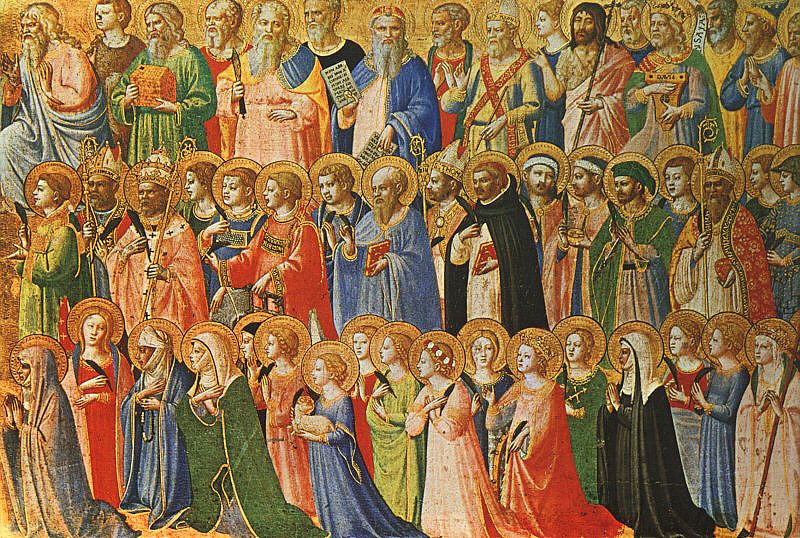
The Forerunners of Christ with Saints and Martyrs (about 1423-24) by Fra Angelico.

All Saints Day was a joint celebration for all the Saints of the Church – since there were far too many to each have their own feast day, and All Souls Day was a day to remember the faithful who died in the previous year.

Most Protestant Churches have either merged these three days into a one day celebration that recognizes all saints of the church – known and unknown (meaning us, when we pass, too); or else they ignore the Festival completely – like the old Calvanists did – disdaining the Holiday, as they did all Holidays, as being too “Popish” in nature.

The tie that links Halloween, All Souls Day and All Saints Day together is the same ancient belief the Celts had, that the veil between this world and the next is thinnest at this time of year. It was a day very appropriate for seeking to calm our fears and uncertainties in this world by reaching out to the next, as the three days in the Medieval Christian Festival each did in their own ways.

I want to reflect for a moment on my last sermon, given on October 4th, where I spoke on the concept of Belief. I pointed out that as Christians, we often think that “believing” is a goal – of having a firm, unshakeable commitment to the absolute truth of God. But, I argued that belief is actually a process – a journey with God, not a journey to God. Belief is not something we achieve, not a goal. Belief is something we do. We don’t know where Belief will take us in our journey through life, but we know where we’re going to end up.

The point of this morning’s reading from The Revelation of John is similar: we’re not certain what road we’ll follow to get to the end, but that we’ll get to the end is certain.


Continue reading “An All Saints Day Homily, “Destiny””

Sermon: Family

The challenge then is not who should be part of our family – that choice is not ours. Nor is the challenge to decide if we are to love them – because the Bible says love all, no exceptions. The challenge is how to love them, because they’re going to be climbing up that same ladder we’re on no matter what we do, Jesus made it so.

Hunter Family, ca1900; (c) 2015 Dorothy Vander Meulen
The Hunter Family of Waterbury, CT, ca 1900;
(c) 2015 Dorothy Vander Meulen

Jesus says “Who is my mother, and who are my brothers? … Here are my mother and my brothers! For whoever does the will of my Father in heaven is my brother and sister and mother.”

How does this relate to us, and why does it matter?

Please join me in prayer…

Lord God, we lift up this morning’s message.  May it touch our hearts, may it speak clearly to our souls, that we may come to more fully comprehend your eternal and undying love for us and for all of the Family of God. Amen.

I lived in the Tidewater area of Virginia about 20 years ago. Many of my co-workers, friends and neighbors were part of military families, mostly Navy. One September, a friend who served on board the Aircraft Carrier U.S.S. Enterprise invited me to be his guest for the ship’s “Friends and Family Day Cruise”. Now, how could I refuse such an invitation to see the Enterprise? I accepted!

USSEnterprise CVN65This was an event where the ship’s officers and crew could invite those close to them to come on board for a short cruise that included tours, a picnic, and some presentations and demonstrations. Towards the end of that afternoon we ran into a co-worker of mine: a wonderful and godly black woman named Veronica. She told us her husband was an officer on the ship.

While there, we really wanted to check out the ship’s control tower, that big “Island” on one side of the flight deck where the bridge is. But, one of the rules was that only officers and their families were allowed up there. Veronica assured us that going up would be no problem…

Wondering how she could do this (since we clearly weren’t family), Sean and I timidly followed her up the ladders. Almost immediately, we were confronted by two very stern guards, holding their rifles at the ready. They said, “Sorry Ma’m, only officers and their families are allowed above Deck O-3.”

Continue reading “Sermon: Family”

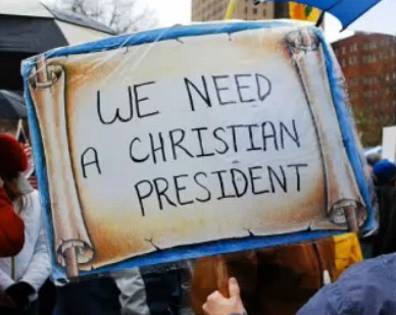
A Christian President?

Such signs say far more about the persons holding them than they do about their intended target. Expressing God’s love in ways these people and I can both agree on is a difficult challenge, because it requires that I be just as open to being changed by that love as I hope they will be. It would be far easier, and less challenging to my own peace of mind, to simply shut the door to relationship by dismissing such people as not worth listening to – which is what those signs are attempting to do in terms of their bearers’ relationship with me – and our President – after all…

11206010_429794493875511_1026886848675139799_nLike you, I’ve seen signs like this posted by relatively conservative groups and individuals on social media and elsewhere. While I understand the impetus behind such signs, that I understand does not imply that I agree with them – far from it!

For one thing, we must remember that our President IS a Christian.  Until shortly before his election to the Presidency, he and his entire family regularly attended worship at Trinity United Church of Christ in Chicago, one of the largest and most dynamic churches within my own denomination.  In fact, more than a quarter of a century ago, our future President made a conscious decision to become a Christian when he joined that church after being, as he put it, a “religious skeptic” for many years.  (One should also note that Trinity Church’s motto is “Unashamedly Black and Unapologetically Christian.” …And as an organization serving a community deeply and continuously affected by racism and injustice in this society, how can their motto be otherwise?)

Now, I am a Minister in the tradition of the United Church of Christ (UCC), and for over three centuries members of my family and our ancestors have been faithful members of a church that is now part of this same Protestant Denomination that Barack Obama chose to become a member of at age 26.  Obama is one of three presidents who were affiliated with this same religious tradition that the UCC descends from (Congregationalism) at some point in their lives.  So, I see signs such as this being evidence that their bearer does not believe I am a Christian, either.

Continue reading “A Christian President?”

Sermon: The God Who Hugs

Christianity is unique in that it claims that God wants to physically walk with us – a point that comes out very strongly in the Gospel of Luke, in particular. So, it is not just our spirits, but also our bodily existence, that matters greatly to God.

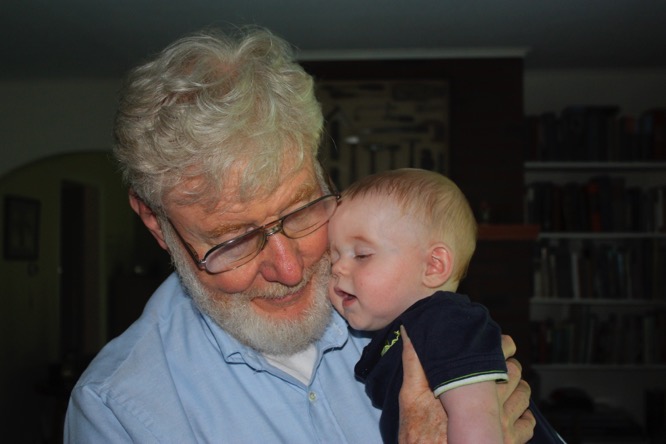
I’d like to begin with this photo. Although my Dad had held our son AJ many times before this, this was the first time that AJ really sought out a snuggle with Grandpa. It was a special moment for them, and for me too: my Father still keeps a framed print of this on his nightstand.

Please join me in prayer…

Lord God, we lift up this morning’s message. May it touch our hearts, may it speak clearly to our souls. You have come to earth to reassure us, comfort us and heal us. You understand the importance of presence and touch. Speak to us now, Lord. Help us to love you in the ways you have wanted us to love you since the beginning, and help us learn how to actively share that love with all whom we encounter. Amen.

Physical touch is such an important thing. In fact, you can find references to physical intimacy (and no, I don’t mean THAT kind of intimacy) all through the Gospels and especially in the Gospel of Luke, beginning with the infant Jesus being held by the elderly Simeon and Anna in the temple in Luke 2, to the woman washing Jesus’ feet and drying them with her hair in Luke 7, to Judas the Betrayer (as a counterexample) hugging and kissing Jesus in Luke 22, and ending with Jesus request that the disciples touch him in this morning’s reading from Luke 24.

As I’m sure you know, research has shown that children who are not cuddled and lovingly held on a frequent basis, starting at birth, do not thrive: they do not develop as fast, and are not as healthy. Even now, at age 5, AJ still reaches for Mommy or Daddy, or his teacher, when he’s distressed. A hug, or even just the touch of a hand, will reassure him, calm him, and help him find stability. And then, once he’s there – he’s off again: playing, tromping in the mud, and climbing on everything!

How many of you remember Leo Buscaglia?

Continue reading “Sermon: The God Who Hugs”

Sermon: Knowledge and Faith

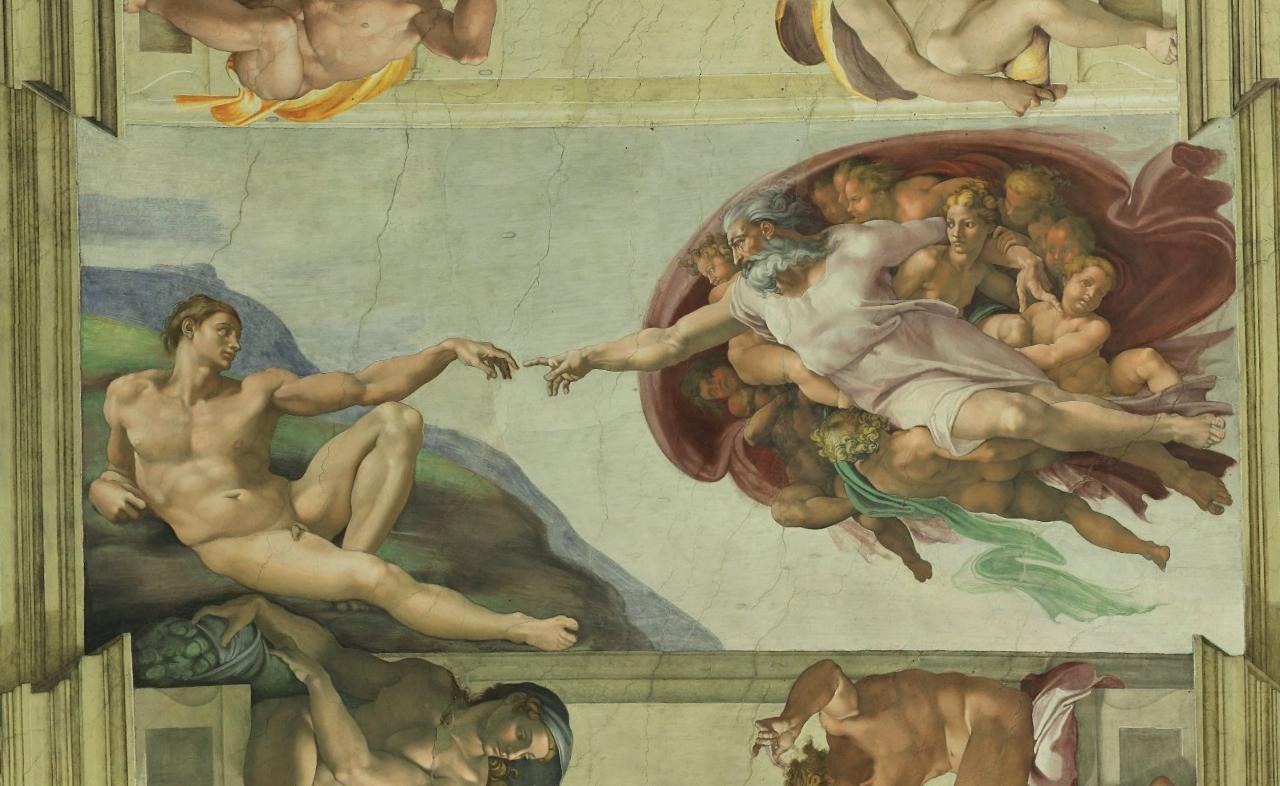
sistine-chapel-ceiling-creation-of-adam-1510I’ve been pondering how faith operates in and through us – both positively and negatively.

For a positive example, I look to our own congregation: We saw faith at work last night in our Annual Meeting – a time of remembering, visioning and deciding; sharing our knowledge, and evaluating the effectiveness of the wealth, wisdom and work we’ve expended in the past year. It was a time of counting up the resources available to us and deciding how to best utilize them to accomplish the mission and goals we believe are a part of our journey into the future.

That meeting, just like this worship service, and the many other things we do – either individually or jointly – are all positive, beneficial, things – or at least we see them as such. And, we see them as expressions of our faith.

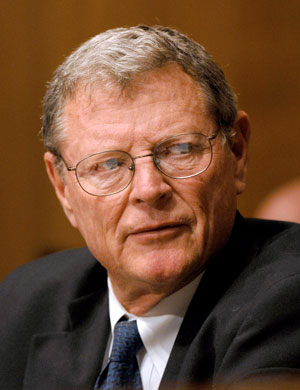
Inhofe
Senator Jim Inhofe

On the other hand, Oklahoma Senator Jim Inhofe frequently quotes the Bible to “prove as he says, that “…The hoax is that there are some people who are so arrogant to think that they are so powerful, they can change climate. Man can’t change climate.” This is the perspective he works-from in his new post as chair of the Senate’s Committee on the Environment and Public Works: a placement of faith ahead of Science, to the exclusion of science in fact. Is this also Faith?  If so, is it a beneficial application of faith?

It seems to me that we need to understand what Faith is, since what it is is central to who we are as Christians, and therefore critical in our discernment and pursuit of God’s Call upon our lives.

Continue reading “Sermon: Knowledge and Faith”

An Advent Prayer

534100_445597948860210_865607878_nLord, Advent and Christmas are a dark time for many, a time when the pain of past and present injuries and losses become almost unbearable.  A time we’d rather not face all over again.

And yet, the purpose of Advent is to remind us of our brokenness and sin, of our need for the grace and healing touch of a God who loves us fiercely and compassionately. Further, Christmas teaches us that God knows our pain because God has lived it: walking among us as one of us, as a human being.  Jesus experienced birth, the love of a devoted mother, the pain of losing those dear to him.  He knew rejection, hunger, despair and fear.  He was betrayed by those he loved, and he experienced a painful and humiliating death.  God knows what it means to be human.  God knows our deepest, greatest, most deeply hidden fears, failures and weaknesses.

And so, our faith tells us, Jesus is Emmanuel – the God who walks with us.  God and the Kingdom of Heaven are near us at the hardest of moments, and for every moment of our lives, including now.

Continue reading “An Advent Prayer”

The God Who Trusts

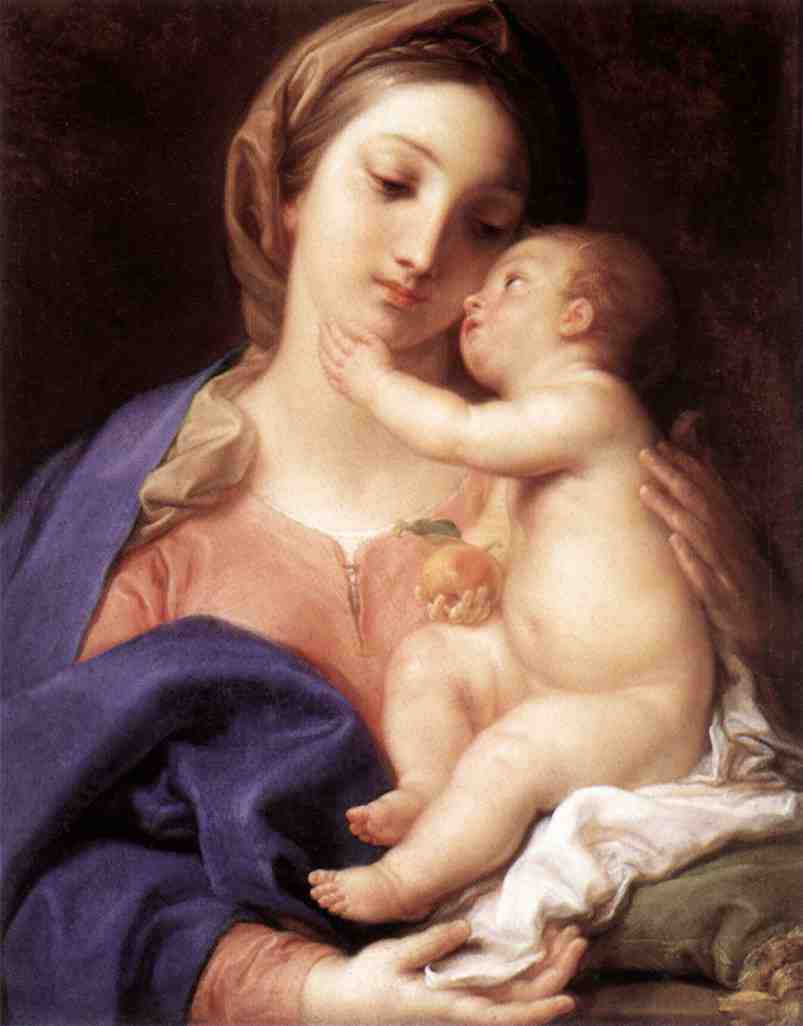
Madonna and Child by Pompeo Batoni, ca 1742.

This Christmas Eve, I thought it would be useful to share a simple thought: that God trusts us.

Orthodox Christianity is very explicit about this – God became incarnate and accessible to us through the birth of an infant human child.

Newborns can do nothing for themselves: they are vulnerable and rely totally upon those who love them for protection, for sustenance, and for life itself.

Jesus and the entire plan and hope represented by the Virgin Birth would never have come to fruition if his parents had not cared for him, fed him, educated him and loved him.  If they had failed to do so, nothing else would have saved him, or us.

So, God became vulnerable to us through the birth of Christ.  God trusted us to take care of the babe and so ensure the fulfillment of God’s plan.

In other words, God trusts humanity – for all its flaws and failings – to do the right thing, and to accomplish the mission.  Even more importantly, God believes that you are ultimately good – because a creature that is inherently evil would never be entrusted with God’s child.

Therefore, God knows you are lovable.  God values you.  God believes in you, and is willing to risk everything based on that belief.

God trusts you…

Have a Blessed Christmas.

… And as my fellow North Central College Alum, Bruce Nesmith, said in response to these thoughts: “Maybe in 2015 we can trust our best selves more.

Copyright (c) 2014, Allen Vander Meulen III, all rights reserved.  I’m happy to share my writings with you, as long as proper credit for my authorship is given. (e.g., via a credit that gives my full name and/or provides a link back to this site – or just email me and ask!)

Static Faith?

10846012_10203194098156896_5553452210125203673_n

In some ways (and perhaps oddly, for a Progressive Christian like me), I admire Joel Osteen.  I like his preaching, even though I often disagree with his Theology, because he presents a clear and simple message that is grounded in God’s love.

This particular tweet of his is, however, a little bit problematic for me: mostly but not entirely because of Osteen’s main point, “choose faith over facts.”  Even though this is, in fact, a theme that often appears in my own preaching and teaching, including my recent sermon entitled “Risky Business.”

But with regards to this tweet, the heart of my concern lies in how that statement is modified by the statements that precede it: “The facts may tell you one thing” and “God is not limited by facts.”

Continue reading “Static Faith?”

The Tale of Injustice

Back in the mid 1990’s I worked for a well known conservative Christian organization.  All employees of that organization were periodically required to spend a day ministering to those in need, in various ways.  My role in one of those efforts was to be part of a crew that distributed food to those in need.


One of the people that I encountered that day, a very slightly built black woman, lived several blocks away from the place where we were handing out our boxes of food.  The box I gave her was very heavy, so I offered to help her carry it back to her home.  She gratefully accepted.  She said it was only a block or two, so I didn’t worry about telling anyone what I was doing, since I figured I’d be back in just a few minutes.

We chatted as we walked along, she was quite an interesting person – but as we went on, I steadily became more and more nervous,  Here I was, getting further and further away from my team, several blocks, in fact, in the middle of a one of the worst neighborhoods in the Tidewater region of Virginia.  I was the only white anywhere in sight, and a red head at that!  I knew that no one would be looking out for me when it was time to pack up and head back.  So, I was likely to be stranded if I didn’t get back soon.  I felt conspicuous, I felt alone, and I was afraid.

Continue reading “The Tale of Injustice”

Safe Sex?

condom-59639_640Although I have disagreed with him in the past on many topics (such as abortion), I like much of what blogger Matt Walsh has to say in his recent post entitled “I will not teach my kids about safe sex because there is no such thing.”

Walsh’s thesis is – as he puts it – that in teaching kids about safe sex, “…we have taken the honesty, love, passion, beauty, and creative power out of the act, and replaced it with something sterile, guarded, frivolous, and disinterested.”

For Walsh, “safe sex” teaches kids that they must protect themselves as much as possible from the potential harm and dangers that can arise as a result of sexual contact.  He feels this misses the entire point of sex, and turns it from a beautiful expression of vulnerability and mutuality into a sterile act that is little more than shared masturbation, as well as providing a false guarantee that it is possible to have sex safely. Continue reading “Safe Sex?”

Rethinking Wedding Traditions

The marriage ceremony is a “passing of the torch” (through this ritual of vowing to love, honor and cherish) from one generation to the next. It reaffirms the importance of preserving those things that make our relationships with our spouses healthy, strong, and supportive. Marriage is a statement of our hope and determination to continue that chain of sharing, and the hope it represents, into the future – so that our spiritual (or physical) descendants will someday have their own opportunity to join with us in making the same affirmations. That said, it is important to recognize that as our culture changes, so too must our traditions. Therefore, no marriage tradition is so sacred that it can’t be rethought or even entirely omitted.

wedding_bandsAs a minister, I am (obviously) called on from time to time to officiate at weddings.  In helping a couple plan their wedding and begin their new life together it is important to help them recognize that as our culture changes, so too must our traditions, if they are to remain relevant and meaningful.  Therefore, no tradition is so sacred that it can’t be rethought or even entirely omitted.

Along these lines, the New York Times recently published an article entitled “What Wedding Traditions Should Be Tossed?”  Which brought together the thoughts of a number of experts on various aspects of marriage and relationship.  These authors’ suggestions are all worth considering when helping a couple work through their plans to marry – and for the ceremony itself.  I thought I’d highlight some of the suggestions that I find most helpful in my role as the officiant and spiritual guide, and I’ve added a couple of additional suggestions of my own…

Continue reading “Rethinking Wedding Traditions”

Coming Out as Inclusive.

UCC Open and AffirmingThanks to Army Chaplain Jonathan R. Fisher for making this valuable point in his blog.

Being “Open” to others (and their otherness) is simply not enough. “Open” by itself is a passive state. As Christians, whether we are in the pastorate or the laity, we are called to do more than merely be “Open.” Our faith calls us to action, meaning that we must not only be Open, but also Affirming. We cannot simply welcome those who come through our doors, but must also reach out to them beyond the doors of the sanctuaries we’ve defined for ourselves. We must affirm others for who and what they are, right where they are.

Affirmation is not about accepting someone when they come into my territory, but rather about valuing and loving others right where they are even if they never step outside the limits of the space they have set for themselves.

Affirmation is a declaration that everyone is a child of God, and therefore a valuable, wonderful person loved by God for exactly who they are right now; and that we are called to do the same.

Being “Open” AND “Affirming” is not an easy thing to do, because it calls us to accept that we don’t have all the answers, and never will; and that we therefore must be willing to accept and value the presence of God in others, no matter how it is expressed, and no matter how challenging we may find those expressions to be.

I’ll end with this quote from Fred Rogers, from his book “The World According to Mr. Rogers”…

“As human beings, our job in life is to help people realize how rare and valuable each one of us really is, that each of us has something that no one else has–or ever will have–something inside that is unique to all time. It’s our job to encourage each other to discover that uniqueness and to provide ways of developing its expression.”


Rev. Dr. Jonathan R. Fisher's avatar Jonathan R. Fisher

It would seem that a post about this would be completely unnecessary in the pluralistic world of the Army Chaplain Corps. It would seem that the directive to perform one’s own faith and provide for all the others would make such a statement redundant.

Only it’s not.

Somehow, this needs be said.

So, I am going to say it: I am a chaplain for ALL my Soldiers. All of them. The gay ones. The straight ones. The fat ones. The skinny ones. The conservative ones. The liberal ones. The religious ones. The non religious ones. The connected to church and the far away. The reason driven and the faith-based. The agnostic and the Christian. The pagan, the Muslim, the Hindu, the Buddhist, the whatever-you-happen-to-believe right now. Everyone I can think to mention and everyone else.

All means all.

This last summer, the General Assembly of the Christian Church (Disciples of…

View original post 694 more words