Static Faith?

10846012_10203194098156896_5553452210125203673_n

In some ways (and perhaps oddly, for a Progressive Christian like me), I admire Joel Osteen.  I like his preaching, even though I often disagree with his Theology, because he presents a clear and simple message that is grounded in God’s love.

This particular tweet of his is, however, a little bit problematic for me: mostly but not entirely because of Osteen’s main point, “choose faith over facts.”  Even though this is, in fact, a theme that often appears in my own preaching and teaching, including my recent sermon entitled “Risky Business.”

But with regards to this tweet, the heart of my concern lies in how that statement is modified by the statements that precede it: “The facts may tell you one thing” and “God is not limited by facts.”

Continue reading “Static Faith?”

Changing Perspective

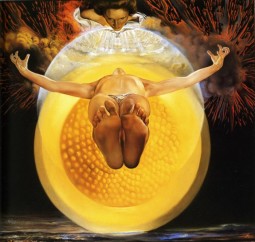
The last Chapter of the Gospel of Luke and the First Chapter of Acts are readings that describe the same event, Christ’s Ascension. Both passages are written by the same author (Luke) and both are addressed to the same person (Theophilus). Yet, there are significant differences between the two narratives, to the point where reconciling them (if both are viewed as absolute fact) is difficult to do. The reasons for these differences lie in an existential crisis that Christians were struggling with at that time. In these two readings we see Luke’s thinking on the crisis evolve as he struggles to reconcile his faith with the facts and then portray The Ascension in a way that helps his audience to see their faith and relationship with God in a new light, and so find new hope for their Salvation.

Salvador Dali's "The Ascension"
Salvador Dali’s “The Ascension”

Sermon: “Changing Perspective”
Delivered at ARK Community Church, Dalton MA
Seventh Sunday of the Easter Season: June 1, 2014.

Scripture readings:
Luke 24:44-53 (from “The Message”)
Acts 1:1-11 (from “The Message”)

Our readings this morning both cover the same event, Christ’s Ascension; both are also written by the same author, Luke; and both are addressed to the same person, Theophilus. Yet, there are some significant differences between the two narratives, to the point where reconciling them (if both are viewed as absolute fact) is difficult to do.

Why is this, what are those differences, and why do they matter?

Continue reading “Changing Perspective”

The Invisible Why

imagesMy friend, Pedro S. Silva, recently made an interesting point, which is that Science and Faith both begin from the same place.  They both start with something that is invisible to the naked eye, approachable only through the functioning of the human mind.

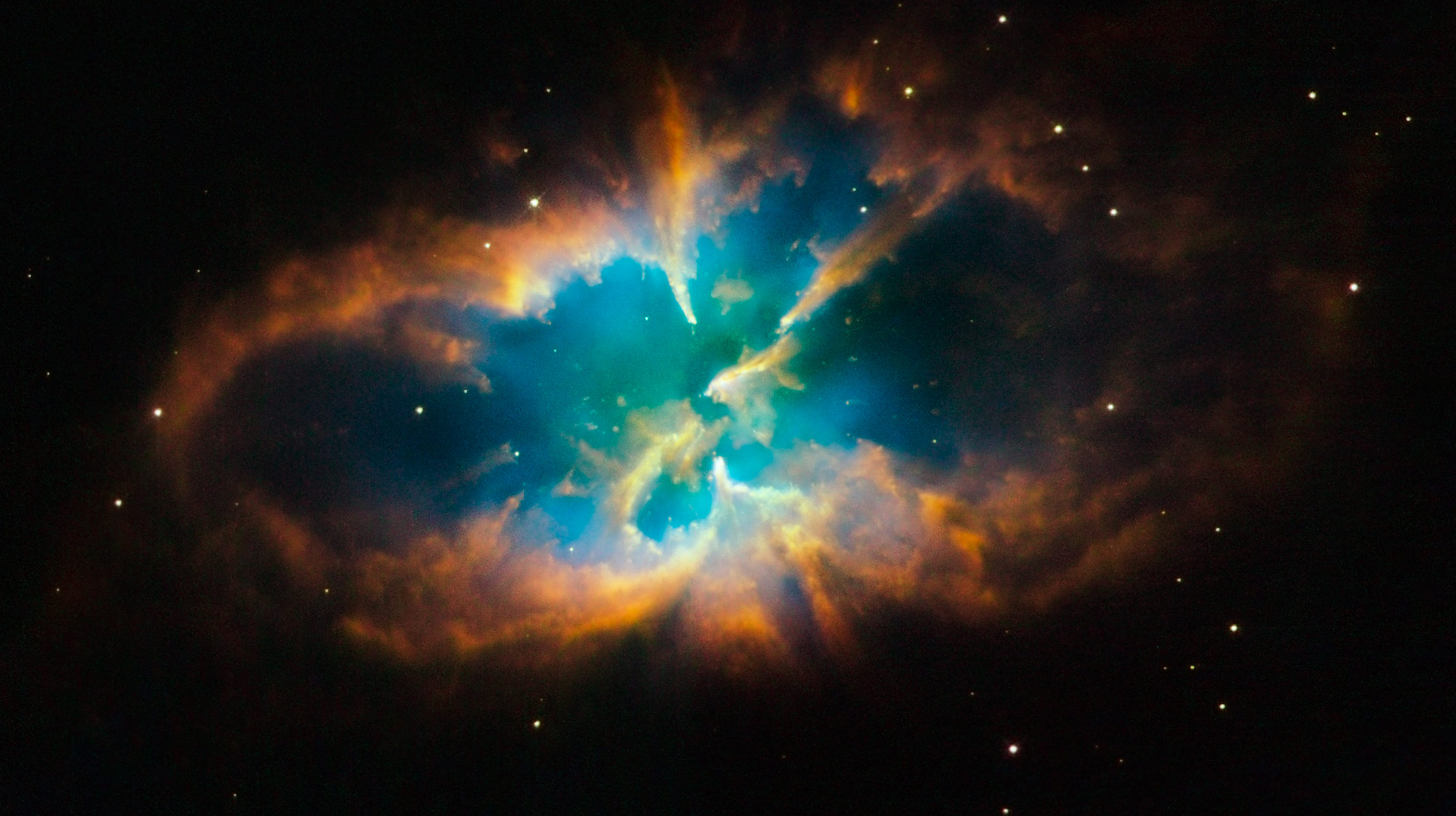
In the case of science, all matter and energy begin with subatomic particles, mixtures of quarks and leptons in various configurations: interacting with each other at the behest of forces like gravity, electromagnetism, the strong force and the weak force.  And yet, none of these elementary particles are seen, heard, tasted or touched.  Instead, we observe their effects on other things, or throw subatomic particles at each other at ridiculously high speeds to see what flies out when they collide.

And we see invisible things in other ways – using telescopes to see the universe as it was back in time, even up to shortly after the “Big Bang.”  Or, assembling myriads of data observations to find patterns that have would otherwise be hidden, patterns which have meaning to us, such as global warming, or economic trends, or opinion polls.  (…If you believe that opinion polls have meaning, which I often do not!)

Science is all about seeing the unseen, employing specific tools to help us see and appreciate things that were previously hidden from us.  Science is a useful tool, one we cannot ignore (even though some try).  Science helps us see clearly where seeing was not possible before.

Faith is no different: like Science, it also makes it possible to find meaning in the unseen.

Like Science, Faith also begins from an invisible place, a place that cannot be directly observed, a place that can be inferred only through its effects upon other things.  Those of us who are people of Faith call that place “God.”

Just like Science, Faith employs various tools to better understand the mystery of that which is invisible to our senses.  We read scriptures. We pray.  We look within ourselves and listen carefully to the unspoken thoughts, feelings and currents we find there.  We observe the world around us and find purpose and meaning in it.

Like Science, Faith sees a bigger pattern than can be discerned with the naked eye by beginning with those things that the naked eye cannot discern at all.  And yet, Faith differs from Science in one crucial aspect.  Science is about finding those patterns.  It is about the How and the Where and the When of things.  It is not about the Why of things.  Faith is about the greater purpose and direction of existence as a whole, and our individual existence.  Science focuses on the mechanics of that existence.

  • Why am I here?
  • Why am I, at all?
  • What purpose is there to my life?
  • What’s the point of life at all?

So, when I see folks dismiss the value Faith for whatever reason, such as because they believe that Science already tells us all about how the universe came to be; I am saddened, for they are not seeing the value of Faith in their lives.  They are confusing Fact with Truth…

Science tells us how the Universe started with nothing and came to be what it is.

Faith tells us why.

Science tells us how the Human body functions, and how various aspects of our environment, or our genes, influence our behavior and the quality of our lives.

Faith tells us why life is worth living.

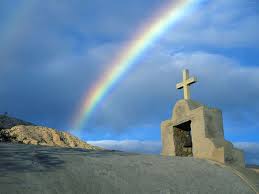
Science tells us of all the wavelengths of light that are to be found in a rainbow, and can even tell us the chemical composition of the source from which that light came.

Faith tells us the Rainbow is beautiful, and how it is a reflection of God’s love for us.

Science helps us understand the World around us.

Faith helps us find hope within it.

Science tells us What we are.

Faith tells us Who we are.

Embrace both.

Copyright (c) 2014, Allen Vander Meulen III, all rights reserved.  I’m happy to share my writings with you, as long as you are not seeking (or gaining) financial benefit for doing so, and as long as proper credit for my authorship is given (e.g., via a credit that gives my full name and/or provides a link back to this site).

Evolution vs. Creationism

2hs-2009-05-a-printA thought to consider for today…

There has been a fair amount of discussion in the media in recent days of Creationism vs. Evolution, perhaps sparked by Bill Nye (“The Science Guy”) and his recent online debate with Creationist Ken Ham.

My concerns with Creationism are threefold: one scientific and two theological in nature.

The scientific one is simply that Creationism flies in the face of established science, science with a very deep and well supported history of research behind it.  To choose Creationism over Evolution requires rejecting a multitude of well established and well defended facts that are highly supportive of each other, and have shown a massive amount of predictive value in terms of where to look for new revelations of the nature of Creation.  Creationism cannot do this, and also (in effect) requires rejecting the majority of scientific theory and research made over the last 500 years or so, along with the advances that have been made as a result of those theories and research.

For me, Faith is of paramount importance (which is probably obvious, given that I am a minister).  However, Faith must pass the “sniff test” – meaning that it is relevant and meaningful in this world that we live in and know.  Creationism fails that test.  This leads to my two theological concerns, where Creationism fails even more egregiously than it does when portrayed as a scientific theory.

Continue reading “Evolution vs. Creationism”

Things Have Changed

Our world is always changing, and yet we hang on to our old traditions and ways of seeing things. This doesn’t always work well, and we often don’t realize it. We just muddle along, often somewhat aware of the changes going on around us, but perhaps not having thought through their full impact. It often takes a challenge to our views and memories for us to fully appreciate what has happened, and how those changes affect us and what we are called to do.

Sermon presented at Centre Congregational Church, UCC (Brattleboro, VT)
June 2, 2013
Scripture: Luke 7:1-10

The Synagogue in Ancient Capernaum

As most of you know, my father, Allen Vander Meulen Jr., was once a Minister here.  It’s humbling and a bit surreal to stand here nearly 50 years after his first Sunday here; and I am happy to report that both he and my mother are here today!  Thank you, Rev. McFadden, and all of you, for inviting me to speak here this morning: it is a blessing and an honor.  I am deeply grateful.

My earliest memories are connected with this church.  One of the first, I think, is hearing my Dad’s voice boom out over the congregation during hymns.

You see, he’d stand here and sing as he’d always done in his previous churches.  But, in coming here something was different, something that he did not realize mattered.  Those previous churches had not had one of these [TAP ON MIKE].  So, singing in full volume with his powerful voice had never been an issue before, he’d never had to think about it – and didn’t think about it because the speakers pointed towards the congregation, not towards him – he didn’t hear what we heard.

And I was three years old – I didn’t know any different.  I had no idea that hearing the preacher sing so LOUDLY was not normal, not even at those times when I recalled it decades later.  It had been cemented in my mind as the way things were, life as normal.  My perspective on it was never challenged until a moment of revelation – in my forties, I think – when I finally heard the story of how “Pony” Felch, the church moderator at the time, took my Dad aside one day and said in that wonderful old Vermont accent of his “You know Allen, next time you sing a hymn from the pulpit, take a step back!”

Our world is always changing, and yet we hang on to our old traditions and ways of seeing things.  This doesn’t always work well, and we often don’t realize it.  We just muddle along, often somewhat aware of the changes going on around us, but perhaps not having thought through their full impact.  It often takes a challenge to our views and memories for us to fully appreciate what has happened, and how those changes affect us and what we are called to do.

Continue reading “Things Have Changed”

A Meditation on John 21:1-9

We aren’t called to be passive in our faith, but to be active, to look for Christ’s presence at all times, for it is always there. We are to employ our hands in the service of the Body of Christ, for it is then that we will enjoy the fullness of all he has set before us. Christianity is not just a faith of introspection and meditation, it is also a faith of service and action, of making a difference.

The last chapter in the last of the four Gospels, the Gospel of John, is the final statement in the narratives of Jesus’ walk among us here on earth.  And so, as such, we can imagine that it has much to tell as we voyage forth into the world, leaving behind the physical presence of Jesus, just as a child ventures forth from home, eagerly heading to school on their own for the first time.

John is unique among the four Gospels.  It was written a few decades after the others and has a great deal of material not shared with the other three.  And unlike the so-called Synoptic Gospels of Matthew, Mark and Luke, John is very much focused on the future of the community of believers.

John 21 focuses on our role as believers living and working in the world: Are we to be active or passive agents of the Body of Christ?  How will Christ be present in us in this role?  How will our own strength and faith be sustained as we do so?

Continue reading “A Meditation on John 21:1-9”

An Expository Reading of Pilate’s Questioning of Jesus

Presented at Sudbury Memorial UCC Church, November 25, 2012
Scripture: John 18:33-37

Prologue…

Today we celebrate “Christ the King” or “The Reign of Christ” Sunday, the last Sunday of the Liturgical year, a time when we ponder the meaning of Christ’s Lordship here on earth, and in our lives.

In exploring this today, we will focus on the topic of Fact vs. Faith.  For us to allow the Son of God to have Lordship over our lives, then Christ must be real and tangible truth to us in some way.  But, what does that mean?  How do faith, fact and truth intersect?  How does the truth of Christ become reality in our lives?

In 1975, James Cone, a well known African American Theologian, got right to the heart of this issue when he wrote that “Jesus is Black.”  People were shocked by this, as you might imagine.  Many rejected the idea, others tried to understand it as a metaphor.  But Cone insisted, saying that his critics didn’t understand, the TRUTH is that for African Americans, Jesus is Black.  He must be, otherwise, Jesus is not talking to those of us who are African Americans, but only to those who are White.  In order for Jesus to speak to us, to really be what he says he is – God with Us – then, for Cone and many others, Jesus must be Black.  Otherwise, Jesus is not someone that Cone can relate to as a member of a race that has been oppressed and marginalized for centuries because of the color of their skin.

In hearing this, our reaction may be “But, that’s not the truth!”

Really?  How can we be sure?  …Does it matter?

Continue reading “An Expository Reading of Pilate’s Questioning of Jesus”

Unexpected Faith

Presented at First Baptist Church, Belmont, MA; June 17, 2012.

Scriptures:
2nd Corinthians 5:6-17 (We walk by faith, not by sight…)
Mark 4:26-34 (The Parable of the Seed that Grows of Itself and the Parable of the Mustard Seed)

How many of you are familiar with the Garlic Mustard plant?

It’s a common weed in this area.  If you crush its leaves, it smells like garlic; and it has a taste similar to that of mustard, hence it’s name.  In colonial times it was a common herb, since the colonists had no money to buy spices from overseas, such as pepper, even if they had access to them.  It was also very easy to grow.   …Perhaps a bit too easy.

Continue reading “Unexpected Faith”

Love

I often ponder, why do I feel a call to Ministry?  Frankly, why would anyone?  Why become a Pastor in a society where Christianity is losing influence and is declining in the face of shrinking and aging congregations, often in buildings that are also aging and located in less than ideal locations?  Why be in a profession where many congregations struggle just to keep the doors open, let alone provide a livable salary for their pastor?  Why become a pastor in a society where many people have little (if any) knowledge of the Bible and what it contains, who have little or no idea of what Christianity really is about?  Why be a religious leader in a society where many (if not most) in the society we live in believe religion is obsolete and irrelevant?

The answer to all these questions is Love.

Love is an inescapable part of what makes us human.  Without love, we would loose that which makes life a journey of hope rather than of despair.  Without love, we would cease to be human.  Paul said it best (of course) in First Corinthians 13:2, “…and if I have prophetic powers, and understand all mysteries and all knowledge, and if I have all faith, so as to remove mountains, but do not have love, I am nothing.” Love is an outgrowth of relationship: our relationships with each other, even our relationship with ourselves, and especially our relationship with Christ.

After many years of exploring many different varieties of Christianity and some other faiths, I have found that the place for me that best expresses and supports these three sets of relationships (with self, man and the Eternal) is Christianity, and especially my particular denomination, which emphasizes our individual relationship with God within the context of our relationship with our local Congregation.

So, I am seeking to become a Pastor because I am driven by love: love for others, love for my church, and love of God.  As a Pastor, I see one of my major tasks as being a conduit, or perhaps an advisor: helping others develop stronger, healthier, more vibrant relationships in all of these areas, to help them become surrounded, filled and even pouring out love. I feel this aspect of religion is very relevant in today’s world, where relationships are becoming fewer, shorter in duration, and more likely to be indirect and distant (such as through Facebook) than face to face.  Our faith in God and membership in a Community of Faith brings meaning and value to our lives; it enables us to love.  Too few people in today’s world know where to turn to fill this need we all have for relationship and love in our lives.  Too few have any idea that Faith is the answer.

In other words, being a Pastor is not about me: it’s about my faith, my congregation and my love for others.  It’s about walking together in the here and now, and in so doing, setting our feet onto the path God has set for our journey into the future; and helping others learn that this same path can be for them, too.


Copyright (c) 2011, Allen Vander Meulen III, all rights reserved.  I’m happy to share my writings with you, as long as you are not seeking (or getting) financial benefit for doing so, and as long as proper credit for my authorship is given (via mention of my name on your site, or a link back to this site).

A Little Faith

Presented at Memorial Congregational Church, Sudbury, Massachusetts, August 7, 2011.

Scriptures: I Kings 19:9-18 and Matthew 14:22-33

The other day, while running errands in my car, I encountered a timid driver.  You know the type: hesitating at intersections, driving slow or speeding up unexpectedly.  These drivers start to do one thing, and then without warning change their mind.  If they’re at a stop sign, you don’t know whether to go, or wait for them.  If they’re trying to make a turn, you don’t know whether to go around them, or not, because you know they might suddenly turn right in front of you.

It would be far better for everyone, including themselves, if these people would just make a choice and go with it, rather than second guessing themselves and changing their minds.  They don’t project confidence, don’t clearly indicate their intentions and leave us guessing as to how to respond.

These drivers seem to have no faith in the choices they are making.  Maybe they’re unsure of where they’re going, or perhaps they’re afraid of the consequences of making a wrong choice.  When they do choose, they change their minds the second there is any reason to doubt the decision they’ve made.

Continue reading “A Little Faith”

Faith

Sermon presented at the Congregational Church of Grafton, MA, July 1, 2012.

Texts:

Mark 4:30-32 (Parable of the Mustard Seed)

Hebrews 11:1-7 & 11:32-12:2

What is Faith?  That’s not a small question.  In Christianity, the answer to that question begins with Genesis … and never really ends.  Faith defines how we see ourselves, who and what we choose to have relationships with, and what we envision our end and the end of Creation, to be.  Faith helps us make sense of the events and circumstances that shape us and our world.  It lays out a path for us to follow into the future.  Faith enables us to gaze into the infinite and the unknowable and find a place there for ourselves.  It helps us make sense of the mystery of God and the vastness of Creation.  Faith enables us to exist in a world of uncertainty and change.

Faith.  A great deal is expressed in that one tiny little word.  So, it’s kind of audacious to think we can have any sort of meaningful exploration of this topic and yet still have time to get to the Sox and Mariners game this afternoon.

A lot has been written on the topic of Faith.  Not just the Bible, but everything from Hamlet or Pilgrim’s Progress to Harry Potter and Star Trek.

We talk a lot about Faith too, saying things like “I have faith in Evolution” or “This (or that) strengthened my faith” or, “I lost (or I found) my Faith.”  But, we never define what Faith is, even though we talk a lot about how much of it we have, or need, or how to find it, or how to use it.

We also talk a lot about how important faith is to us.  We admire those who have strong faith, and we honor those who die for their faith.  We seek to encourage faith in others, and we minister to those in need as a product of what our own faith impels us to do.  Faith is a powerful thing, and central to our existence.

Yet, even though we talk a lot about what to have faith in; or, how to find faith; or, how to use our faith, we never define what it is.  It’s assumed we already know.  I’m not sure that’s a good assumption.

Continue reading “Faith”

Is God Involved?

One of the biggest questions any faith must address in their theology is to what extent God is involved in human affairs.  The answer can range from seeing God as distant and totally uninvolved (if not unapproachable); to heavily involved in every last detail of our lives.  None of the world’s major faiths have a single viewpoint on this issue.  Instead, we see a range communities within each of these great faiths with a broad range of views on the continuum between these two extremes.

The “distant” conception sees God as a distant, uninvolved deity.  In this view, humanity is often seen as an accidental or deliberate byproduct of creation, as rejected or cut off from God, or perhaps even forgotten by Her (or Him).  Adherents of this view usually believe it is up to humanity to somehow bridge the gap between us and God to achieve salvation.  For myself, I have difficulty with this view, since I believe God can (and does) have a personal relationship with us.  A distant and uninvolved God wouldn’t care about us one way or another, and our very existence would therefore be meaningless and futile.

A “Highly Involved God” is one where all pain, suffering and bad choices in this life are “fixed” because of God’s love for us.  While I believe God loves us, I have concerns with this point of view because it requires God to interfere in human affairs on an ongoing basis.  If God miraculously heals or favors me in some way, the cost is probably that someone else must suffer or be denied access to the benefits I am being given.  As a Rabbi once said: if I take a walk one day and see a fire engine racing by me towards smoke rising in the distance from where my house is, and I pray for God to let it not be my house that is burning, then am I, in effect, asking that someone else’s house be burned?  A God who interferes in human existence in such a way would not be respecting the gift of freedom of choice, which I believe lies at the heart of what makes us human, and is what makes us capable of having a true relationship with God.  If God does not permit us to suffer the consequences of our own choices, then we are no more than pets, or perhaps robots: playthings without a meaningful existence of our own.

The Book of Job in the Hebrew Bible makes this same argument: as a human, I am finite and limited in my understanding.  Therefore, I cannot know all the consequences of what I ask of God.   So, when God does not grace me with what I see as a favorable answer to what I am requesting, is that a bad thing?  I think not.  To me, it merely means that I do not know the full story, and that I am asking for something that is not in line with God’s perfect will for me and for all of Creation.  It is not a matter of “not having enough faith” or not being perfectly obedient to God’s will.  (In fact, I would argue, as did Paul, that no one can ever be perfectly obedient, and therefore none of us ever “deserves” God’s grace.)  But, let’s get back to the question of “Is God Involved?”

Is God involved?  Does God actually care for us as individuals?  Does God even notice that we exist?  For me, the answer is “Yes”

I believe that the primary reason for the historical existence of Christ is to demonstrate that God shared with us and walked with us, both fully human and fully divine.  God knows what it means to be happy, to be sad, to be hungry, to be satisfied, to love, and to grieve.  Through Christ, God has experienced all of these things, and so knows exactly what it means to be human.  Through doing this, God demonstrated that he (or she) cares for us as individuals: that each and every one of us matters to God.

Further, as Christ said in John 14:26, the “Comforter”, the Holy Spirit, is still with us.  I believe this is the same spirit that manifested itself as the “voice” that came to Elijah in the cave (I Kings 19:13).  I believe that the Holy Spirit is but one of the many avenues God uses to communicate with us, to help us learn for ourselves what God already knows is best for us.  Yet, God will never seek to shield us from the consequences of our choices.  If we make a bad choice, bad consequences will follow.  For me, the doctrine of “original sin” teaches us that we cannot help but make imperfect choices.  In other words, any choice we make will ultimately lead to negative consequences for someone, if not for ourselves.

So, the answer is Yes, God is involved: God is constantly talking to us, feeling what we feel, walking our walk.  But, it is up to us to choose to listen and to walk the path that God knows is best for us.  Yet, if we fail to do so, God remains with us, experiencing with us the pain and loss we’re experiencing.

I believe that God never gives up on us, and so I will never give up on the God I see as a very personal and very loving God.


Copyright (c) 2011, Allen Vander Meulen III, all rights reserved.  I’m happy to share my writings with you, as long as you are not seeking (or getting) financial benefit for doing so, and as long as proper credit for my authorship is given (via mention of my name on your site, or a link back to this site).