Eating of the Tree was the only thing in the Garden for which we’d been told there was a consequence of making a choice – “In the day you eat of it, you shall die.” Yet, the man and woman did not know what a “consequence” was, they did not even know what death was. Yahweh was speaking way over their heads: a specific day? Time? Death? What’s that? I’m sure the man and woman thought: “Hmmm, sounds bad, let’s not go there!” Time was infinite, so why rush? Why push the boundaries? Why risk change?
Yet, there was a reason. The serpent knew what it was: they would “become like God, knowing Good and Evil.” Eating that fruit meant we’d learn new things: we’d escape from our existence in a mindless and meaningless eternity. Something new would happen in our never-ending cycle of days. But, to do so, we had to be willing to face what we had never known: change. We would experience limited time, we would experience death.
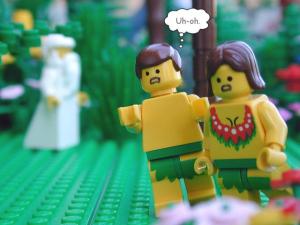
Genesis 3:8 Lego Adam And Eve, from “The Brick Testament”
You know, the story of Adam and Eve is a great story, but it’s always bothered me. I mean, come on: if the Tree of the Knowledge of Good and Evil were so darned important, why didn’t God put a fence around it, or stick it in some remote and impossible to access place? I mean – seriously: even if the man and woman obeyed, one of their kids or grandkids, or great-grandkids would eventually “forget” and taken a bite. It was inevitable. So, why?
Now, this morning’s reading is the passage in which the so-called “Original Sin” takes place, an event that we are taught “cursed” mankind for all time, until we were redeemed by Christ. But, is this event that affects every one of us – whether it is factual or metaphorical – really the great failure and source of all sin that we have been taught it is? Perhaps not.
…Let’s step back for a minute and consider the text as a whole. This particular story, the second of the two “creation narratives” at the beginning of the Bible, portrays Yahweh as a very hands-on sort of God: unlike the more remote vision of God we find in the first Creation narrative in Genesis 1. In that narrative, God “spoke” the world into being, hovered over the waters and said “Let there be light.” – All these are commands and things done from a distance, like you’d expect a remote and unapproachable God to do.
But, in Genesis 2 & 3 God doesn’t command anything into being, Instead, Yahweh gets down and dirty: She lovingly forms us with her own hands, then gently breathes the breath of life into our nostrils. She is presented as an up close and in your face sort of God, a very hands on sort of diety.
Yahweh is concerned for us as individuals, saying “it is not good that the man is alone” and so creates the woman. She talks face to face with us. The man and woman, we are told, “heard the sound of Yahweh walking in the garden at the time of the evening breeze.” Yahweh works, walks, talks and breathes. She is a very human God – not some powerful spirit being. She is a very personal God – not some distant and unreachable entity. Yahweh is a God of Relationship – not a dictator. She is not a god who demands obedience and taking whatever she wants from us – Yahweh is a God filled with love and concern for us and for all of her Creation.
So, what does the type of God we find in this passage have to do with all this? Why wasn’t there even something like one of those little gnomes holding a “keep off” sign put there in the garden? Why was this tree left unguarded, tempting us? …Why no fence?
Christianity is the faith-language we use here in encountering the Divine, but there are many such languages. It would be nice if there was a single, simple answer, but faith never provides a single answer, let alone a simple one – how could you have such an answer with an infinite God? You can’t write a symphony with a single note, and God’s Creation is far more complex, extensive and wonderful than any symphony! Our faith-language, combined with many others, are sung by the great choir that extols the greatness, diversity and immensity of an infinite and loving God, who loves each of us for who we are, just as we are – treasuring the unique and special gift that each of us is – a gift from God to all of Creation.
Our faith is like a language, a framework that helps us explore, express and deepen our relationship with the Divine. Everyone has a faith-language, whether we are Christians, Jews, Buddhists, Shamanists … even Atheists (since even non-relationship with the Divine is still a type of relationship).
We use this framework to understand and express our faith. It shapes how we look at the world around us: how we see our relationships with each other; and how we interact with each other; how we perceive the world is organized, what the purpose of Creation is (if any); and the purpose and limits of our own existence. Our faith-language is a lens we use all the time – not just in encountering the Divine, but in dealing with the everyday realities of life.
Our own faith language is Christianity. How we experience and express our faith is influenced by our familial roots, education, relationships and life experiences, the choices we’ve made in life, and many other factors. They all affect how we see and express the relationship we have with God and our relationships with each other. These relationships and experiences are uniquely ours, never to be repeated.
We all have a unique relationship with the Divine because our faith tells us that God values and loves us as and because we are unique and distinct individuals. The faith-language share binds us together as a community in relationship with each other, and with God.
And, Christianity works well for us (I hope!): we are familiar with it. It is part of the “cultural wallpaper” of our lives. It’s a tool that we constantly use throughout our lives: developing, strengthening and exploring our relationships with each other and with God. But, that does not mean that Christianity is the only faith-language for everyone, or even anyone, else. In fact, it can’t be.
Christianity is unique in that it claims that God wants to physically walk with us – a point that comes out very strongly in the Gospel of Luke, in particular. So, it is not just our spirits, but also our bodily existence, that matters greatly to God.
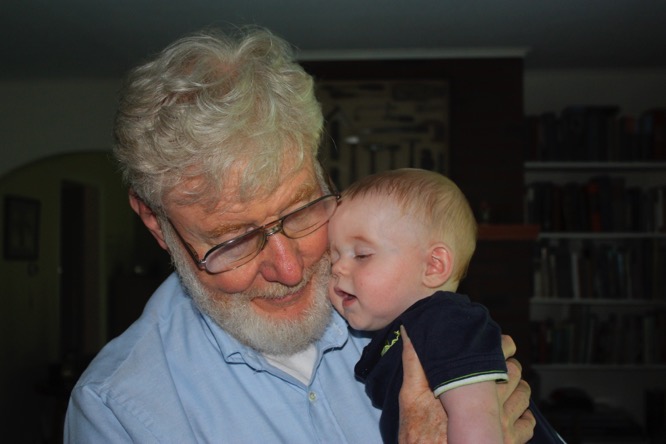
I’d like to begin with this photo. Although my Dad had held our son AJ many times before this, this was the first time that AJ really sought out a snuggle with Grandpa. It was a special moment for them, and for me too: my Father still keeps a framed print of this on his nightstand.
Please join me in prayer…
Lord God, we lift up this morning’s message. May it touch our hearts, may it speak clearly to our souls. You have come to earth to reassure us, comfort us and heal us. You understand the importance of presence and touch. Speak to us now, Lord. Help us to love you in the ways you have wanted us to love you since the beginning, and help us learn how to actively share that love with all whom we encounter. Amen.
Physical touch is such an important thing. In fact, you can find references to physical intimacy (and no, I don’t mean THAT kind of intimacy) all through the Gospels and especially in the Gospel of Luke, beginning with the infant Jesus being held by the elderly Simeon and Anna in the temple in Luke 2, to the woman washing Jesus’ feet and drying them with her hair in Luke 7, to Judas the Betrayer (as a counterexample) hugging and kissing Jesus in Luke 22, and ending with Jesus request that the disciples touch him in this morning’s reading from Luke 24.
As I’m sure you know, research has shown that children who are not cuddled and lovingly held on a frequent basis, starting at birth, do not thrive: they do not develop as fast, and are not as healthy. Even now, at age 5, AJ still reaches for Mommy or Daddy, or his teacher, when he’s distressed. A hug, or even just the touch of a hand, will reassure him, calm him, and help him find stability. And then, once he’s there – he’s off again: playing, tromping in the mud, and climbing on everything!
Good Friday is the day when we hear the first half of this story, where we mourn the death of Christ – and claim him as one of our own. And now, on Easter, we hear the rest of the story, the Divine did not relinquish its claim on Jesus either, but instead raised him from the dead. He is the missing link: we and God both claim him for our own. God has saved us through Christ, just as Jesus told Nicodemus so long ago. Jesus binds us together as members of the Body of Christ, and as children of God. The resurrection is a living reality. But, unless we come to know Christ in the depths of our hearts, unless we take the risk of claiming Christ for our own, the resurrection will never be a living reality for us.
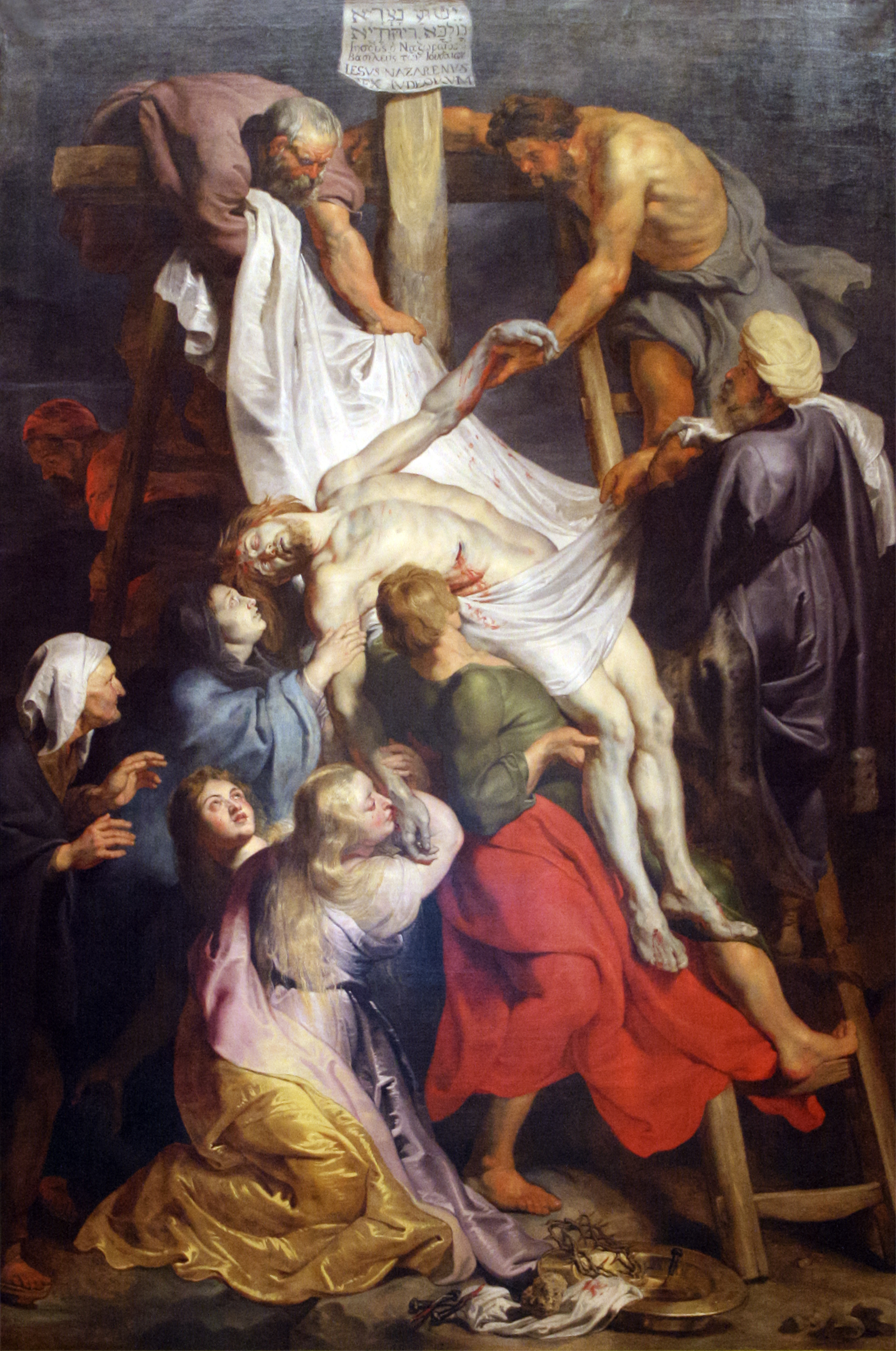
La Descente de Croix – Rubens (1617)
On Easter, we celebrate the heart of our faith, the story of Christ’s death and resurrection. Why is it so important? How does this narrative bridge the gulf between Human Sin and Divine Grace? And, why does this Act of God from two Millennia ago matter to us today?
Let us pray…
Lord God, we lift up this morning’s message. May it touch our hearts, may it speak clearly to our souls. We know that your Word and your love have bridged the huge chasm that separates us from you, and affirmed that all of us are your beloved children. Speak to us now, Lord. Help us to know you in the ways you have wanted us to know you since the beginning. Amen.
Three years ago, I visited the Church of the Holy Sepulcher in Jerusalem, the place at the heart of the events of Easter. As you enter that Church, to your right and up a flight of stairs, is the shrine of the Crucifixion. To the left, what would be behind me and deeper into the church, is the Shrine of the Tomb. So, on one side is the place where our Sin brought about the death of our Savior; and on the other is the spot where he was resurrected by the Grace of God.
Man’s Sin sent Jesus to his death, and God’s Grace brought him back, but what ties the two together?
The answer is in front of you, unavoidable as you enter the Church: the Stone of Unction.
It is a simple stone, unadorned, surrounded by a few lamps, and just long and wide enough for a body. On the wall behind it is a modern mural that depicts the event that took place at this spot, where Joseph of Arimathea and the Pharisee named Nicodemus laid Jesus’ body after taking it down from the Cross.
“Unction” means “anointing,” and it is here on this stone that they washed Jesus’ body, anointed it with oil, and prepared it for burial.
Why is this important? Why did the designers of this Church orient it such that this spot is right in front of you as you enter the church? And, why is the building laid out such that you must pass by it a second time as you go from Calvary to the Tomb? In other words, why does it matter?
Let’s start by imagining what would have happened if Joseph and Nicodemus had not taken Jesus ‘ body down from the Cross.
The Crowd, Pilate, Caiaphas, Judas, and Peter: They all try to do the right thing, and we can see ourselves in them; because they are us in this story.
One central lesson of Palm Sunday is that that no matter how powerful we may be, no matter how well intentioned we are, no matter how wise, or how foolish, or how rich, or how poor, we all constantly make choices that widen the chasm that lies between us and God. We can’t help it, we can’t change it: … it’s part of being human. That is what Sin is: Sin with a Capital “S”; the Sin that has been passed down to us as our share in the brokenness of all existence, the Sin that began with Adam.
How does it feel to be one of them, one of the mob, one of those calling for His death? To turn on him in his hour of need?
How does it feel?
Let us pray…
Lord God, we lift up this morning’s message. May it touch our hearts, may it speak clearly to our souls. We believe your word and your love will rescue us from the depths of our doubt, unbelief, and Sin. Speak to us now, Lord. Help us to know you in the way you have wanted us to know you since the beginning. Amen.
Peter really tried to do the right thing. In the Garden of Gethsemane, he really tried to stay awake while Jesus prayed, but failed. We’ve all been there: like many of you, I have a hard time staying awake for my son after a long day of work, let alone during a sermon. Peter was no different!
But then, when Jesus was arrested, Peter ran away, just like everyone else. He tried again, tried to be there for his friend, the man he knew to be God’s anointed: stumbling along in the dark behind that mob, following their torches to the house of Caiaphas. He then sat in the courtyard, wondering what to do, listening to the voices coming through the window above him, hoping to hear his master speak, hoping that – somehow – Jesus would escape the fate they’d all feared for him. But, Peter also feared for his own safety, fearing he would be recognized as he warmed himself beside that fire.
He did his best, but it was too much for him. When the test came, when that servant girl called him out, he did the only thing he could do: he lied.
And then, when he heard the cock crow the second time, he wept. His failure was complete, his weakness contributed to the death of the man he loved. But Jesus had known this all along, and out of an abundance of compassion and love, had warned Peter this would happen.
We all know how this feels. We’ve all been confronted by situations we could not overcome. How many of us are Peters?
God’s Covenant with Abraham has long been understood to reach far beyond the descendants of Isaac to include all humanity – as both he original narrative in Genesis and Paul’s references to it in Romans demonstrate. What we often fail to appreciate is how the narrative in Genesis makes it clear God’s Covenant with Abraham also embraces those whom we reject,and those whom we often do not “see” at all.
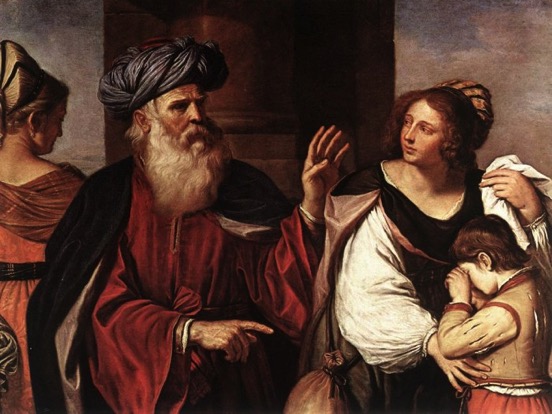
Abraham Casting Out Hagar and Ishmael, by Giovanni Francesco Barbieri, 1657
Our readings this morning touch on the story of Ishmael, one of my favorite characters in Hebrew Scripture.
Because we’ll be digging deeply into this story, I thought it would help to provide an overview …
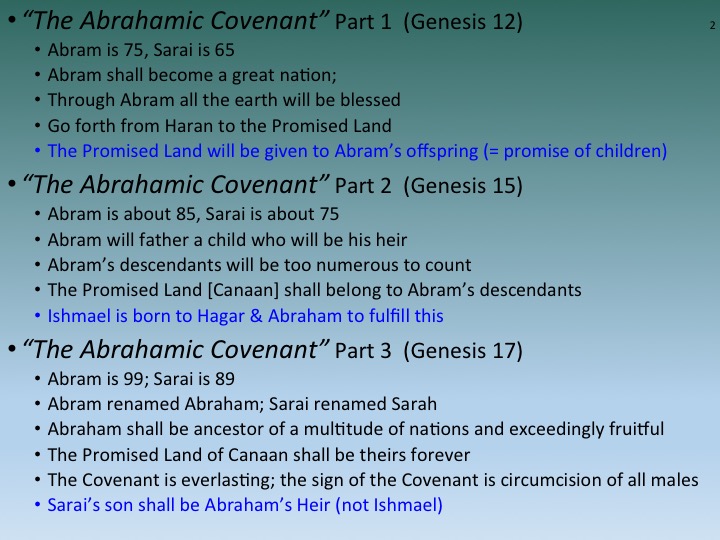
Genesis 12-17: The Three Revelations of God’s Covenant with Abraham
Here we see the three revelations of God’s Covenant to Abraham in the book of Genesis. All three declare that he shall have an heir, and that his descendants will be an uncounted multitude. They all say his descendants will inherit the Promised Land. But, with each revelation, more detail is added; and the duties of each of the Covenant’s participants (meaning God, and Abraham’s family, and us) are more completely spelled out.
We won’t talk much about the first revelation, other than to note that it was ten years before the second one.
You see here that Abram and Sarai’s names are changed to Abraham and Sarah as part of the third revelation. The names of everyone in this story are a metaphor, reflecting the nature of their relationship with us, with each other, and with God. So, name changes are very important – reflecting a change in the person’s relationships and position in the story.
To remain consistent with the narrative, you’ll see me using the old or new version of a person’s name based on where we are in the story.
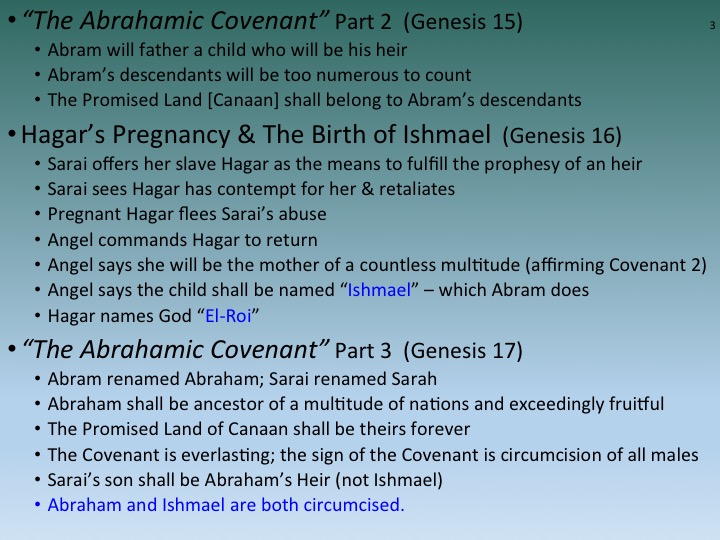
Genesis 16: Hagar’s Pregnancy and the Birth of Ishmael
We’ll be focusing on what happens between the second and third revelations, as shown here: the time of Ishmael’s birth and early life.
When God speaks for the third time, Abraham laughs and thinks to himself “Can a child be born to a man who is a hundred years old? Can Sarah, who is ninety years old, bear a child?” and then says to God “O that Ishmael might live in your sight!”
Clearly, Abraham is concerned for Ishmael, and is remembering the second revelation of 13 years earlier, when he said to the Lord “’You have given me no offspring, and so a slave born in my house is to be my heir.’ And the Lord replied, ‘This man shall not be your heir; no one but your very own issue shall be your heir.’
To fulfill the second revelation’s promise of an heir, and at Sarai’s insistence (since she was barren) Abram fathers a child through Hagar, Sarai’s slave. Sarai then feels that the newly pregnant Hagar is looking upon her with contempt and abuses her. Hagar then flees into the desert. There, an angel appears to her saying “return to your mistress and submit to her.” And tells Hagar she will have a son, repeating what seems to be part of the promise, saying “I will so greatly multiply your offspring that they cannot be counted.”
When Hagar’s child is born, Abram names him Ishmael – as was commanded by the angel – a name which literally means “God Hearkens” or, to use more modern language, “God hears (and responds)” – a clear indication that Abram believes the child is the promised heir.
13 years go by, and now we’re in the time of the third revelation from this morning’s reading: God says the same things as before, adds a requirement for circumcision as a sign of the covenant; renames Abram to “Abraham”; then says “As for Sarai your wife, you shall not call her Sarai, but Sarah shall be her name. I will bless her, and … I will give you a son by her … she shall give rise to nations; kings of peoples shall come from her.”
Abraham laughs (whether from joy or incredulity, we’re not sure – maybe both) and wonders at this, given his and Sarah’s advanced years. He then realizes that Ishmael, his only child, now 13 years old, is not the promised heir. What’s going to happen to him? So Abraham says “O that Ishmael might live in your sight!” – pleading for his only son’s position, and maybe even his life.
After affirming that Sarah will indeed bear him a son to be named Isaac, God says “As for Ishmael, I have heard you; I will bless him and make him fruitful and exceedingly numerous…. But my covenant I will establish with Isaac, whom Sarah shall bear to you at this season next year.”
Afterwards, and as God commanded be done in observance of this new covenant, Abraham takes Ishmael and all the men in his household, whether free or slave, and circumcises them, including himself.
Now this is troubling. Ishmael, whom we thought to be the promised heir from the second revelation, was apparently confirmed as such by the angel who spoke to Hagar. And, Abraham names the child “Ishmael”, just as the angel commanded. He had to be the heir. But now, he is no longer the child promised as part of the covenant. It looks like he’s been rejected, and yet he is circumcised, meaning that he is part of the covenant.
For someone who has Eternal Life, no day is any more, or less, valuable than any other. They have unlimited time to complete unfinished business, correct mistakes, or finish their “bucket list.” So, what value would any particular day (or century) have for them? Would love or friendship be valued when time is of no concern? Mortality makes time precious, but also means all things are eventually stolen or destroyed by time – except for Love.
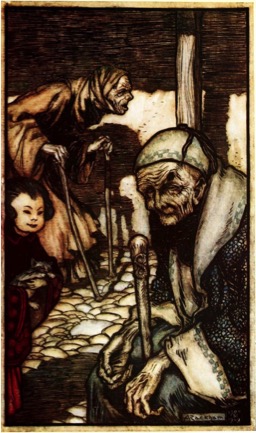
“The Struldbrugs” (from Gulliver’s Travels by Jonathan Swift)
Recently, I’ve been thinking about eternal life and its implications, as reflected within Lent and Easter.
In Genesis 3, YHWH removes our access to Eternal Life after Adam and Eve eat of the “Tree of the Knowledge of Good and Evil.” Yet, Jesus’ death is presented as the perfect sacrifice for our salvation and reconciliation with God: a promise that we too shall be resurrected, someday. So I wonder, is Eternal Life a good or bad thing; and how does it differ from being resurrected, reconciled and saved?
One implication of Eternal Life is that time no longer matters. For someone who has Eternal Life, no day is any more, or less, valuable than any other. They have unlimited time to complete unfinished business, correct mistakes, or finish their “bucket list.” So, what value would any particular day (or century) have for them? Would love or friendship be valued when time is of no concern?
Many writers have thought about Eternal Life…
Jonathan Swift in “Gulliver’s Travels” imagines an immortal race called the Struldbrugs. They live forever, but do not have eternal youth: their minds and bodies eventually deteriorate to the point where every breath is torment – but they cannot die. Immortality for a Struldbrug is a curse, not a gift.
In “The Lord of The Rings”, J.R.R. Tolkien presents a race with eternally youthful bodies: the Elves. Yet immortality is a burden for them, too: They are a people not quite in tune with the world. A people whose bodies do not age, but who carry profound sadness because they know everything they create, everything they love, will eventually pass away – and they cannot stop it. They are doomed to outlive everything around them, and cannot escape from their past to live fully in the present.
Science Fiction author Robert Heinlein imagined the achievement of immortality through technology. In his novel “Time Enough For Love” is Lazarus Long, who is two and a half millennia old. (Or so, but who’s counting?) A man who is medically “rejuvenated” whenever old age afflicts him. But Lazarus is tired of life. Like the elves, Lazarus has seen everything he creates or loves pass away.
Heinlein also points out that our brains are not infinite: If we live long enough, we run out of room for new memories. Even if that weren’t a problem, our memories get cluttered and disorganized with age. (In one of my favorite passages, Lazarus complains about hunting all morning for a book, only to realize he’d put it down a century ago.) Through Lazarus we see that even with youthful bodies, our minds (and spirits) will still age.
Periodically, Lazarus has his mind “washed” of old memories to make room for new ones, but this raises a new question: what good is immortality when memory no longer links you with the person you once where? Immortality is a burden for Lazarus because he outlives his youth, and because of the broken connection between his present and his past.
Mortality makes time precious: every day is a gift that cannot be recaptured. The flip side of this is that we cannot go back and make different choices when things don’t turn out as we hoped. We cannot choose to avoid the pain that is the inevitable result of the choice to love.
In the end, we need to ask ourselves whether it is worth it: to live a life like that of Lazarus, or the elves, or the Struldbrugs, or the timeless existence Adam and Eve had before they ate of the fruit.
I’ve been pondering how faith operates in and through us – both positively and negatively.
For a positive example, I look to our own congregation: We saw faith at work last night in our Annual Meeting – a time of remembering, visioning and deciding; sharing our knowledge, and evaluating the effectiveness of the wealth, wisdom and work we’ve expended in the past year. It was a time of counting up the resources available to us and deciding how to best utilize them to accomplish the mission and goals we believe are a part of our journey into the future.
That meeting, just like this worship service, and the many other things we do – either individually or jointly – are all positive, beneficial, things – or at least we see them as such. And, we see them as expressions of our faith.
It seems to me that we need to understand what Faith is, since what it is is central to who we are as Christians, and therefore critical in our discernment and pursuit of God’s Call upon our lives.
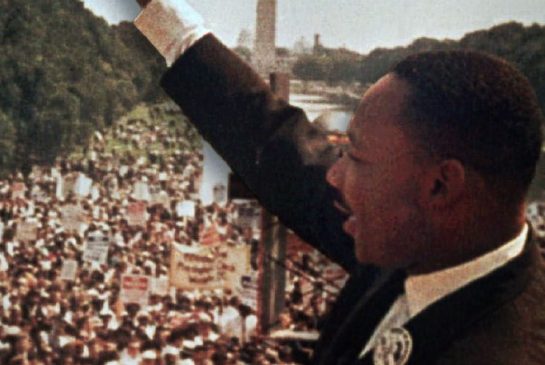
…when we walk out of this church, the question of whether we are going to face the issue of racism and race-based injustice is a choice we can make, because we are all white. And, unlike our black brethren, we can choose to forget about it. … King said “the time is always ripe to do right.” And so I say “yes, the time is always ripe; but are we willing to do right all the time?”
My self-image as a strong supporter of Civil Rights crashed in ruin one Sunday morning, in the Spring of 1996. At the time, I was a member of an African American church in Virginia, and their sound technician. (…But please don’t tell our worship team that!) That morning, as I was setting up, a young woman, maybe 16 years of age, came in with her friends, and sat down in front of me and my sound board. She then leaned forward in her chair, so that I could not miss what was printed on the back of her orange t-shirt in big block letters: “I WASN’T EDUCATED IN NO F***ING WHITE MAN’S SCHOOL”.
I must apologize for even hinting at such language here. But it is important for this morning’s message to give you a good sense of what that moment was like.
Obviously, this is not one of my lighter sermons. So, let’s take a moment to pray…
…the landscape is not as dark or cold or empty as we thought, because The Light is already here. We carry it with us wherever we go, and so it continues to beckon to all those who are wandering in the darkness – a beacon guiding the nations to a place of light and warmth, and the promise of an Epiphany of their own.
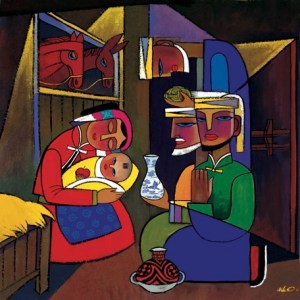
“The Magi” by Chinese Artist He Qi
When I was 12, my family moved from Vermont to Wyoming. As you might guess, it was quite a transition. Here I was: a New England boy used to rolling hills, abundant trees, air that was humid, and lots of little towns sharing borders with other little towns; but we were relocating to a sparsely inhabited desert plateau a mile and a half above sea level and surrounded by mountains – real mountains – not the green bumps we have here in New England.
I remember as we drove out, constantly quizzing my Father:
So Dad, we’re moving to Laramie, right?
Yes, son.
So, what other towns are around it?
There aren’t any. Rawlins is the next town up on the highway, on the other side of the Snowy Range, about 100 miles away.
Huh, but … what’s in between? There must be towns in between!
Nope, none.
Really? Well, but what’s in-between Rawlins and Laramie, then? There’s got to be something!
…The fact that every acre of land in the country wasn’t within some town’s boundaries, as is true here in New England, just did not compute for me. There was no such thing in my experience as a town that bordered on … nothing!
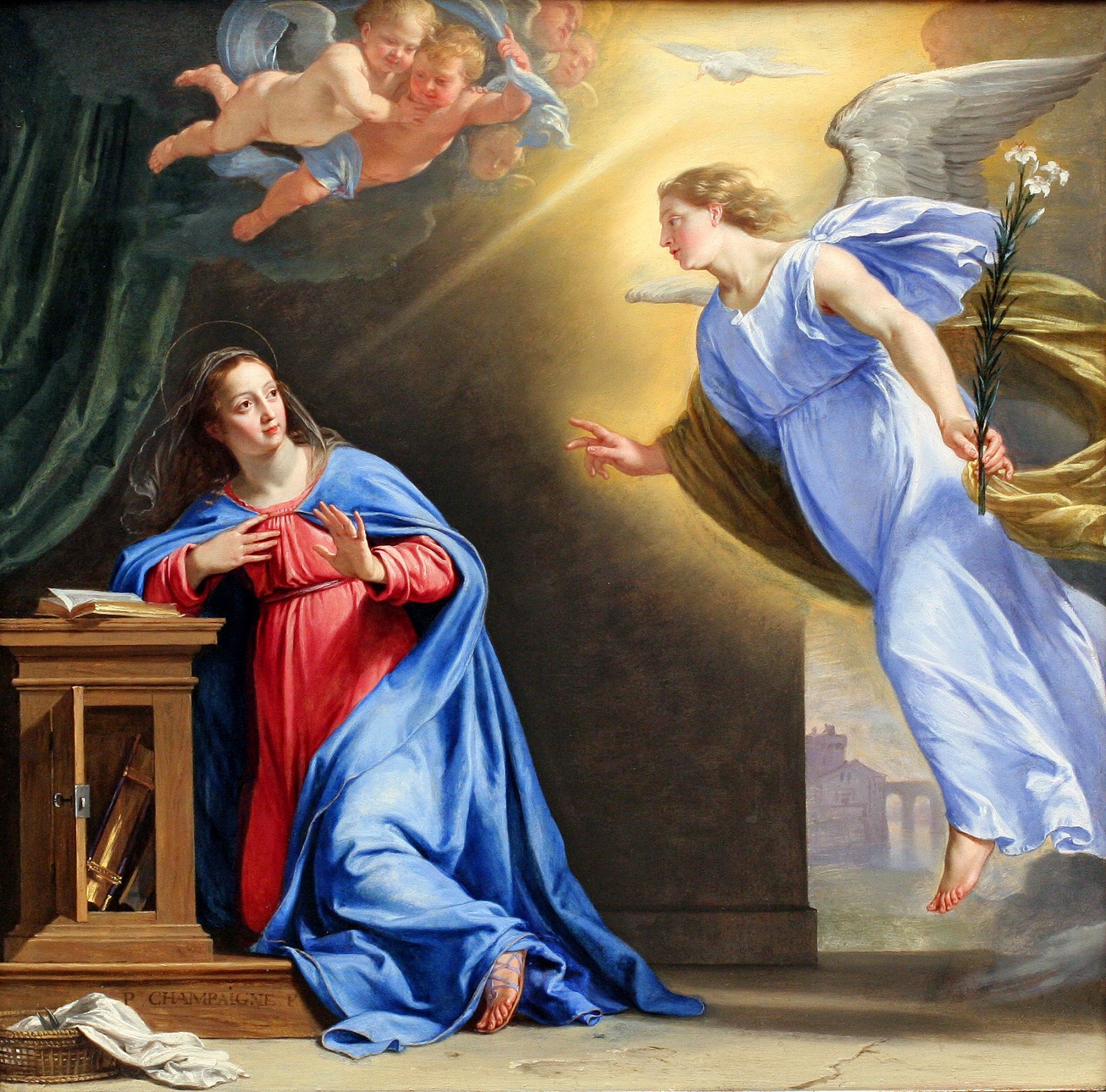
At the heart of the Annunciation is the declaration that God isn’t here just in the extraordinary times. God isn’t here just when we need divine providence. God loves us, and calls us, right here, right now, right where we’re at in our ordinary, everyday lives.
L’_Annonciation, Philippe de Champaigne (1644)
Sermon: “How Can This Be?”
Delivered at ARK Community Church, Dalton MA, December 21, 2014; (Fourth Sunday in Advent).
I’ve been considering Mary’s question in this morning’s reading from Luke, where Gabriel tells her that she will soon have a child, a son; that he’ll be a great King, and that he will sit on the throne of his ancestor, David.
Mary responds by asking “How can this be?”
As Christians, this is a question we often ask ourselves, or perhaps others ask of us: How can this be? It’s a question we ask about the birth of Christ, about why we believe, about why we find ourselves in various situations. And, as we read this passage in Luke, we see that a lot is wrapped up in this simple little question of Mary’s: How can a baby be born of a virgin? Why is God doing this? Why does it matter?
I begin by asking myself “what was Mary thinking when she asked this?” What I do know is that the common assumption, that she’s wondering how a virgin can give birth, is not what she is perplexed about.
Advent encourages us to choose God BECAUSE of the facts, not in spite of them; and to remember that it is God who writes our story, a story that always ends in the embrace of God’s eternal, fierce, and unrelenting love for us.
Sermon: “Just the Facts”
Delivered at ARK Community Church, Dalton MA, December 7, 2014; (Second Sunday in Advent).
The year is about 540 BC. The place is Babylon, capitol of the Babylonian Empire.
Only a generation ago, in the year 587 BC, Nebuchadnezzar’s army destroyed the Nation of Judah, the City of Jerusalem, and Solomon’s Temple. Much of the surviving population, including most of the upper classes of Judah – priests, nobility, scholars and their families – are imprisoned and then exiled here, in an alien land totally unlike the isolated mountaintop fortress of Jerusalem. Their new home is perhaps the greatest city on earth, containing people of many cultures, languages and faiths. Strange people, strange ideas, and strange gods are all around them, challenging the Jews and their faith in ways they never imagined.
They are strangers in that strange land. The fact is, they have lost everything – friends, family, home, possessions, status, and even – or so they think – their God. And even if God is not lost, what good is God, since the strange gods of this strange land are clearly more powerful? And besides, how can they hear from God, even if God still lives? God’s home among them was destroyed, too.
The news from back home is just as troubling: the prophet Obadiah tells us that marauders and armies from nearby lands, such as Edom, are sweeping through the ruined land, murdering those left behind, and plundering what little of value remains.
The People of God see themselves as the walking dead, soon to forever vanish and be forgotten. All is darkness. All is lost. They are lost: whether they are scrabbling to survive among the ruins of Judah, or living in exile in the all too alluring and exciting materialism and corruption of cosmopolitan Babylon.
The facts are indisputable: the future holds no hope at all for them, nor for their faith.

 So, what does the type of God we find in this passage have to do with all this? Why wasn’t there even something like one of those little gnomes holding a “keep off” sign put there in the garden? Why was this tree left unguarded, tempting us? …Why no fence?



 The Here and the Hereafter