The Pain of Father’s Day

Fathers Day is a day that is both joyful and painful for me, as it is for many.

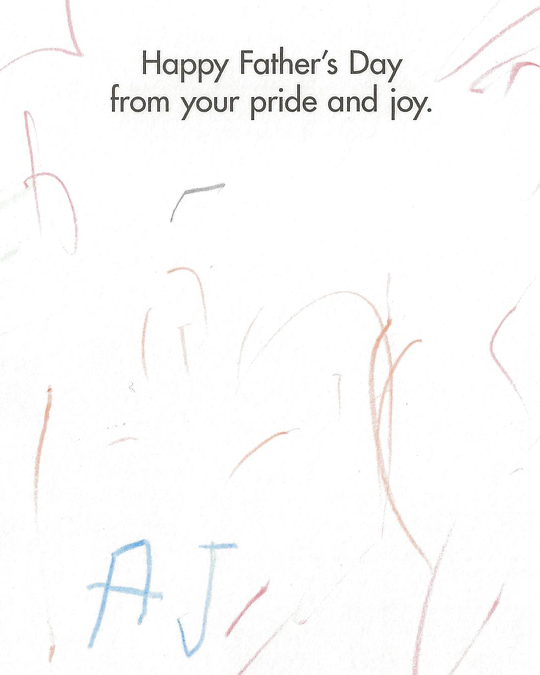
AJCardFathersDay2015Father’s Day is meant to be a happy time, and so it is for me – in part: a time where my wife and son conspire to present Daddy with some nice little momento, usually (at this point) a card with artwork, to tell Daddy how much he is loved by his youngest child.  And I love it: he and I do the same thing for Mom on Mother’s Day.  All such things speak of the love and care that is within this home and our life.  It also speaks of the importance we attach to family, and modeling for our son that it is important to tell those closest to us how much we love them, in many ways, all the time.

Unfortunately, Father’s Day is also a day of sadness for me, as it is for many.  In my case, it is a stark and painful reminder of the long separation between my daughter (who is now 26 years old) and myself.  July 12th of this summer will mark ten years since the last time I spoke to her, or had any idea of how her life was going, where she was living, or anything else about her.

Now, I could dwell on the events surrounding my divorce from my first wife, which began with our separation on July 10th of that year (2005), but that would be doing her a disservice, since she is not here to defend herself.  So, I will merely say that my separation from our daughter is the outcome of a great deal of dysfunction in that relationship, magnified by a legal system that grants custody to the mother as the default, on the assumption that doing so is in the best interest of the child; and made worse in turn through my own ignorance of how to navigate that same system.

Now, assuming the mother (and children) are the ones who need more (and immediate) protection when accusations of abuse are being made is not a bad thing.  In fact, it should be that way, since they are (generally) much more likely to be the ones at risk in a dysfunctional relationship.
Continue reading “The Pain of Father’s Day”

Just Show Up

Being faithful isn’t about being skilled or perfect at anything. It’s about showing up. That’s all that God asks us to do – show up, and you’ll find that God is there too: showing us the way, impelling us to speak or act as needs to be done, helping us to learn what we need to learn, and providing the grace for those we encounter to rejoice in our presence and willingness to stand with them, no matter how clumsy we feel we might be.

5428
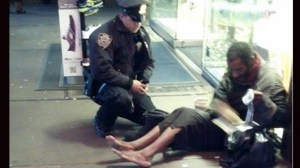
NYPD Officer Lawrence DePrimo buying boots for a homeless man in Times Square this past November.

During this past Sunday’s “Open and Affirming Forum” at ARK Church our guests related some of their own experiences to help us better understand the pain and alienation that many transsexuals encounter every day, and also provided a great deal of information to help us be more sensitive, compassionate and affirming when dealing with anyone who is “other” – especially those in the LGBTQ communities. Our eyes were opened to the challenges of being someone who doesn’t fit into the neat (and very binary) categories of “male” or “female” or “opposite sex loving” or “same sex loving.” It was a moving, growing (and humbling) experience.

The leader of the forum said something near the end of the meeting that has stuck with me all week: “just show up.”

Continue reading “Just Show Up”

You Sheep Scattering GLORY SEEKER!

Slapping a label on someone is a defense mechanism, it distances “the other” from us: making them seem to be “less than” in our minds. Labels can make others seem inconsequential or less than human, and so easier to dismiss, or ignore, or exclude, or oppress – or hate.

Labels hurt.

RPW2011_003
Lost in My Life (Price Tags)
by Rachel Perry Welty (2009) from the permanent collection of the Decordova Museum in Lincoln, MA

Not that this isn’t uncommon; but I’ve recently encountered quite a string of people who, being frustrated with my (admittedly) Progressive views, labeled me with various terms, including: “Anti-Jew”, “Palestinian Lover”, “Left Winger”, “Commie Extremist” (really?), and (my favorite) “sheep scattering GLORY SEEKER!”  (A close relative of this is the tendency some have to use phrases that reveal the unspoken labels they’ve applied to you.  Some of the most galling of these – for me – are when such phrases are used in a patronizing way, such as: “Your heart’s in a good place.”)

These attempts to make me into something other than I am got me to thinking: I was slapped with a label; then condemned or belittled for being (in their eyes) that label.  But, they know almost nothing about me beyond their label. So, they are condemning a label, not me – a phantom that has no reality.  There is no reason why I should accept such labels – or any label – as reflecting the “real me”; and in fact they say more about the person who bestowed the label upon me than they do about who I am (or who you are).

We all have a tendency to label people and things – it’s a perfectly natural thing to do. In fact, we are far more likely to do it to someone we don’t know than with someone who is close to us – and I’ll tell you my theory as to why…

Continue reading “You Sheep Scattering GLORY SEEKER!”

Our Foolish Faith

tiananmenPaul tells us in this week’s Lectionary reading from 1 Corinthians that “the message of the Cross is foolishness to those who are perishing.…” And, that “God made foolish the wisdom of the world.”

In other words, foolishness (at least in one’s faith) is a good thing. But, can we have too much of a good thing? Are there boundaries beyond which our foolishness should not go?

Continue reading “Our Foolish Faith”

A Light in the Darkest of Times

We all go through dark times in our lives, times when our own prayers; and even the assurances, encouragements and prayers of others; seem futile and useless. If anything, such attempts are painful and bitter proof that human effort is always futile in the end. And yet, the darkness we see all around us is not really the issue. It is the darkness within us that we are really battling…

rays-of-light-shining-throug-dark-cloudsThese short and gloomy days and long dark nights of winter are a hard time, often made harder and darker by the challenges we face.

We all go through dark times in our lives, times when our own prayers; and even the assurances, encouragements and prayers of others; seem futile and useless. If anything, such attempts are painful and bitter proof that human effort is always futile in the end.

In such times all we see is darkness ahead of us, behind us, and all around us. We are convinced the end is near and inescapable. We know that all we are, all we do, and all we aspire to be, is nothing in the face of the insurmountable challenges confronting us. We have no hope. No one can change the darkness that is inexorably consuming us.

And yet, the darkness we see all around us is not really the issue. It is the darkness within us that we are really battling: it feeds on the loss of hope within our spirits; and on our endless self-castigation for missed opportunities, for past sins, and for our separation from those whom we love.

One of the lectionary readings for this coming Sunday is from Psalm 62, which repeats the following sentence twice: “[God] alone is my rock and my salvation, my fortress; I shall never be shaken.” It is a Psalm written by someone just like us. All they had left was God, and their faith. And yet in such times of darkness, even our faith seems insufficient to dispel the darkness we see all around us.

Darkness blinds us to our God who, in the first chapter of Genesis, CREATED the light – a point emphasized in the first few verses of the Gospel of John as well: “In the beginning was the Word, and the Word was with God, and the Word was God. He was in the beginning with God. All things came into being through him, and without him not one thing came into being. What has come into being in him was life, and the life was the light of all people. The light shines in the darkness, and the darkness did not overcome it.”

We cannot overcome the darkness on our own; but no matter how dark it is around us, God is there. No matter how dark it is within us, God is there. The Holy Spirit is the “light of all people” – a light within us. It shines no matter how dark things may seem, and the darkness cannot overcome it.

So, in these darkest of times, be certain that God is there, because God is Lord of Darkness, not just the Lord of Light; and God is the Creator of Light. God is the source of all light, light that is there even in the midst of the greatest darkness of all.

God is always with us, a light that shines no matter how hopeless, empty, and futile our personal darkness may seem. God’s Hope for us lies within God, it is not something that we can lose or forsake on our own; because it is under God’s control, and scripture assures us that God will never forget us or forsake us.

We can trust in God at all times, because God is with us for ALL time. God is our Rock and our Salvation: a refuge that will never fail.

Amen.

Copyright (c) 2015, Allen Vander Meulen III, all rights reserved.  I’m happy to share my writings with you, as long as proper credit for my authorship is given. (e.g., via a credit that gives my full name and/or provides a link back to this site – or just email me and ask!)

The God Who Trusts

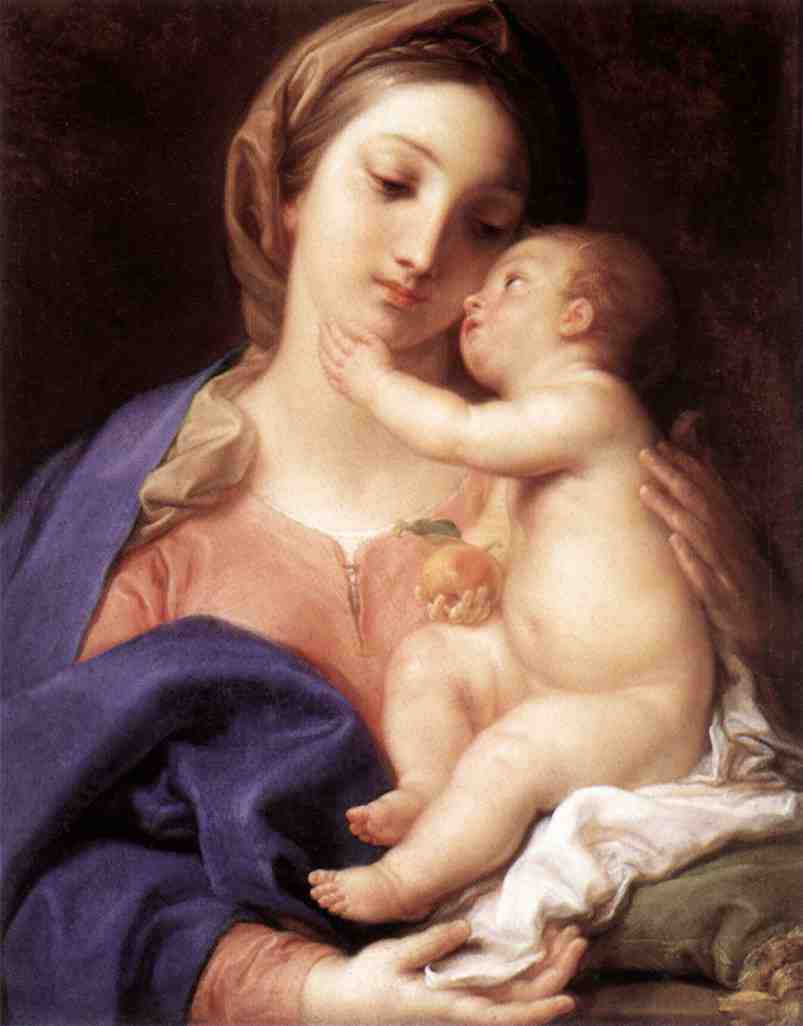
Madonna and Child by Pompeo Batoni, ca 1742.

This Christmas Eve, I thought it would be useful to share a simple thought: that God trusts us.

Orthodox Christianity is very explicit about this – God became incarnate and accessible to us through the birth of an infant human child.

Newborns can do nothing for themselves: they are vulnerable and rely totally upon those who love them for protection, for sustenance, and for life itself.

Jesus and the entire plan and hope represented by the Virgin Birth would never have come to fruition if his parents had not cared for him, fed him, educated him and loved him.  If they had failed to do so, nothing else would have saved him, or us.

So, God became vulnerable to us through the birth of Christ.  God trusted us to take care of the babe and so ensure the fulfillment of God’s plan.

In other words, God trusts humanity – for all its flaws and failings – to do the right thing, and to accomplish the mission.  Even more importantly, God believes that you are ultimately good – because a creature that is inherently evil would never be entrusted with God’s child.

Therefore, God knows you are lovable.  God values you.  God believes in you, and is willing to risk everything based on that belief.

God trusts you…

Have a Blessed Christmas.

… And as my fellow North Central College Alum, Bruce Nesmith, said in response to these thoughts: “Maybe in 2015 we can trust our best selves more.

Copyright (c) 2014, Allen Vander Meulen III, all rights reserved.  I’m happy to share my writings with you, as long as proper credit for my authorship is given. (e.g., via a credit that gives my full name and/or provides a link back to this site – or just email me and ask!)

Static Faith?

10846012_10203194098156896_5553452210125203673_n

In some ways (and perhaps oddly, for a Progressive Christian like me), I admire Joel Osteen.  I like his preaching, even though I often disagree with his Theology, because he presents a clear and simple message that is grounded in God’s love.

This particular tweet of his is, however, a little bit problematic for me: mostly but not entirely because of Osteen’s main point, “choose faith over facts.”  Even though this is, in fact, a theme that often appears in my own preaching and teaching, including my recent sermon entitled “Risky Business.”

But with regards to this tweet, the heart of my concern lies in how that statement is modified by the statements that precede it: “The facts may tell you one thing” and “God is not limited by facts.”

Continue reading “Static Faith?”

Why Fundamentalism Is Not Faith

I find the perspective of the author of the following article (that I’m reposting below) interesting and useful.  It conforms to my own experience and observations during the two decades or so I spent in more conservative churches, including some very “Fundamentalist” congregations.  Which is that yes: there is comfort and value in “knowing God” and coming to know the great Love God has for us, which many if not most such churches espouse.

But, if God is present and speaking in the present world, then God cannot be a static or unchanging God.  Nothing else is – the very core of the nature of Creation is constant change and variety, an infinity of possibilities and realizations, each reflecting their own instantiation of some aspect of the nature of God.

So, if we claim that the Bible is in fact an inerrant, and direct (read: unchanging) revelation of God’s word that is without contradiction, then we must be careful to not assume that our own finite minds are capable of fully comprehending even a tiny portion of the infinitude of God that is the source of that document.

Many of us make this mistake, concluding that our current understanding is the only valid understanding of what our faith (or “The Truth,” whatever that means), and the Bible, is attempting to tell us.

When we do that, then we’ve set up our own perspective as an inerrant and unchanging standard for our faith.  The result is that any possibility of coming closer to God is actually lost. What we believe now becomes the standard, and an idol. And, God’s voice becomes hard to discern, if not entirely silent – lost in the noise of our own selfishness and egocentricity.

God is still speaking.  We are called to listen for God’s voice and be open to the power of change and growth that is always an inherent part of God’s Word., God is not only speaking to us directly, but also through everything, and everyone around us.  No one has a monopoly on comprehension of God, and no one understands more than a tiny fraction of all that God is, or all that God says, to us.

jonnyscaramanga's avatarLeaving Fundamentalism

In this article I am going to argue that Christian fundamentalism is not a faith position. The former Bishop of Edinburgh, Richard Holloway, declared, “the opposite of faith is not doubt, it is certainty.” As their language and actions show, fundamentalists are absolutely certain.

We have a risen Christ, unquestionable proofs, and, as if we needed it, God has thrown in a host of unarguable evidences all around us!

(Accelerated Christian Education Science 1096, p. 31)

View original post 852 more words

“Pro-Life” is just another kind of Abortion

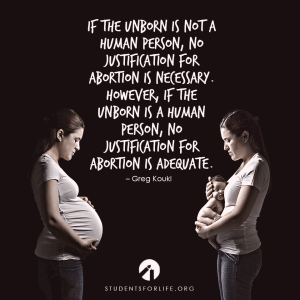
AntiAbortionMemeThis poster featuring Mr. Kouki’s statement is extremely misleading: it assumes that the fetus is a being for whom all choices can be made independently of the mother, and ignores the fact that it is actually totally dependent upon its mother while still in the womb.  It is another round in the effort to create a law that prohibits certain activities (abortion, in this case) as a way of settling a moral debate, even though history proves that such prohibitions are almost always ineffective, and often cause far more harm than good.

While I agree that abortion is not a step to be taken lightly (and hopefully, only extremely rarely); viewpoints such as that expressed in this poster are also a form of abortion, since they separate the child from its mother in another way – by declaring that the mother must be responsible for their child, but only as long as their decisions with regard to the child conform to the dictates of others.  Think about it: this poster declares that it is absolutely acceptable to abort the mother’s life in favor of the child’s.  Or, to put it another way, instead of the mother being allowed to decide whether to remove a fetus from within her body; the state feels it is justifiable to remove that same fetus from the control of the mother – while it is still in her body.  (I’d also note that this notion, which is part of the the Tea Party’s stance on abortion is completely at odds with one of its most basic principles, which is that the government already intrudes too deeply into the lives of American citizens.)

Continue reading ““Pro-Life” is just another kind of Abortion”

Suicide

Robin Williams
Robin Williams

I’ve long promised that I would eventually post here on the issue of suicide, and this seems to be the moment, as much as I dread doing so: it is a difficult challenge, one that must be approached with great care and compassion.

What impelled me to do so at this time is the death of Robin Williams, and my feelings with regards to a post about Williams’ suicide by Matt Walsh – another screed of his that I once again (almost) agree with.

Walsh emphasizes in his recent post – “Robin Williams didn’t die from a disease, he died from his choice” – that suicide is a choice, and there is always an alternative, you can choose life.  I [almost] agree – he is right, to some extent.

In his post, Walsh discusses at length how painful suicide is, in so many ways, for those we leave behind: whether we realize it or not.  As he and I both know all too well, there are always those who love you dearly, and who will always be haunted and who will always carry a deep, hidden hurt from the suicide of someone they love.  He calls suicide a “selfish choice” and again – he is right, to some extent.

Frankly, there are far more survivors than you can possibly suspect of their own suicide attempt(s) or the suicide of someone close to them.  I am certain that there are many people you know who carry this hidden pain, and who will move heaven and earth to keep another from experiencing what they’ve gone through – which means they will do everything they can to help you, once they know that you see your own death as the only way out of the deep pain and darkness that you feel you cannot escape.

But, Walsh is also wrong – suicide seems like a choice to those looking on from outside, but for those mired in making that choice, it is not a choice: it is an escape when one becomes convinced there are no other choices.  It is a disease that deludes one into thinking that the only way out is to choose oblivion.  It leads you to believe that no one else cares, or that no one else can help you.

Continue reading “Suicide”

Rethinking Wedding Traditions

The marriage ceremony is a “passing of the torch” (through this ritual of vowing to love, honor and cherish) from one generation to the next. It reaffirms the importance of preserving those things that make our relationships with our spouses healthy, strong, and supportive. Marriage is a statement of our hope and determination to continue that chain of sharing, and the hope it represents, into the future – so that our spiritual (or physical) descendants will someday have their own opportunity to join with us in making the same affirmations. That said, it is important to recognize that as our culture changes, so too must our traditions. Therefore, no marriage tradition is so sacred that it can’t be rethought or even entirely omitted.

wedding_bandsAs a minister, I am (obviously) called on from time to time to officiate at weddings.  In helping a couple plan their wedding and begin their new life together it is important to help them recognize that as our culture changes, so too must our traditions, if they are to remain relevant and meaningful.  Therefore, no tradition is so sacred that it can’t be rethought or even entirely omitted.

Along these lines, the New York Times recently published an article entitled “What Wedding Traditions Should Be Tossed?”  Which brought together the thoughts of a number of experts on various aspects of marriage and relationship.  These authors’ suggestions are all worth considering when helping a couple work through their plans to marry – and for the ceremony itself.  I thought I’d highlight some of the suggestions that I find most helpful in my role as the officiant and spiritual guide, and I’ve added a couple of additional suggestions of my own…

Continue reading “Rethinking Wedding Traditions”

The Besiegement Narrative

Original Article: Even After Hobby Lobby, the Religious Right is Still Terrified

The “besiegement narrative” that the Right Rev. V. Gene Robinson talks about in his recent article found on The Daily Beast is indeed a theme I frequently saw and heard during my sojourn through many of this country’s more [religiously] conservative Christian denominations.

Such an “us vs. them” theology has a long history in Christian thought, going back to at least the time of the persecutions and martyrdoms of the early church, and even further back into ancient Judaism.  And, in fact, in examining other faiths, you quickly find that it is a universal theme.  This is because such a narrative is  a good way to define the boundary between who is and who is not one of “us” (whoever “us” is).  It is a theme that can bind people together; generate and focus emotional and physical energy upon a (real, potential or imagined) threat; and define what it means to be “us” by making it crystal clear who and what we are not.

This is not necessarily a bad thing.  Being able to draw a line that separates “us” from “not us” seems to be necessary – because if a group cannot define that boundary, it has a very difficult time explaining who they are, what they stand for, why they should continue to exist, and why you might want to be one of “us.”

Continue reading “The Besiegement Narrative”