Communion

CentreChurch-Brattleboro-RevCarra-croppedSermon: “Communion”
Presented at ARK Community Church in Dalton, MA
October 6, 2013

Scripture readings:
2 Timothy 1:1-14 (from “The Message”),
Luke 17:5-10  
(from “The Message”)

Additional Scripture:
1 Corinthians 11:23-26 (NRSV)

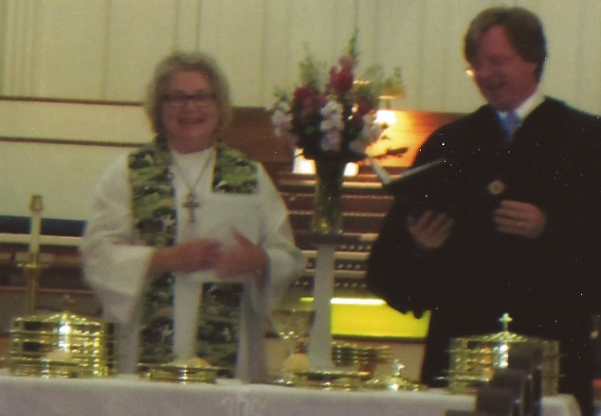
This morning is World Communion Sunday, a day where we join with our fellow Christians throughout the world in proclaiming the unity and diversity of our faith through the symbolic sharing of Christ’s Body and Blood: gathering together as one to participate in Christ’s death and resurrection, which in turn frees us to partake of the bounty of the Lord’s Table, filled with Grace and Love for each and every one of us.

But, what is Communion?  It has to be more than just a bit of bread and juice.  Why does it matter?  What good is it?  For that matter, why is it a Sacrament?

Please join me in prayer…

Lord, open our eyes that we may see the truth you have for us here today; place in our hands and hearts the key that shall unite us, bridging the differences that isolate us from each other and from you. Open my mouth, Lord, that I may be a faithful witness to your Gospel, that the eyes of our hearts might be opened, and that your love for all of us, your children, is made manifest, and that our hearts are prepared for sharing your gospel with all we whom encounter today, and in the days ahead.  Amen.

This past January, I was in China, and had the opportunity to attend a Mandarin language worship service at St. John’s Cathedral, the Anglican Congregation in Central Hong Kong.

It was a communion service, delivered by intinction, as we will be doing here today; all who were there joining together as one to share the Lord’s Supper.  After I returned to my second row seat, I watched and prayed as the rest of the numerous members of the congregation filed past me.

The last to receive communion were a small family – mother, father, and their two little girls; ages perhaps 5 and 3.  The littlest, in her lacy white dress and shiny black shoes, was the last.  The priest had to bend down for her to dip her bread in the cup.  It seemed that this was the first time she’d had communion, and she was very excited, though not quite sure how it all worked.  She took her bit of bread, and promptly dropped it in the cup.  …Oh dear!

Continue reading “Communion”

Bridging the Gap

AN31491615epa03937969-Pope-Sermon: “Bridging the Gap”
Presented at Payson Park Church, UCC in Belmont, MA
September 8, 2013
Scripture: Luke 7:1-10

It is good to be back among friends, to once again worship with the Christian Community that embraced me as one of their own when I first moved back to New England in 2006. Your love of me brought healing, hope and eventually new love and new life into my life, and I am glad that I have been able to bring my wife and son, the fruits of the love you cultivated in me, here with me today, and I am blessed that you continue to support me in my call to the ministry through your invitation to have me speak here today – and so I extend a deeply felt “Thank You” to Lael, and all of you, for this opportunity.

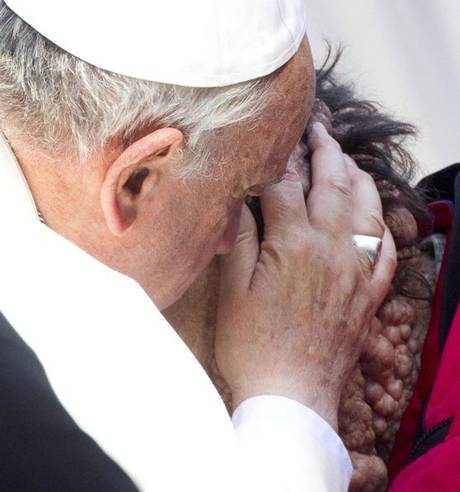
And it is about embracing the stranger that I wish to speak of today. In today’s world, we see increasingly extreme cases of violence and brutality afflicted by those with power upon those who have little or none. And, our public discourse has degenerated from a dialog for finding common ground for action into a strident battle over whose demagoguery is the most pure and right. The quarrels and injustices grow ever more daunting; and the gaps that separate us seem wider, every time we turn around. All of these are examples of how rejecting those who are different, placing those who are foreign or strange – those not of our “family” – on the other side of a gap that has been opened between us and them.

And once it’s there, no matter whether we created it or others, it seems like there is nothing we can do to bridge that gap; to rebuild relationship and trust once they have been extinguished. We can’t fix it. Change for the better has never seemed so out of reach as it does now. These strife-laden gaps make it all too easy, and reasonable, to retreat into protecting our own turf: responding to differences with others’ by hardening our positions, and demonizing them in return.

Continue reading “Bridging the Gap”

The Value of Faith in Our Community

VT_2007_03_ 015The following was a “Letter to the Editor” written by Heidi Mario, a member of Centre Congregational Church in Brattleboro, VT and published in the August 17th Issue of the Brattleboro Daily Reformer.  I was so impressed with the letter that I asked Heidi for permission to republish it here in my blog, which she granted. The original article can be found here. – Allen

I am curious to know on what Dean Lynch bases his statement “More people have been killed over the history of religion than any other” (Letter Box, Aug. 8). While it is true that over the course of human history the worship of gods, or God, has been used as an excuse and justification for much evil, the vast majority of wars have been political, not religious. Most murders are committed for reasons of passion, anger, sex or drugs, and most of the horrific mass killings of recent years, such as Columbine, Aurora, Arizona and Newtown, were perpetrated by disturbed individuals with no axe of faith to grind.

To make a statement such as “Organized religion is a bad thing: a dogmatic system of conduct sold by clergy/true believers as the only path to the Divine,” is tarring progressive mainstream Protestants, Bible-thumping Southern Baptists, Evangelicals, Catholics, Buddhists, Islamic extremists, Islamic moderates, Hindus, ultra-Orthodox Jews, Reform and Conservative Jews, Taoists, Wiccans and a dizzingly vast array of other faith practices, all “organized” to one degree or another, with the same brush. That is as bigoted and ridiculous as declaring that all persons of a particular ethnic group or culture are inclined to violence, or are lazy, or stupid.

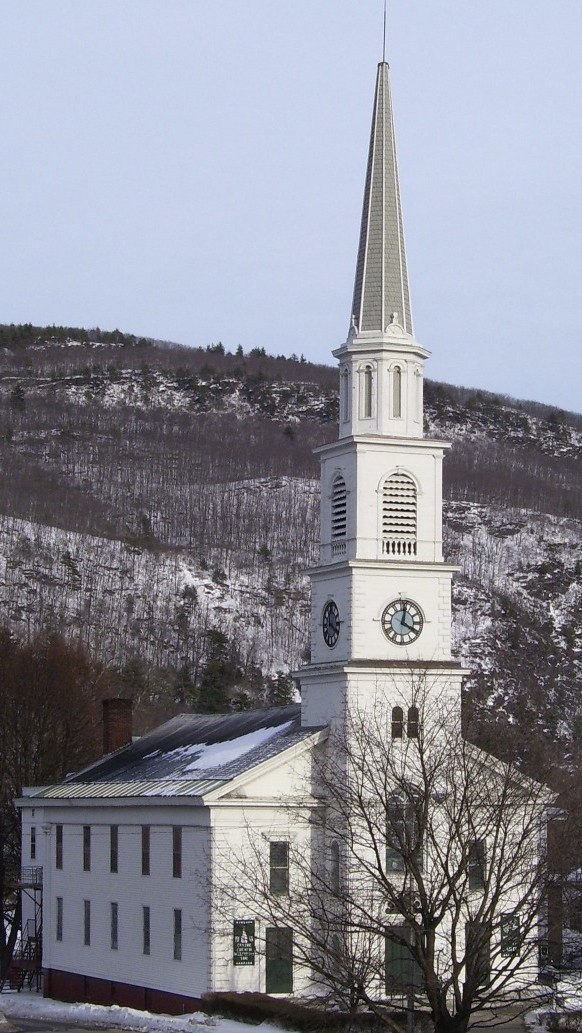
I wonder if Mr. Lynch is aware that if churches were taxed, as he proposes, all but the largest and wealthiest would most likely be forced to close their doors. Using my own church as an example, the free meal program that feeds hundreds each week in our building would shut down. The AA groups that meet several times a week would have to find somewhere else to go. The day care center, which serves many lower-income families, would close. The monthly non-sectarian Moment for Peace would be homeless. Community musical events, including the Messiah Sing, which raises money for the Brattleboro Area Drop In Center, would have to find another venue. The graceful, historic sanctuary, where countless weddings, baptisms and funerals have been held over the last two centuries would stand silent and empty. And the Baptist church across the street could no longer provide meals and shelter to the homeless.

And there are many elderly, disabled and just plain lonely, for whom their church family is their only family. To say that the government would use the increased tax revenue to “feed the hungry … help the sick … teach the children,” is laughably naive.

If Mr. Lynch chooses to tread his own spiritual path alone, that’s fine. More power to him. But others of us find our our faith journeys require, at least partly, the enrichment of a faith community. We find inspiration, joy, hope, courage and peace in the words of a sermon and in Scripture, in the guidance of a wise and compassionate pastor, the beauty of music and the love and support of sharing that journey with others.

Our pastor told us recently about a young woman from North Carolina who had come into the church, seeking help. A “friend” had convinced her to take an impromptu joy ride to Vermont, and then promptly abandoned her. She had no money. She knew no one here. She didn’t know her mother’s or father’s phone numbers, or street addresses. She was illiterate. But she saw a building that looked like a church, and knew that churches were supposed to help people. The pastor spent the rest of her day playing detective, eventually managing to contact her family and then getting her on a bus for home.

This was, sadly, not a particularly rare event. We frequently get requests from people in our community in desperate circumstances requesting help, who have never attended a service, never dropped a quarter in the collection plate, asking for gas money, to pay a utility bill, or for groceries. And we do what we can, because we are an organized religion, a church, and that is what churches are supposed to do.

I would like to invite Mr. Lynch to attend services at local churches, to see for himself if indeed, organized religion is such a bad thing as he has posited. Possibly he will feel himself justified. But then again, he may find his horizons broadened and meet some pretty nice people. As far as “what would Jesus, Mohammed, Buddha, whoever, do?” I do know that for most major religions, meeting together, and sharing faith, is an intrinsic, indeed, required, part of practice. As Jesus said, “For where two or three are gathered together in my name, there I am in the midst of them.”


A Mite in the Emptiness (II)

There’s a tiny island about halfway up the western coast of Scotland. It’s a small, desolate place: bare of trees. Ancient rises of eroded granite make up much of the island; covered with a few patches of grass, some flowers and one or two small streams. Many years ago, I journeyed there, taking a ferry to the Island of Mull, then a long meandering bus ride along a single lane road, passing by empty hills and the occasional Scottish farm; and then – finally – a short trip on a ferry to the Island of Iona.

widows-mite-roman-coins_900pxSermon: “A Mite in the Emptiness”
Presented at Centre Congregational Church, UCC in Brattleboro, VT
August 18, 2013
Scripture: Mark 12:38-44

SCRIPTURE READING…

This morning’s reading comes from the Gospel of Mark chapter 12, verse 38 through chapter 13 verse 2.  In it, Jesus condemns the scribes, tells the story of the Widow’s Mite and prophesies the destruction of the temple.  It is part of a sequence of vignettes in Mark that deal with Jesus teaching in the Temple about the Messiah, the coming of the end times, and what can be done to assure oneself of salvation.

As you hear these words, ask yourself how these stories, particularly the story of the widow and her mite, fit in with Mark’s themes.

Continue reading “A Mite in the Emptiness (II)”

My Baptism(s)

I agree. For me, Baptism is about relationship – a statement of our commitment to each other and our common devotion to God. I do not see it as a prerequisite for salvation.

sicutlocutusest's avatarSicut Locutus Est

There’s a family story about my birth that, like a lot of family stories told and re-told over the years, is probably only tenuously true, but it’s a good story all the same. This is how it goes:

My parents had decided that if they had a girl, they would name her Janice. This was a merciful way of naming a child for my grandmother without actually saddling the child with my grandmother’s name, which was Janetta. But my mother’s labor was long and my head and shoulders were big, and her pain was great, and at a particularly difficult moment, she—who had never been particularly devoted to the Mother of Jesus—was heard to scream, “Get me out of this and I’ll name her Mary!”

But there’s another story about my birth that I cherish more than this one. It seems that when I finally did come out, I came…

View original post 1,037 more words

Free Will and Shopping Carts

One of the things I love doing with my 3 year old son is to take him to the grocery store.

Image from http://milkandcuddles.com/2010/01/tom-thumb-shopping-carts-get-tricked-out/

My little guy loves to get one of those “toddler shopping carts” with a steering wheel, and we wend our way through the store, him “steering” and me acting as the “engine,” brakes, and sanity check.

He is very serious about his job of steering the cart: energetically spinning the wheel this way and that to guide the cart towards his intended destination of the moment; pointing at and commenting about various things he wants daddy to see (or procure); and making sure no food sample is missed.

It’s a fun voyage, and one that often ends with us hitting the hot food and salad bar to select a meal, usually consisting of (for him) chicken, potatoes, corn, cauliflower and a small bottle of either cranberry juice or goat milk.  We then sit down in the store’s dining area and enjoy our meal together, watching the “cart person” dashing this way and that in the parking lot, and seeing shoppers of every description rolling by with carts full of groceries.

One thing I think about as we roll along with him “piloting” our cart through the aisles is that this could be a good metaphor for the nature of free will in our lives.  Yes, we do define our own path in life – steering this way and that: observing and participating in all the wonderful variety of this world in which we live.  But, the entire environment, and all the rules that constrain where we can go and how we get there have been designed and implemented by God.  Even the bodies in which we live, the mind with which we observe the world, and all of our senses, are God’s creations.  All that we think, see, hear, feel, touch, smell and experience are constrained by the very design of the Universe.

So, in seeing my son “drive” his cart, I think of how yes – he believes he’s doing all the work, making all the choices.  But it is others who designed and stocked the store, and ultimately even where he can go within that environment is constrained by whoever is pushing the cart.  My son believes his voyage is directed by his own free will; but in looking at the larger picture, we realize that things are not always as they seem, especially when we think we’re in the driver’s seat.

Copyright (c) 2013, Allen Vander Meulen III, all rights reserved.  I’m happy to share my writings with you, as long as you are not seeking (or getting) financial benefit for doing so, and as long as proper credit for my authorship is given (via a credit that gives my full name and/or provides a link back to this site). 

Things Have Changed

Our world is always changing, and yet we hang on to our old traditions and ways of seeing things. This doesn’t always work well, and we often don’t realize it. We just muddle along, often somewhat aware of the changes going on around us, but perhaps not having thought through their full impact. It often takes a challenge to our views and memories for us to fully appreciate what has happened, and how those changes affect us and what we are called to do.

Sermon presented at Centre Congregational Church, UCC (Brattleboro, VT)
June 2, 2013
Scripture: Luke 7:1-10

The Synagogue in Ancient Capernaum

As most of you know, my father, Allen Vander Meulen Jr., was once a Minister here.  It’s humbling and a bit surreal to stand here nearly 50 years after his first Sunday here; and I am happy to report that both he and my mother are here today!  Thank you, Rev. McFadden, and all of you, for inviting me to speak here this morning: it is a blessing and an honor.  I am deeply grateful.

My earliest memories are connected with this church.  One of the first, I think, is hearing my Dad’s voice boom out over the congregation during hymns.

You see, he’d stand here and sing as he’d always done in his previous churches.  But, in coming here something was different, something that he did not realize mattered.  Those previous churches had not had one of these [TAP ON MIKE].  So, singing in full volume with his powerful voice had never been an issue before, he’d never had to think about it – and didn’t think about it because the speakers pointed towards the congregation, not towards him – he didn’t hear what we heard.

And I was three years old – I didn’t know any different.  I had no idea that hearing the preacher sing so LOUDLY was not normal, not even at those times when I recalled it decades later.  It had been cemented in my mind as the way things were, life as normal.  My perspective on it was never challenged until a moment of revelation – in my forties, I think – when I finally heard the story of how “Pony” Felch, the church moderator at the time, took my Dad aside one day and said in that wonderful old Vermont accent of his “You know Allen, next time you sing a hymn from the pulpit, take a step back!”

Our world is always changing, and yet we hang on to our old traditions and ways of seeing things.  This doesn’t always work well, and we often don’t realize it.  We just muddle along, often somewhat aware of the changes going on around us, but perhaps not having thought through their full impact.  It often takes a challenge to our views and memories for us to fully appreciate what has happened, and how those changes affect us and what we are called to do.

Continue reading “Things Have Changed”

Children’s Message: Holy Spirit Balloons

A fun Children’s Meditation on the importance of the Holy Spirit and why God wishes us to be healed.

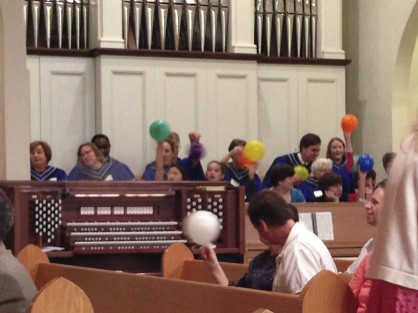
The Choir enthusiastically participating in the task of handing out %22Holy Spirit Balloons%22 following the Children's message, 5-19-2013

A fun Children’s Meditation that gets the congregation as a whole involved in presenting the message.  The lesson is on the importance of the Holy Spirit and that God wishes us to be healed so that we can share the Holy Spirit with others.

Scriptures: Acts 2; and possibly either Isaiah 53:5 or 1 Peter 2:24

The suggested quantities of balloons are for a group of 12-15 children, with a generous “margin of safety” so that no one is left out if more than the expected number show up!

Continue reading “Children’s Message: Holy Spirit Balloons”

Affirmation

Affirmation requires embracing the other, and loving them, without judgment, for every aspect of who they are, and what they are. … It is an acknowledgement that we don’t have all of the answers, and that the other’s answers therefore deserve just as much respect and care as we expect them to show for ours. This is driven by our firm conviction that the Holy Spirit is available to all and that God is present in all of Creation, a conviction rooted in Peter’s quote from Joel to that crowd of many nations on Pentecost: “God declares, that I will pour out my Spirit upon all flesh.” All Flesh. So, it is our role to discern God in the other, even if the presence of the Holy Spirit in their lives manifests itself in ways that we are neither familiar nor comfortable with.

Bugobi-29-960x540My “Farewell Sermon” at Sudbury Memorial Church, UCC
Presented 5/19/2013
Scriptures: John 15:12-17; Acts 2:1-21

My first Sunday here was as a pulpit supply preacher on August 7th, 2011. The Lay Leader that day was John, who was a tremendous help, the very first of many here who have reached out to support, encourage and guide me, every time I’ve been in this Sanctuary or ministered in any capacity on behalf of this congregation.

Just over eight months ago, I began serving as your Ministerial Intern. That day, I was leaping into the unknown. I was nervous about the year long experience we’d both committed ourselves to, worried about saying the wrong thing, doing something stupid, or offending someone inadvertently; hoping our time together would be a positive experience for all of us.

And every day since has been a great blessing, filled with experiences I will always treasure.  This has been a time of growth and of correction, a time of learning and of teaching, a time of deepening and broadening my faith and ministry (and – I hope – yours), a time where we have each given a piece of ourselves to the other, a time when we planted seeds for the future within each other, a time where we have been open to each other and shared in deeply moving, loving ways. We’ve bonded with each other in ways that will last forever.

Those most involved in mentoring and guiding me during my time here, the members of my Teaching Parish Committee, and Tom and Cathy, are all up here this morning, continuing their support through our joint ministry today, doing what you have all been so diligent in doing these past eight months – affirming and guiding me in hundreds of ways, small and large. But most importantly, and most memorably, you’ve all offered me your friendship, and your love, and I have been profoundly grateful and blessed by it.

But now, our journey together draws to a close. Our future has arrived, a future where our paths diverge. A time when, once again, we must leap into the unknown; but this time of ministering together will live on, in our memories. Good memories, mostly – I hope! Certainly that will be the case for me. It’s been a good year, but as we often say when times such as this come to a close, our journey together has been all too short.

But is it the end?

In this morning’s reading from the Gospel of John, Jesus tells his disciples “I do not call you servants any longer, because the servant does not know what the master is doing; but I have called you friends, because I have made known to you everything that I have heard from my Father…”

I do not call you “Servants” any longer… but I have called you friends

We are embarking on a new stage in our relationship, which is also the message of Pentecost. The arrival of the Holy Spirit at Pentecost was a declaration that Christ’s relationship with his disciples, including us, is one that can never die, and one that has changed into something new. There is a new level of openness, of sharing, of affirming, of vulnerability. A deeper bond has been born, binding us together through the Holy Spirit that now indwells each and every one of us.

Continue reading “Affirmation”

Jesus’ Last Command

This week in Boston, we’ve seen so many people in our community coming together to minister in many ways to those who wounded, whether visibly or not, by this tragedy. This reflects how Jesus called upon his disciples to love one another and minister to each other, especially in times if crisis, as we see in this morning’s scripture. It is a story we know all too well – but the disciples didn’t know it, yet.

Sermon presented 4/28/2013, Sudbury Memorial Church, UCC
Scripture: Excerpts from John 13:4-35

This week in Boston, we’ve seen so many people in our community coming together to minister in many ways to those who have been wounded, whether visibly or not, by this tragedy. This reflects how Jesus called upon his disciples to love one another and minister to each other, especially in times if crisis, as we see in this morning’s scripture.  It is a story we know all too well – but the disciples didn’t know it, yet.

What the disciples knew was that Jesus had just washed all of their feet, and told them that if they truly love him they must follow his example by ministering to one another, as he had.  He then foretold his imminent betrayal by one of their own.  Finally, Judas accepted an offering of bread and vanished into the night on some unknown errand.  It was the evening of the “Last Supper.”  The disciples had taken shelter from the darkness outside in the cherished, annual celebration of their love and connection with each other, and with the people of God.

We remember and celebrate this even today, in the sacrament of communion.  The sharing of the bread is seen as the sharing of the Body of Christ that has been broken for us.  By eating of it, we are sharing in his life, in his death, and in the resurrection.  By eating of it together as a community, we are acknowledging that we are all part of the Body of Christ here on earth, working together to continue His ministry and to make manifest the Kingdom of God that is already all around us, even though we may not yet see it in all of its glory and perfection.

Judas took his piece of that bread as he left the light and warmth of his companions, and his Lord, as he retreated into the night.

Why did John think it so important to preserve the memory of this strange offering to the Betrayer?  Judas is someone to be shunned, damned and forgotten for all time – why remember anything about him at all?  Was that gift just for Judas?  I doubt it.  No passage in the scriptures has just one lesson for us – or I’d be out of a job!

Continue reading “Jesus’ Last Command”

Grief

… it is OK to feel that anger, it is OK to allow ourselves to experience it, just as it is OK to experience the grief and sadness. It is part of what being human is all about. Our emotions are a critical part of who and what we are. Without emotions, we could not love, without emotions we could not create, and we could not grieve; but also, without emotions, we would not destroy and we would not hate.

One of my favorite songs of all time is Don McLean’s rendition of “Waters of Babylon” – a beautiful, haunting, sad three part canon that mourns the loss of Zion and the captivity of the Jews following the Babylonian’s destruction of all they had known and loved, including the Temple and the City of Jerusalem, in 586 BCE.

The lyrics are taken from Psalm 137 in the Bible, which I quote in full here (using the New Revised Standard Version):

By the rivers of Babylon—
there we sat down and there we wept
when we remembered Zion.
On the willows there
we hung up our harps.
For there our captors
asked us for songs,
and our tormentors asked for mirth, saying,
‘Sing us one of the songs of Zion!’

How could we sing the Lord’s song
in a foreign land?
If I forget you, O Jerusalem,
let my right hand wither!
Let my tongue cling to the roof of my mouth,
if I do not remember you,
if I do not set Jerusalem
above my highest joy.

Remember, O Lord, against the Edomites
the day of Jerusalem’s fall,
how they said, ‘Tear it down! Tear it down!
Down to its foundations!’
O daughter Babylon, you devastator!}
Happy shall they be who pay you back
what you have done to us!
Happy shall they be who take your little ones
and dash them against the rock!

It is times such as the recent shootings in Newtown and this week’s bombing at the Boston Marathon that bring back this song into my mind in all its power and beauty – the events and the music working together to forcefully remind me of how frail and fragile our human existence is; that our time on earth, and the lives of us and all of our fellow human beings, are far too precious to waste.

Continue reading “Grief”

A Meditation on John 21:1-9

We aren’t called to be passive in our faith, but to be active, to look for Christ’s presence at all times, for it is always there. We are to employ our hands in the service of the Body of Christ, for it is then that we will enjoy the fullness of all he has set before us. Christianity is not just a faith of introspection and meditation, it is also a faith of service and action, of making a difference.

The last chapter in the last of the four Gospels, the Gospel of John, is the final statement in the narratives of Jesus’ walk among us here on earth.  And so, as such, we can imagine that it has much to tell as we voyage forth into the world, leaving behind the physical presence of Jesus, just as a child ventures forth from home, eagerly heading to school on their own for the first time.

John is unique among the four Gospels.  It was written a few decades after the others and has a great deal of material not shared with the other three.  And unlike the so-called Synoptic Gospels of Matthew, Mark and Luke, John is very much focused on the future of the community of believers.

John 21 focuses on our role as believers living and working in the world: Are we to be active or passive agents of the Body of Christ?  How will Christ be present in us in this role?  How will our own strength and faith be sustained as we do so?

Continue reading “A Meditation on John 21:1-9”