
Please join me in prayer…
Lord God, may your peace and Holy Spirit fill this place. Open your scriptures to us, and may I clearly communicate that which you intend us to receive. May your Word take root and flourish within each and every one of us. Through it may we be strengthened and transformed by your unconditional, living, and limitless love for all of your Creation. In Jesus Name, Amen.
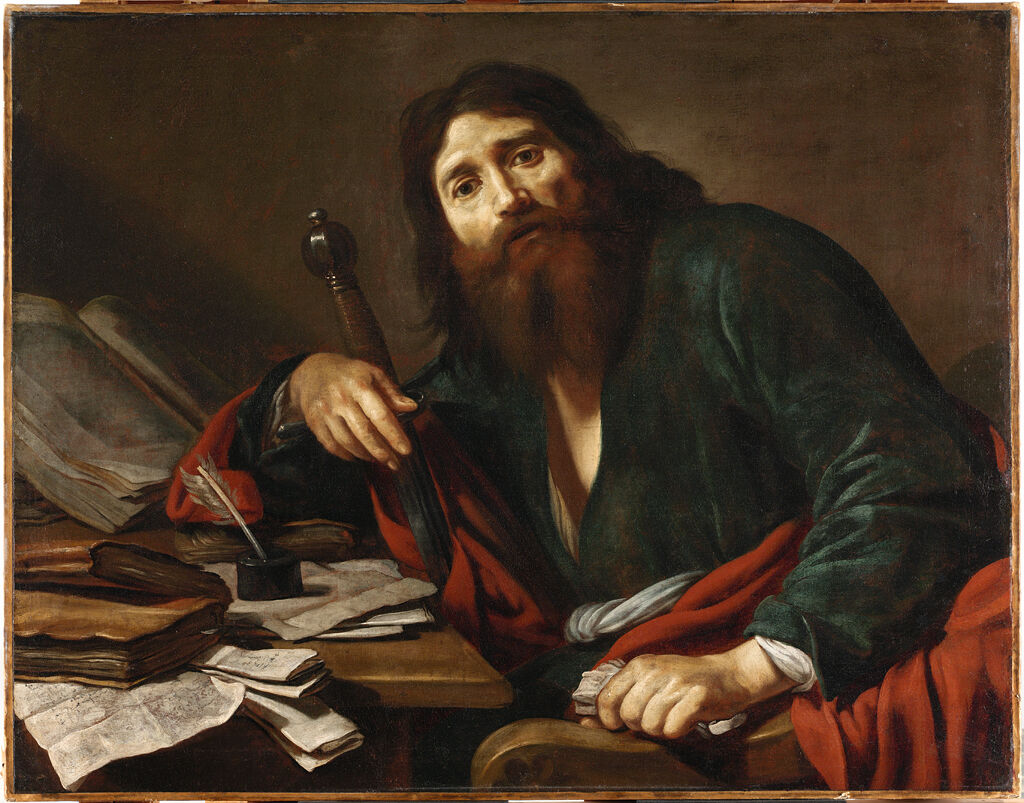
I’ve been thinking a lot about community recently. Especially communities of faith – such as ours, here at MCC. In our reading, Paul talks about what a community of faith is, and how to make it work.
In Paul’s time, Corinth was a young city of several hundred thousand inhabitants, rebuilt long after Rome destroyed the original city and all of its people.
Everyone was an immigrant, or descended from immigrants. The social hierarchy was still fluid and evolving. So, improving one’s social status was possible, unlike most Roman cities. This may be why many came to Corinth in the first place. But even so, there were great disparities in wealth, power, and privilege. Most of the population were slaves and freedman, and very poor. Some were newly wealthy, but often had a low social status due to their own humble origins.
Back then, Christians were seen as slightly bonkers (we still are). But we worship together regardless of class, which was very odd to folks back then, because it challenged the social norms of the time.
In Corinth at this time, there were perhaps 200 Christians over all, meeting in tiny house churches scattered around the city. Their members are known to include Jews, longtime Gentile believers, new converts, slaves, the wealthy, and perhaps a few soldiers and Roman officials as well. It was a tiny and diverse but fragmented, community of faith. They worshiped together, but their divergent perspectives and lives created friction.
Paul had to address problems that we still face today. People still talk at each other rather than with each other. People still seem unable to appreciate their neighbor’s points of view. Many don’t give credence to others’ perspectives including our own – if they hear us at all.
Paul established the Corinthian church in 50 AD. First Corinthians is actually the second epistle he wrote to them, one of a string of letters they exchanged about three years after he left town. The first letter is lost. So, the Bible calls this, his second epistle, First Corinthians. And so the third is called Second Corinthians. And, just to really confuse things, there is a Third Corinthians. But that one is a forgery, written centuries later.
Biblical Exegesis is fun. And I’ve finally used the word “Exegesis” in a sermon, twice!
The Corinthians were asking for help with several controversies they faced. In this passage, he is responding to their question about eating meat sacrificed to idols.
There were three aspects to the issue. And, I’ll give a little background on each.
First, nearly all meat available was from animals sacrificed in temples. It was often sold in the marketplaces afterwards. Like the Jews, Gentile believers were not supposed to eat meat sacrificed to idols. This decision was made at the Great Council in Jerusalem in 50 AD, and Acts 15 speaks of that Council. It was there that it was decided that gentile converts do not need to follow Jewish practice or law. However, they should abstain from meat sacrificed to idols.
Paul knew of that decision. In fact, he was there – just a few months before he left for Corinth. And, that decree was made in response to his own questions.
In his epistle, Paul agrees that idols are false gods, and powerless. Some – particularly the wealthy – asked why it matters if they eat meat sacrificed to idols. They knew that buying and eating it could not harm them or their faith, and Paul agreed.
Second, temple feasts and celebrations were central to life throughout the Empire. Temples had dining halls, often several of them, for private banquets and feasts. Meat sacrificed to that temple’s idols was served at these events. They were important for creating and maintaining business connections, family ties, and social status. Those in, or aspiring-to, the upper classes felt great pressure to attend or sponsor these events. Even though their own Christian Faith demanded they not do so.
Some of these same people hosted the house churches. They made it possible for the Corinthian community to celebrate together, equal before God. Prohibiting them from eating the meat of idols could threaten the existence of the Corinthian Church.
Third, the lower classes saw their fellow Christians entering these temples and buying that meat in the markets. Yet, they themselves could rarely afford to eat meat at all. And, they knew of the Council’s decree. So, I imagine that the claims to “greater knowledge” made by their wealthier brethren did not sit well.
So, what does Paul do? He likely did not want to insult the Jews, some of whom were leaders in Corinth’s house churches. Nor did he want to condemn those who relied on temple feasts to enhance their social status. Nor could he demand poorer believers tolerate the choices of their wealthier neighbors.
Paul’s primary concern was to unite a young and fractured community. He knew that declaring who was right, or wrong, would not solve the conundrum. It would only create greater division.
So, he flips the script. First, he points out they all have knowledge, which suggests to me they were arguing what the facts were. But, Paul does not decree who is right, which is what the Corinthians wanted him to do. Instead, he says “Knowledge puffs up, but love builds up.” It does not matter who is right or wrong. It does not matter who has the superior knowledge. Loving God comes first, not the facts. Our love of God makes it possible for God’s own love of us to become operational in our lives. Everything else follows from that.
It’s not about who knows God best. In fact, how can we really know the omniscient and omnipresent Creator of all? We can’t, because we ourselves are not infinite. But, we can love and trust God. Knowledge is not required.
Paul says that knowledge without love harms our neighbors. It destroys the faith of others. It harms the family of Christ.
Yes, we are at liberty to eat that meat. But, we cannot place that ahead of love. Paul concludes that through such love we will see that our knowledge harms others. And so, out of love he, and we, will freely choose to not eat that meat.
Now, there’s subtext to this, too. Idol worship is transactional faith. Everyone in that church had grown up in a transactional faith. Even the Jews, through their Temple in Jerusalem, had a transactional relationship with the Creator. If we make a sacrifice, whether to an idol or to God, or to our boss at work, we expect something in return. There is no room in that transaction for love. Now, I think wealthy in Corinth were still doing that, expecting something out of their continued attendance at Temple Feasts. Even the poor were doing it, expecting God to approve of their devotion to the law.
So I wonder: was Paul thinking of this as he wrote his reply to the Corinthians? I’m not sure, may be. But, I think I’ll leave that to my next sermon! I think it fair to say, though, that the problem of falling into the trap of a transactional relationship with God, has the same solution: Love God first.
Paul defines the community through their love of God and each other. A love that grows out of God’s love for us. He implies that our community of faith extends as far as God’s love reaches. And, we know there are no boundaries to God’s Love.
Thinking about this, I see two ways that people define who they are, and what community they are a part of.
The first, as the Corinthians were trying to do, is to set boundaries. Do you eat the meat of idols? Some say that if you do, it shows you are a strong believer. So, those who refuse to eat such meat must be weak. Others said the reverse: eating that meat means you are not a true Christian; you’re a sinner.
Boundaries create division, they are division. And, they are everywhere, not just in churches. Not just in ancient Corinth. Such boundaries are easy to declare and simple to enforce. Paul says they give a false sense of security and superiority, and, they separate us and our neighbors from each other and from the Love of God.
Reflecting on how Paul is speaking to us today, I’m struck by how much of our public discourse is still framed in terms of who is right, and who is wrong, just like 2,000 years ago. Approaching disagreements this way; though, means that for someone to win, everyone else must lose.
It creates boundaries between “us” and “them.” Boundaries that exclude more than they include. Boundaries that hurt more than they help. Paul says that when we create such division it is we who sin, not The Other.
There’s a better way to define who we are. It does not matter who we believe is worthy, or who is right, or who is wrong. Paul says our community is not defined by our love of God, nor by our knowledge of God. It is God’s love of us through Christ that defines who we are.
The boundary between “us” and “them” vanishes in the light of such love. Our judgement of another’s worth is irrelevant, as is our knowledge of the faith. Our faith community here at MCC is an expression of God’s presence here in Sudbury. We are not separated from our neighbors by that love. God’s love doesn’t leave room for self-declarations of uniqueness or superiority.
But, setting boundaries is such an easy sell. The divisions are made clear: lines that make it easy to declare that we merit God’s grace, not “them”.
And yet, when you know that you are loved by a God who deeply loves all, where is the dividing line? There’s nothing to distinguish between who is and who is not loved by God, and therefore part of God’s community of faith.
We all share the same relationship with God. It is God’s love that defines that relationship. God loves all of us just as we are, and just where we are, and that is all that matters.
It’s hard to sell such a faith. We can’t say that our brand of Christianity is unique or better than another. We don’t draw a line between us and them. There is no boundary, which is precisely Paul’s point.
We don’t need to sell our faith. We don’t need to prove we have a better faith, or a better church, or better facts. What matters is not what church we attend, or whether we are “right” with God, or whether we believe rightly, or even who we vote for. Paul says all that matters is that we love God. Because God’s Love can then manifest in us. That’s what defines who we are. And, when we start from there, everything else will work out just fine.
Amen.
Scripture Reading:
First Corinthians 8:1-13 [NRSV]; Eating the meat of idols
Delivered at Memorial Congregational Church UCC in Sudbury MA, January 28th, 2024: (4th Sunday of Epiphany)
Copyright 2024, Allen Vander Meulen III, all rights reserved.
This work is licensed under a Creative Commons Attribution-NonCommercial 4.0 International License.

 The Here and the Hereafter